Search

conversations on the fringe

Trauma-Informed Youth Ministry


I went to a training on creating trauma-informed systems of care. I was impacted by the implications on schools and youth ministries. People often look to the church for hope in the midst of tragedy. The church can be a place of good news and healing if they take steps to be trauma-informed in what they do.

Print

Trauma studies report 70% of all adults have experienced some form of trauma. Trauma experiences can range from a simple car accident that results in injury, to gang violence in the city, to physical or sexual assault, to repeated name calling, to being in high stress environments such as jail or prison. 90% of those people suffering from trauma end up in public behavioral health systems seeking support and therapy. 70% of teens who seek treatment for addiction report having traumatic experiences in their young lives, often repeated trauma. New research has revealed trauma can actually derail normal development of the body, brain, and cognition.

SAMHSA (2012) reports “individuals can be retraumatized by those whose intent it is to help”. Trauma clearly interferes with healthy brain development and coping measure become problematic (i.e., substance use, avoidance, aggression, risky behaviors).

As we engage youth in our programs (especially schools and churches) we must understand the principles of trauma informed care.

Understanding attachment theory should be required for all who work with children and adolescents. Attachment theory is best explained as the type of connection (attachment) one has with their primary care givers as a child. When the infant/child is cared for and nurtured the growing infant develops a sense of security that their needs will be taken care of. As a result, the child will likely develop into an adolescent/young adult who is autonomous, self-controlled emotionally and behaviorally, well-formed identity, and can adapt to changing circumstances.

A child who experiences high levels of stress or trauma is more likely to develop insecure or avoidant attachment styles of interacting with the world around them. If they are victimized, they will likely be extra weary of people and see the world as unsafe. Due to this worldview, the child has to develop maladaptive ways to interact with the dangerous world they live in.

When a child experiences trauma the architecture of the brain is changed and emotions and cognition are not integrated. The separate regions of the brain do not communicate effectively with one another so, when something triggers a memory of trauma that fear signal cannot be challenged with rational thought because the pathways have been disrupted. This means everything is a potential trigger for re-activating the trauma.

One example of this is when a young person, that has been sexually abused and threatened or coerced into not reporting the abuse, is told by a well-meaning youth worker that she cannot have her cell phone on the retreat away from home. The reason for this is so the student can focus on God without the distraction of modern mobile technology. Unfortunately, a trauma-impacted student may experience this as a loss of safety that reignites the feeling of being powerless to call for help if needed.

Children and youth are vulnerable populations but there are intersections that increase their vulnerability because we live in a society that marginalizes anyone that is different from the norm (i.e., LGBT, people of color, disables, gender, religion, class, etc.). The greater the number of identity intersections the higher the likelihood of victimization and trauma. Think about the homeless black teenage girl who was kicked out of her house because she identifies as a lesbian. She also recently dropped out of school because she has a learning disability. Now, in order to survive on the streets, she resorts to survival sex with strangers just for a warm bed and a hot meal. This is traumatizing if it happens just once but for many marginalized youth, this becomes a way of life.

If a young person is handled with care, healing can occur. Our school or church can help this precious child begin the healing by creating a trauma informed program or ministry. This starts by educating staff and volunteers. Bring a local therapist, who specializes in trauma, to speak to your team about the impact of trauma and how to be more informed as a team. There are also plenty of resources on the web. Conversations on the Fringe has several blog posts dedicated to trauma.

Another way we can help a hurting student is by creating safe spaces for them to walk with Jesus. Their journey may not be as linear as most of their peers. Cultivating an environment for vulnerability is of the utmost importance but remembering the classroom or youth ministry room is no replacement for a qualified and trained therapist.

Trauma impacts whole family systems. They will need support as they begin the journey to freedom and healing. Trauma alienates and can lead to isolation for families who are ashamed, embarrassed, overwhelmed, and hurting themselves. They need your friendship more than anything. Be present. Sit quietly. Cry with them. Bring meals to families sorting out their trauma stories. Incarnate real love and support. Prayer is good and essential but no replacement for a hug or wiping away tears or a warm dinner.

Lastly, creating a trauma-informed program is a justice issue. If a traumatized young person is to ever recovery a sense of goodness and justice in the world, if they are ever to let go of the natural anxiety of being victimized and move out into the world a whole-hearted person, they need to know and experience goodness that brings balance to their life. Trauma leaves such a powerful and deep impact on the mind and soul that it will take good people doing good to re-establish equilibrium to their mind and soul. The issue of justice cannot be avoided in human service or ministry organization because, it is the heart of why people seek help for trauma in the first place.

What does justice work look like for victims of trauma? What does it look like for perpetrators of trauma?


The Voices Project – Shifting Focus


The Voices Project aims to share stories of marginalized and vulnerable groups of people, people created in the image of God. Our hope is that these stories humanize and connect us to others who are different that us (although, not as different as we think) and moves us towards closing the distance between one another.

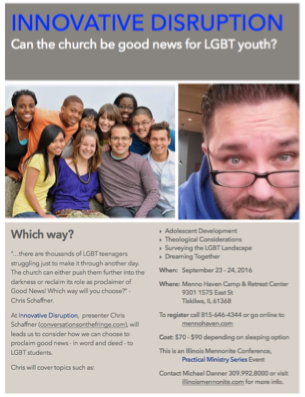
This week’s post comes from Dr. Michael Danner, Executive Minister of the Illinois Mennonite Conference. We are partnering together later this month to have a conversation about whether or not the church can be Good News to LGBTQ youth. He explains why below.


Shifting Focus…

I became a part of Illinois Mennonite Conference (IMC) and the wider Mennonite Church in 1997 (now MC USA) when I was called by Metamora Mennonite Church (MMC, Metamora, IL) to serve as their associate pastor.  A big part of my job was overseeing children’s and youth ministry – with hands on responsibility for jr. and sr. high.

Earlier in 1997, MMC hosted the IMC annual assembly that focused on one question. Would IMC kick out two congregations – who were currently on discipline – because they had openly gay, non-celibate church members.  There was a vote. The vote did not carry. The churches remained on discipline, but were not removed.  Some churches were upset. Others were happy. Some people left their congregations. Others remained. Everyone seemed worn out.

That was almost two decades ago.

I’d love to say that over the past two decades IMC and MC USA have resolved the tensions and questions about the in(ex)clusion of LGBT persons that were present in 1997.  Yes, some things have shifted since then. We do not talk as much about questions of LGBT membership. However, we talk more about non-celibate married gay persons in leadership, whether or not ordination is open to them, whether the church will bless same-sex marriages and pastors are free to participate.  People still line up on one side or the other, with many people in the broad middle, hoping we can move on soon.

In the midst of all this, one thing has escaped our attention. How are we, as a church, engaging youth people in our midst who awaken to a same-sex attraction?

Here’s the thing. Persons generally become sexual aware in their teens (13 – 18).  In the best of circumstances this is an awkward and, often times, confusing time. This is especially true to those who have same-sex attractions. At risk behaviors for students that have same-sex attraction skyrocket – including the risk of drug abuse and suicide. Students often feel alone.

According to recent research by Andrew Marin, published in Us vs. Us, 96% of gay persons interviewed prayed that God would change their sexual orientation when they first came to believe they were gay.  He also reports that when this prayer goes unanswered, the result – more times than not – is that students are driven into church and youth group, not away. Marin’s explanation of this is that gay teens believe their orientation isn’t changed because they are not faithful or “Christian” enough, so they start doing more “Christian” things.

In my view, this has created a situation where the church talks/argues/debates – somewhat abstractly – about questions related to gay persons while there is little done to equip pastors, youth pastors, youth leaders, Sunday school teachers (parents and grandparents) as they relate to students wrestling with their sexuality in their midst.

Whether the adults in the church are aware of it or not, there are gay kids in our youth groups that are wrestling with significant issues. How are we doing at walking with them? Are we creating environments where they can hear and experience the good news of Jesus in their lives?  Do they have the kind of support that makes it less likely they will engage in at risk behaviors? Do they believe that the church is the place for them to experience God’s grace and mercy in the midst of their struggles?

These are complicated questions that raise many tensions among adults in the church. Which means we tend to avoid them. Which means students suffer in silence.

The purpose of Innovative Disruption: Can the Church be Good News to Gay Teens is to explore helpful practices for those who walk with teens. We’re pleased to have Chris Schaffner as our presenter.  I have every confidence that he is up to the task in steering sessions that will lead to practical insights and practices.

As Conference Executive Minister, It is my hope that this event signals a missional shift in our approach to issues of sexuality within the conference.  Instead of abstract discussions that don’t ever land on the ground, it’s time we begin to consider how we minister in and among the culture where we live. That includes development more helpful and healthy relationships between the church and the gay community, including the approach of the church to gay persons in the church. The fighting has not served the gospel well, in my view. It has served the church even worse.  Can we imagine a new kind of dialog and engagement that leads to life, even in the midst of tension?

Bio:  Michael Danner, Conference Executive Minister, Illinois Mennonite Conference.  Live in Morton with my wife Melissa and our two cats. Three adult-ish kids.  MAR Trinity Evangelical Divinity,  DMin in Contextual Theology from Northern Seminary.  Blog at provokelove.net.  email is mdanner@gmail.com.

This event is open to the public. You can register for this gathering by clicking the image below.

blocks_image_20_1

The Voices Project – Refugee Realities


We’re launching a new series from The Voices Project. This initiative aims to share stories of marginalized and vulnerable groups of people, people created in the image of God. Our hope is that these stories humanize and connect us to others who are different that us (although, not as different as we think) and moves us towards closing the distance between one another.

This first post comes from a friend and former pastor of mine. I’ve known Tim for years and know his heart is for those who are near to the heart of God. Take a few minutes and open your heart to what he has discovered in his work with refugees from around the world. If, after reading this, you want to support Tim and his work, you can find suggestions at the end of this post with easy instructions on how you can help.

REFUGEES-1

Refugee Realities
– Tim Barnes, Executive Vice President at International Association For Refugees (IAFR)

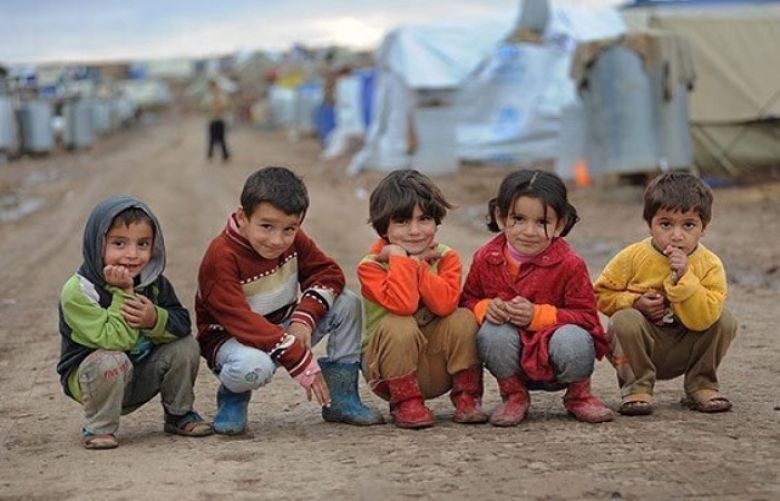
A Little Girl in a Refugee Camp
My colleague and I were walking along the rough paths that wind through the Dzaleka Refugee Camp about an hour or so from Lilongwe, Malawi. As we were in quiet conversation, we heard someone behind us clear their throat.

We slowly turned around to see a dirty faced little girl with a huge grin on her face. With a confident and strong voice, she began to sing, “Welcome, Welcome. Ladies and Gentlemen…I love you, and Praise the Lord. Welcome”. Then with a loud giggle, she ran off as quick as she had appeared.

Her smile and laughter grabbed me. But what I couldn’t shake were her words. ”Welcome, Welcome”. As she welcomed us into her world with open arms, I was acutely aware that the majority of the world was saying just the opposite to her.

Refugee Realities
Our giggling friend is one of 65.3 million people in our world today who finds themselves displaced due to war, violence, conflict, and political or religious persecution. And more than 50% of those displaced, are under the age of 18. In fact, nearly 100,000 refugee teens and children showed up in Europe last year on their own, without a parent or guardian.

As we experience the greatest movement of people across our world, numbers not seen since the end of World II, many of our politicians, leaders, and media work to spread fear through misleading and skewed information about refugees. Unfortunately, there are many in the church who are following the same path.

Reasons For Hope
Having engaged displaced people in the refugee camps in Africa, along some of the paths that are being traveled in Europe, and with those who have been resettled to North America, I would like to share with you three things that I am learning about God, Refugees, and the Church…and that also give me hope.

The first thing I am learning is that God loves and cares for refugees. Deuteronomy 10:18,19 (NIV) says, “He (God) defends the cause of the fatherless and the widow, and loves the foreigner residing among you, giving them food and clothing. And you are to love those who are foreigners…”. Now, if this was a one-off verse, we might be tempted to move on. But over and over throughout scripture, we find that God has a special heart for those who are the most vulnerable, including those whom we see as “foreigners”.

If you look closely, you will notice that the whole Biblical narrative is full of displacement; starting with Genesis where Adam and Eve are displaced from the Garden because of their sin, to Revelation, which is written by John, while exiled (displaced) on the island of Patmos. Think of Hagar, Joseph, Daniel, David, Nehemiah, Philip, Pricilla and Aquila, to name a few. In fact, Jesus was a refugee. He and his parents had to flee to Egypt in the middle of the night to escape Herod’s quest to kill him.

Over and over we find stories in scripture of God working in specials ways among people who were displaced. And He is doing it today because he loves and cares for refugees.

Secondly, I am learning that refugees are more than just people in need. Contrary to what is often portrayed in the media, refugees are some of the most resilient and resourceful people that I have ever met. Don’t get me wrong. They often find themselves in very desperate situations but we often forget that many refugees come with a background in education, business, law, government, medicine, and have other professional skills.

My organization, International Association For Refugees (IAFR) works closely with refugee churches that have started in refugee camps in Africa. In spite of the hardships and vulnerabilities that come with refugee camp life, these churches have chosen to tithe on their meager UN rations. Through this sacrificial gift they have committed to serve the widows and the orphans, started pre-schools, Bible and ministry training schools, and sustainable agriculture projects. They have helped to care for the poor and have planted numerous churches both inside and outside the camp. In spite of their need, they have chosen to be missional to the core.

Third, and finally, I am learning that the church can be a source of hope in the middle of this crisis. All across the world, local expressions of faith are strategically located near where refugees are on the move. And as the body of Christ, are we not to be the vessel through which the heart of God engages the world and brings hope?

Many humanitarian organizations are doing fantastic work, meeting the crisis needs of security, food, shelter, water, and medical care. But for refugees to recover and find hope in their displacement, they need more. They need community, relationship, understanding, increased capacity, a sense of meaning in the middle of their crisis. They need the church to show up and be the church.

Antonio Guterres, who recently completed his role as the UN High Commissioner For Refugees, expressed this hope when he said the following at a special meeting of faith based NGO’s:

“…for the vast majority of uprooted people, there are few things as powerful as their faith in helping them cope with fear, loss, separation, and destitution. Faith is also central to hope and resilience. Religion very often is key in enabling refugees to overcome their trauma, to make sense of their loss and to rebuild their lives from nothing.”

The Church Showing Up
Here is one example of how a church of about 300 in the Minneapolis area showed up. When the need was made known that refugee church leaders were asking for Bibles, the church raised money to provide several hundred Bibles to the refugee church in the camp. Later the Minneapolis pastor went with us to visit the camp. He was able to encourage and minister to the refugee pastors, as he also was ministered to by them.

Another need that was expressed was the desire to hold an annual retreat for the youth in the camp. The youth of the Minneapolis church raised money to make it happen and for the past 3 years, the church has also sent their youth pastor and another volunteer to help run the retreat with the refugee youth leaders. The church has raised money to help put up shelters for refugees and are looking at other projects as well as staying in touch with the churches in the camp through regular visits.

The Minneapolis church decided they could also receive refugee families that were scheduled to be resettled to Minneapolis. They have received two families and will be receiving a third family in just a few weeks. Their involvement with refugees has transformed their church.

What Can I Do?
So you are probably asking, what can we do. Here are a few things to consider:

1. Get Informed about the refugee situation. A couple places to receive a different perspective are www.IAFR.org/toolbox or www.wewelcomerefugees.com.

2. Don’t underestimate Prayer. When I tell the refugees about those who are praying for them, they are so encouraged. It reminds them that they are not forgotten.

3. Consider giving to a group or organization that is doing work among refugees or to a project that will benefit refugees.

4. Look around and see if there are refugees that have been resettled in your area. Welcome them. Show them respect. Invite them into your world. Help them understand and acclimate to your area.

5. Consider showing up in a refugee camp or along the paths that refugees are traveling. Jesus said not only to invite people in but to also go and show up where they are.

References

1. UNHCR Global Trends 2015. https://s3.amazonaws.com/unhcrsharedmedia/2016/2016-06-20-global-trends/2016-06-14-Global-Trends-2015.pdf

2. From the Opening Remarks by Mr. Antonio Guterres, UNHCR, at the Palais des Nations, Geneva, 12 December 2012. UNHCR Dialogue on Faith and Protection. Transcript available online at http://www.unhcr.org/cgi-bin/texis/vtx/search?page=search&docid=50c84f5f9&query

Tim Barnes serves as the Executive Vice President at International Association For Refugees (IAFR) and also oversees their work in Malawi. He can be contacted at tim@iafr.org.


We would love to share your stories. If you have a powerful story of marginalized living and you are willing to let us share it, we would be honored to share those stories. You can email us at cschaffner@fringeconversations.com.

Help Wanted


We continue to be humbled by the positive feedback we receive, like this one from a local high school teacher. Here’s what she has to say about Conversations on the Fringe:

“I support Conversations on the Fringe because I work with teenagers every Monday – Friday in my classroom. I teach English, but my role is much greater than that. Teachers have to be good role models, show compassion, listen for what we are not hearing from our students and try to keep them motivated to learn, despite a myriad of personal problems. I need every tool I can get to try to empathize with my students. Conversations on the Fringe is one of the best tools for me. It helps me to gain an understanding of perspectives my students might be experiencing so that I can be on alert if a student needs serious help. Each time I read a posting, I am brought that much closer to a student in need. As I educate them, I educate myself, too.”

Angie Stokes-Pittman – High School English Teacher

It’s comments like this that motivate us to keep develop relevant content, training, and other resources.

Our hope for the rest of 2016 and into 2017 is to expand our reach and impact. One way you can help us do that is by sharing our work with new people. Here are a few ways you can do that:

  1. Like our Facebook Page. Share it with others.
  2. Tell others about us. Word of mouth is still the easiest and best way to expose others to our work.
  3. Schedule an event in your community, church, or organization. Check out our Fringe Initiatives to discover the best fit for you and your community/organization.
  4. Tell your youth pastor, supervisor, principal, or organization about us. Shoot him/her an email or text with a link to our website and tell them you think we can help and how. http://conversationsonthefringe.com
  5. Email us and let us know what new resources are needed in your community/organization.

We hope to see all of you somewhere in this upcoming year. Check out our calendar to see where we’re going to be and stop by and say hello.


We Need Your Input


Conversations on the Fringe is committed to bringing you relevant training and education. In order to continue doing this we need your feedback. Please take a moment and let us know what you think are the most pressing concerns youth in your communities are facing today. Your feedback will shape future resources. Thanks for supporting CotF for the last decade. We are hopeful that the work we all do together matters…

Listening 101


In light of the political debates and the decline in collective listening skills, I thought I’d repost this blog entry from 6 years ago. It’s still as relevant today as it was then.

CotF Admin's avatarconversations on the fringe

Listening is such an important skill, especially when working with adolescents.  But, it’s a skill that isn’t often developed intentionally.  Some of us come by the gift naturally but others really struggle to truly listen to what young people are trying to say.  Good listening is not a passive activity.  The following is a crash course in active listening.  By using the following skills the listener will increase their capacity to discern underlying conditions, increase in empathy, and be able to assure the speaker that at least one person is really hearing their plight.

Attending

A: Eye contact
B: Posture
C: Gesture

S.O.L.E.R.

Five steps to attentive listening

Squarely face the person
Open your posture
Lean towards the sender
Eye contact maintained
Relax while attending

Paraphrasing

What is it: Restating a message, but usually with fewer words. Where possible try and get more to the point.

Purpose:

  1. To test your…

View original post 601 more words

Self-Injury Facebook Live Event with Youth Specialties


Here’s a thing we’re doing with Youth Specialties next Monday (8/22/16 from 3pm – 4pm CST).

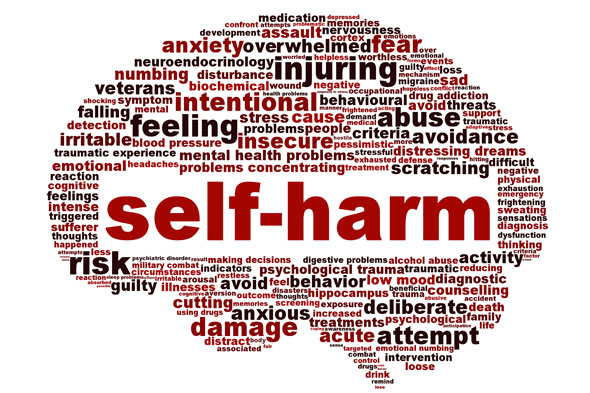
Youth Specialties is hosting a live Q&A on their Facebook page on the topic of self-injury. Everyone is invited to participate. All you need in a device connected to the internet (smartphone, tablet, laptop). This is free to everyone that works with youth (parents, teachers, coaches, youth workers, etc.) We are hoping you could pass this on to your network and any others you think would benefit from this online event. We’ll be doing two more in September and October on addiction and suicide. We’ll keep you posted on those dates and times.

Until then, here’s a blog post I wrote for YS on self-injury. Take a few minutes are read up on the subject and then join us live next week.

Click here on Monday 8/22/16 for the Facebook Live Event.

White Privilege


There’s no denying who I am. I am a white, middle-class, straight, American, Christian male. I, and others like me, and we are legion, we are many, and we are in control of the American culture.

I have more power over my life than most others around the world. I didn’t steal this power from others. It was given to me by a generation of white males that didn’t steal it either. I’m not sure how far back we’d have to go to find the culprits but somewhere along the way (there are definite benchmark though), someone took power that wasn’t theirs to take. Using and benefiting from power that isn’t mine to begin with makes me complicit in the act of theft.

If someone steals a television from their neighbor and sells it to me without telling me it’s stolen, I cannot be held responsible for the theft. I may still have the privilege of using it and watching cable and movies on it but I’m not aware it shouldn’t be mine to begin with.

Once I learn the television is stolen (wake up), I have a moral and social responsibility to address this problem. If, instead, I just keep using the television, knowing it was stolen, I am complicit and an accessory to the act and I am equally responsible for the harm committed against the neighbor from which the television was stolen from.

I order to stay asleep (in denial about my privilege) I have to morally disengage. You can read about that here. Moral disengagement is the cognitive process where we justify our harmful actions towards others. It’s mental gymnastics.

I have come to the conclusion this year that I have not only profited greatly from this privilege but have sought to protect it by personally and systematically oppressing other people groups, other beloved children of God. I have undergone a personal, internal awakening, one in which I have become painfully aware of the origins of my privilege and the toll it has taken on others. Here’s a great post on how white people experience white privilege.

I once heard a talk at a conference in which the speaker talked about three phases of change; orientation, disorientation, and reorientation. 2016 has been a period of disorientation and I’m hoping 2017 will be a reorientation to a new normal. The disorientation started long ago but I became acutely aware of it this year while reading the following:

Peter’s Vision

9 About noon the following day as they were on their journey and approaching the city, Peter went up on the roof to pray. 10 He became hungry and wanted something to eat, and while the meal was being prepared, he fell into a trance. 11 He saw heaven opened and something like a large sheet being let down to earth by its four corners. 12 It contained all kinds of four-footed animals, as well as reptiles and birds.

13 Then a voice told him, “Get up, Peter. Kill and eat.”

14 “Surely not, Lord!” Peter replied. “I have never eaten anything impure or unclean.”

15 The voice spoke to him a second time, “Do not call anything impure that God has made clean.”

16 This happened three times, and immediately the sheet was taken back to heaven.

17 While Peter was wondering about the meaning of the vision, the men sent by Cornelius found out where Simon’s house was and stopped at the gate. 18 They called out, asking if Simon who was known as Peter was staying there.

19 While Peter was still thinking about the vision, the Spirit said to him, “Simon, three[a] men are looking for you. 20 So get up and go downstairs. Do not hesitate to go with them, for I have sent them.”

21 Peter went down and said to the men, “I’m the one you’re looking for. Why have you come?”

22 The men replied, “We have come from Cornelius the centurion. He is a righteous and God-fearing man, who is respected by all the Jewish people. A holy angel told him to ask you to come to his house so that he could hear what you have to say.” 23 Then Peter invited the men into the house to be his guests.

I spent the better part of the past year meeting with, talking to, interviewing and blogging and speaking about marginalized and vulnerable populations of people; LGBTQ youth, heroin users, racial minorities, refugees, people with disabilities, and people in the criminal justice system and the more time I spent listening to them the more ashamed I became of myself. I also became ashamed of my faith, for it was guilty of the same thing.

The focus of what I’ve learned this year is the danger of having too much (personal and corporate) dominance over a culture and how the systems that govern it may be contributing to a larger problem that will impact our personal and corporate faith for a long time to come.

As a white, middle-class, straight, American, Christian male, I am part of the power structure at the top of the ladder. When any group rises to the top it is often accompanied by a sense of privilege. It’s the “Good Ol’ Boys Club” mentality. And, it often happens without its members even knowing it. As a result of one group believing it has privilege, another group consequentially is oppressed. I have and you do not.

In other words, if people from the dominant groups, in this case, me, really saw privilege and oppression as unacceptable – if white people saw race as their issues, if men saw gender as a men’s issue, if heterosexuals saw heterosexism as their problem – privilege and oppression wouldn’t have much of a place in the future of the church. But that isn’t what’s happening. Dominant groups don’t often engage these issues, and when they do, it’s not for long or with much effect, and rarely do they address the systemic causes. I had developed throughout the course of my life; toxic ownership, entitled sense of power and control, unequal distribution of that power and control, a fear of scarcity, and a homogenous community.

When asked “How or Why?” certain responses pour out without hesitation. Because I benefited most in the dominant culture I don’t see privilege as a problem. Why couldn’t I see it?

  • Because I didn’t know in the first place. I was oblivious to it. The reality of privilege doesn’t occur to me because I don’t go out of my way to see it or ask about it and because no one dares bring it up for fear of making things worse. I also have no understanding of how my privilege actually oppresses others.
  • Because I don’t have to. If you point it out to me, I may acknowledge that the trouble exists. Otherwise, I don’t pay attention, because privilege shields me from its consequences. There is nothing to compel my attention except, perhaps, when a school shooting or sexual harassment lawsuit or a race riot or celebrity murder trial disrupts the natural flow of things.
  • Because I think it’s just a personal problem. I thought individuals usually get what they deserve, which makes the problem just a sum of individual troubles. This means that if whites or males get more than others, it’s because we have it coming – we work harder, we’re smarter, more capable. If other people get less, it’s up to them to do something about it.
  • Because I want to protect my privilege. On some level, I think I knew I benefited from the status quo and I just didn’t want to change. I felt a sense of entitlement, that I deserved everything I have and wanted, including whatever advantages I have over others.
  • Because I was prejudiced – racist, sexist, heterosexist, classist. My attitudes use to be consciously hostile towards blacks, women, lesbians, gay men, the poor. I believed in the superiority of my group, and the belief is like a high, thick wall. I developed circular reasoning to protect against myself against cognitive dissonance.
  • Because I was afraid. I may be sympathetic to doing something about the trouble, but I was afraid of being blamed for it if I acknowledge that it exists. I was afraid of being saddled with guilt just for being white or male or middle-class, attacked and no place to hide. I was even more afraid that members of my own group – other whites, other heterosexuals, other men, the ones that affirm my power – will reject me if I break ranks and call attention to issues of privilege, making people feel uncomfortable or threatened.

So there you have it. That’s me, or more accurately, the old me. A work is being done in me, as I look back throughout the last decade, especially as I look back over the last year and what has brought me to the place I am today. In my heart I want to have this vile, evil purged from me. I want to do the right thing.

Although doing the right thing can be morally compelling, it usually rests on a sense of obligation to principle more that to people, which can lead to disconnection (injustice) rather than to restorative justice (reconnection). I take care of my children, for example, not because it’s the right thing to do and the neighbors would disapprove if I didn’t, but because I feel a sense of connection to them that carries with it an automatic sense of responsibility for their well-being. The less connected to them I feel, the less responsibility I feel. It isn’t that I owe them something as a debtor owes a creditor; it’s rather that my life is bound up in their lives and theirs in mine, which means that what happens to them in a sense also happens to me. I don’t experience them as “others” whom I decide to help because it’s the right thing to do and I’m feeling charitable at the moment. The family is something larger than myself that I participate in, and I can’t be a part of that without paying attention to what goes on in it and how everyone is affected.

So, maybe that’s where I start today, maybe that’s where we all start…paying more attention to all the members of the family. Not just the few that look like us. But, it can’t just end there, as it usually does. We must share our lives and resources, breach cross-cultural barriers, take risk, and sacrifice our comfort if the church is to ever be what God intended for it to be.

Where do you see privilege in your heart and your community? Where do you see overt or subtle oppression? What unconscious biases are you becoming more aware of? What conversations do we need to start? How are our youth being shaped by privilege and oppression? Do we have real friendships with people not from our tribe? Do you have ideas and beliefs about people but don’t intimately break bread with them on a regular basis? Maybe that’s where we all start…That’s what Peter did when the Spirit showed him the vision. It took him three viewings, so know that we’ll struggle with this initially. That’s ok, embrace the disorientation and trust that God wants to reorient you to a new way of thinking, living and loving.

What Does Effective Treatment Look Like (part 5)


image

The treatment of prescription drug and heroin use is one of the most pressing issues facing our country right now. Across the country, opiate related overdose deaths, fueled by prescription pain killers, now takes more lives that car accidents, with nearly 100 Americans dying from an overdose EVERY DAY.

Given the current state of affairs related to opiate use and abuse, current legal, regulatory, and budgetary constraints, federal agencies and the White House have been working hard to develop guidelines for effective treatment  and to generate and direct resource at this epidemic. But, on the frontlines, counselors and treatment professionals are trying to figure out what will really help and what doesn’t.

There is no silver bullet for a disease as complex as opioid addiction. Research does reveal the longer a person is involved in treatment the better the outcomes. There needs to be an alignment of the stars to get all the wheels of treatment and recovery to move in the same direction. It is not impossible but, without the needed resources, it is very difficult. Let’s take a look at what effective treatment looks like.

1. Individualized Treatment Planning
Each individual comes to treatment with a unique set of circumstances. Some are caught in a domestic abuse situation, others at involved with Children and Family Services, yet others are facing serious legal consequences. Most are simply aware that the path they are on will end in death. Because of the myriad variable in each story, effective treatment must be responsive to the individual needs and considerations. That doesn’t mean there aren’t universal skills each person will need, such as relapse prevention skills, it simply means that a cookie-cutter approach isn’t helpful when everybody starts at a different place.

2. Level of Motivation
Besides the unique process that led an individual to seek treatment there is also a unique level of motivation for each that should be considered. Many develop a sense of hopelessness that they can every get this monkey off their back. Others, while drug dependent, haven’t been motivated by the consequences to quit yet. One of the ways humans resolve the cognitive dissonance between what we do and how that impacts our lives and the lives of those we love, is denial. It’s a protective mechanism that keeps us from being overwhelmed with guilt, shame, and remorse, but also enables ongoing drug use. Understanding a person’s level of motivation is key in helping them through the process, when they are motivated.

3. Understanding the Science of Addiction
We have learned so much in the last 10 years about the brain that we struggle with presenting current information because what we are learning is outpacing our ability to integrate it into treatment. But, people desire to know how the brain works and how drugs affect it. The more you understand that science of behavior and addiction and what is happening in the brain the greater the sense of being able to control what is happening. For example, if a person in treatment learned about how the brain is rewired through drug use and what new behaviors will help the brain heal and rewire into healthier behaviors, that is empowering. There is meaning and understanding to the choices they make. Plus, science is cool.

4. Cognitive Behavioral Therapy
There is a direct connection between how we think about ourselves and the world we live in and how we behave. If someone is afraid of flying and they believe planes are unsafe, they will not likely fly anywhere. But, when that thinking is challenged with rational thinking, such as how safe flying actually is, and that you are more likely to be injured in a car accident that have your plane fall from the sky, you are more likely to fly. Good treatment helps the individual challenge and replace irrational thinking and evaluate it in the light of reality. When you live under the fog of addiction you live in survival mode. There is so much deluded thinking that is necessary to navigate that world but is problematic once an individual enters recovery.

5. Wellness
The mind and the body and intricately connected. The benefits of healthy habits are well documented. For the opiate dependent sleep, exercise, and nutrition are essential to quality recovery.

6. Family Engagement
Just because the wind from the storm is over doesn’t mean there still isn’t work that needs done. The family has taken a toll because of their loved one’s addiction. Work needs to occur to rebuild trust and habits of relating to each other. Imaging living with someone and you both speak English (the language of addiction/anger/stress) and then someone goes to treatment or seeks out recovery. In recovery they speak French (recovery, therapy). Now, you have two parties trying to co-exist and they can’t communicate because they speak different languages. Both groups need to be speaking the same language if restoration of relationships is to occur.

7. Accountability
Drug use monitoring is an important part of the recovery process. Drug screens and medication counts help bring accountability to the person in recovery. Because old habits die hard, the need for someone to ask tough questions and to provoke honest dialogue is also necessary. This is most effective when there is trust and rapport between the two parties.

8. Co-occurring Conditions
Many times drug using individuals are self-medicating because of a co-occurring condition, such as PTSD, depression or anxiety. Taking opiates, benzos, or other depressants can give temporary relief to an often debilitating condition. If these conditions are not treated, relapse is imminent.

9. Employment Support
Studies show one of the biggest predictors of sustained recovery is gainful employment. Working gives the individual a sense of purpose, accomplishment, and independence. This can be a challenge if you have a felony record or a spotty work history. Having someone trained to walk alongside you while job seeking can be an indispensable source of encouragement and support.

10. Pro-Social Recreation
Anhedonia is the inability to experience pleasure. This often occurs when the reward center has been hijacked due to years of opiate misuse. When you experience pleasure so off the charts over and over again, the brain rewires to that level as the new default. Anything less than that is no longer experienced as pleasure. Boredom is a HUGE trigger for people early in recovery precisely for this reason. Who wants to live an existence where they experience no or low levels of pleasure in anything. Retraining the brain to enjoy (pleasure) life is also an important part of the recovery process. Developing new hobbies that are not related to using drugs, listening to music without getting high, being sexually intimate without having to use first are all difficult for the person early in recovery.

11. Criminogenic Needs
Do you know what you get when you sober up a horse thief? A sober horse thief. Criminal attitudes and behavior are a part of the lifestyle associated with drug use. The mere fact that someone uses drugs means they are engaged in a criminal act. Along with behaving in a criminal manner means adopting criminal attitudes that support or endorse your behavior. This needs to be undone if someone is going to thrive in recovery.

12. Case Management
Because the person can be caught up in other systems there is a need for effective case management. It is possible that a drug using individual ca be on probation, Children and Family Services, Drug Court, see another therapist for past trauma, or a host of other service, all aimed at helping them get back on the right path. Effectively communicating with these other services is necessary, as is making appropriate referrals to address these needs.

13. Harm Reduction
I won’t say much about this now because I’m designating a future blog to this but Harm Reduction is the idea, that if an individual is not willing or struggling to abstain from drug use, how can we support them where they’re at? For example, providing clean needles is proven to prevent the spread of blood born disease common among IV needle users. This also reduces the associated cost of health care for treating someone, likely without insurance, in the emergency room and ongoing treatment for Hepatitis C, a commonly spread disease among IV needle users. This is a controversial strategy but one that is often misunderstood. We’ll explore this in greater detail.

14. Intersections
Individuals are unique and complex. There are other intersections to consider when providing effective treatment, race, ethnicity, gender, religion, sexual orientation, ability/disability, age, educational levels, and a host of other considerations. All which need to be addressed when providing individualized treatment.

15. Recovery Community
Yes, addiction has biological hooks. The pleasure is such a powerful reward that it draws a user back with powerful cravings. But, more often that not it is reinforced by the community of peers we surround ourselves with when using. Recovery is no different. Creating the community we crave, that was denies by our addiction, is one of the most powerful reinforcers of remaining clean or returning after a relapse. Recovery has more to do with being connected in meaningful ways than just about anything else. The pain of alienation and isolation, the pain of being marginalized and feeling outcast, the deep hurt of feeling utterly unloved and unlovable will drive addiction to dark places we never knew existed. If we are going to heal our those addicted in our communities we must be willing to venture into those dark places and lead them out.

We are constantly learning more about what it means to be a person dependent on opiates every day. In spite of the progress we are making, not everyone who needs treatment can access it when they need it or are motivated to seek it. We’ll address barriers to treatment in our next post. 

A WordPress.com Website.

Up ↑