Heading over to the 2nd annual Abbey’s Walk @ the Pekin lagoon @ 9am to raise awareness for substance abuse/recovery…Join us if you can!

 Compassion Fatigue affects a broad range of health care professionals as well as others who provide a myriad of listening and support services. This condition occurs when professionals, family, friends, or caregivers are continually exposed to extreme emotional circumstances wither directly or indirectly, in an attempt to treat or support those they serve.
Because the effects of compassion fatigue are cumulative, caregivers may be unaware of this syndrome’s ability to rob them of their energy, vitality, and resiliency. The pervasiveness of this phenomenon places those in the helping/serving professions at high-risk of sacrificing their own physical, mental, emotional, and spiritual well-being on the altars of compassion.
The term Compassion Fatigue differs from the term Burnout in that it concentrates on the transfer of emotions from the primary source to a secondary one. Whereas burnout that physical, mental, and emotional exhaustion is caused by a depletion of the ability to cope with one’s environment.
Examples of Compassion Fatigue Burnout Symptoms
Cognitive
Lowered concentration, decreased self-esteem, apathy, rigidity, disorientation, perfectionism, minimization, preoccupation with trauma, thoughts of self-harm or harm to others
Emotional
Powerlessness, anxiety, guilt, anger/rage, survivor guilt, shutdown, numbness, fear, helplessness, sadness, depression, emotional rollercoaster, depleted, overly sensitive
Behavioral
Impatient, irritable, withdrawn, moody, regression, sleep disturbance, nightmares, appetite changes, hypervigilance, elevated startle response, accident proneness, losing things
Spiritual
Questioning the meaning of life, loss of purpose, lack of peace, pervasive hopelessness, anger at God, questioning long held convictions/beliefs, loss of faith, increasing skepticism about religion
Personal Relations
Withdrawal, decreased interest in intimacy or sex, mistrust, isolation from others, over-protection as a parent, projection of anger or blame, intolerance, loneliness, increased interpersonal conflicts
Somatic
Shock, sweating, rapid heartbeat, breathing difficulties, aches and pains, dizziness, increased number and intensity of medical problems, other somatic complaints, impaired immune system
Work Performance
Low morale, low motivation, avoiding tasks, obsession about details, apathy, negativity, lack of appreciation, detachment, poor work commitments, staff conflicts, absenteeism, exhaustion, irritability, withdrawal from colleagues
Any of these symptoms could be signaling the onset or presence of compassion Fatigue. If you think you may suffer from Compassion Fatigue you can take and online Compassion Fatigue Test that will help you determine if you need help.
Share this:

 Conventional wisdom (and research) says that good communication can improve relationships, increasing intimacy, trust and support. The converse is also true: poor communication can weaken bonds, creating mistrust and even contempt! The Scriptures also tell us that it is wise to be slow to speak and quick to listen. Here are some examples of negative and even destructive attitudes and communication patterns that can exacerbate conflict in a relationship. How many of these sounds like something you’d do?
1. Avoiding Conflict Altogether:
Rather than discussing building frustrations in a calm, respectful manner, some people just don’t say anything to their partner until they’re ready to explode, and then blurt it out in an angry, hurtful way. This seems to be the less stressful route—avoiding an argument altogether—but usually causes more stress to both parties, as tensions rise, resentments fester, and a much bigger argument eventually results. It’s much healthier to address and resolve conflict.
2. Being Defensive:
Rather than addressing a partner’s complaints with an objective eye and willingness to understand the other person’s point of view, defensive people steadfastly deny any wrongdoing and work hard to avoid looking at the possibility that they could be contributing to a problem. Denying responsibility may seem to alleviate stress in the short run, but creates long-term problems when partners don’t feel listened to and unresolved conflicts and continue to grow.
3. Overgeneralizing:
When something happens that they don’t like, some blow it out of proportion by making sweeping generalizations. Avoid starting sentences with, “You always…” and “You never…” as in, “You always come home late!” or “You never do what I want to do!” Stop and think about whether or not this is really true. Also, don’t bring up past conflicts to throw the discussion off-topic and stir up more negativity. This stands in the way of true conflict resolution, and increases the level of conflict.
4. Being Right:
It’s damaging to decide that there’s a ‘right’ way to look at things and a ‘wrong’ way to look at things, and that your way of seeing things is right. Don’t demand that your partner see things the same way, and don’t take it as a personal attack if they have a different opinion. Look for a compromise or agreeing to disagree, and remember that there’s not always a ‘right’ or a ‘wrong’, and that two points of view can both be valid.
5. “Psychoanalyzing” / Mind-Reading:
Instead of asking about their partner’s thoughts and feelings, people sometimes decide that they ‘know’ what their partners are thinking and feeling based only on faulty interpretations of their actions—and always assume it’s negative! (For example, deciding a late mate doesn’t care enough to be on time, or that a tired partner is denying sex out of passive-aggressiveness.) This creates hostility and misunderstandings.
6. Forgetting to Listen:
Some people interrupt, roll their eyes, and rehearse what they’re going to say next instead of truly listening and attempting to understand their partner. This keeps you from seeing their point of view, and keeps your partner from wanting to see yours! Don’t underestimate the importance of really listening and empathizing with the other person!
7. Playing the Blame Game:
Some people handle conflict by criticizing and blaming the other person for the situation. They see admitting any weakness on their own part as a weakening of their credibility, and avoid it at all costs, and even try to shame them for being ‘at fault’. Instead, try to view conflict as an opportunity to analyze the situation objectively, assess the needs of both parties and come up with a solution that helps you both.
8. Trying to ‘Win’ the Argument:
I love it when Dr. Phil says that if people are focused on ‘winning’ the argument, “the relationship loses”! The point of a relationship discussion should be mutual understanding and coming to an agreement or resolution that respects everyone’s needs. If you’re making a case for how wrong the other person is, discounting their feelings, and staying stuck in your point of view, you’re focused in the wrong direction!
9. Making Character Attacks:
Sometimes people take any negative action from a partner and blow it up into a personality flaw. (For example, if a husband leaves his socks lying around, looking it as a character flaw and label him ‘inconsiderate and lazy’, or, if a woman wants to discuss a problem with the relationship, labeling her ‘needy’, ‘controlling’ or ‘too demanding’.) This creates negative perceptions on both sides. Remember to respect the person, even if you don’t like the behavior.
10. Stonewalling:
When one partner wants to discuss troubling issues in the relationship, sometimes people defensively stonewall, or refuse to talk or listen to their partner. These shows disrespect and, in certain situations, even contempt, while at the same time letting the underlying conflict grow. Stonewalling solves nothing, but creates hard feelings and damages relationships. It’s much better to listen and discuss things in a respectful manner.
Share this:

 Listening is such an important skill, especially when working with adolescents. But, it’s a skill that isn’t often developed intentionally. Some of us come by the gift naturally but others really struggle to truly listen to what young people are trying to say. Good listening is not a passive activity. The following is a crash course in active listening. By using the following skills the listener will increase their capacity to discern underlying conditions, increase in empathy, and be able to assure the speaker that at least one person is really hearing their plight.
Attending
A: Eye contact
B: Posture
C: Gesture
S.O.L.E.R.
Five steps to attentive listening
Squarely face the person
Open your posture
Lean towards the sender
Eye contact maintained
Relax while attending
Paraphrasing
What is it: Restating a message, but usually with fewer words. Where possible try and get more to the point.
Purpose:
- To test your understanding of what you heard.
- To communicate that you are trying to understand what is being said. If you’re successful, paraphrasing indicates that you are following the speaker’s verbal explorations and that you’re beginning to understand the basic message.
When listening consider asking yourself:
- What is the speaker’s basic thinking message
- What is the person’s basic feeling message
E.g. – S: I just don’t understand, one minute she tells me to do this, and the next minute to do that.
X: She really confuses you.
S: I really think he is a very nice guy. He’s so thoughtful, sensitive, and kind. He calls me a lot. He’s fun to go out with.
X: You like him very much, then.
Clarifying
What is it: Process of bringing vague material into sharper focus.
Purpose:
- To untangle unclear or wrong listener interpretation.
- To get more information
- To help the speaker see other points of view
- To identify what was said
e.g. – I’m confused, let me try to state what I think you were trying to say.
You’ve said so much; let me see if I’ve got it all.
Perception Checking
What is it: Request for verification of your perceptions.
Purpose:
- To give and receive feedback
- To check out your assumptions
e.g. – Let me see if I’ve got it straight. You said that you love your parents and that they are very important to you. At the same time you can’t stand being with them. Is that what you are saying?
Summarizing
What is it: pulling together, organizing, and integrating the major aspects of your dialogue. Pay attention to various themes and emotional overtones. Put key ideas and feelings into broad statements. DO NOT add new ideas.
Purpose:
- To give a sense of movement and accomplishment in the exchange
- To establish a basis for further discussion.
- Pull together major ideas, facts, and feelings
e.g. – A number of good points have been made about rules for the classroom. Let’s take a few minutes to go over them and write them on the board.
We’re going all over the map this morning. If I understand you correctly, the three major points of the story are…
Primary Empathy
What is it: Reflection of content and feelings.
Purpose:
- To show that you’re understanding the speaker’s experience
- To allow the speaker to evaluate his/her feelings after hearing them expressed by someone else
Basic Formula:
You feel (state feeling) because (state content)
e.g. – Student: I just don’t know how I am going to get all this math homework done before tonight’s game especially since I don’t get most of this stuff you taught us today.
Teacher: You are feeling frustrated and stuck…You are feeling frustrated and stuck with math you don’t know how to do and you’re worried that you won’t figure it out before you go to the game.
The main fear for you seems to be fear of loss — you’re really scared of losing your relationships if you continue struggling with math because it will consume most of your time to work on it.
It’s upsetting when someone doesn’t let you tell your side of the story.
Advanced Empathy
What is it: reflection of content and feeling at a deeper level.
Purpose: To try and get an understanding of what may be deeper feelings
e.g. – I get the sense that you are really angry about what was said, but I am wondering if you also feel a little hurt by it.
You said that you feel more confident about contacting employers, but I wonder if you also still feel a bit scared.
Share this:

 “I’m a lesbian.” she said. She chose to self-disclose right in the middle of a youth group gathering. She just dropped a big elephant right in the center of the group. We were rocked. Moments before we were discussing the importance of being transparent with each other. God has a funny sense of humor. The silence was awkward and uncomfortable at best. Those word just hung there in mid air, waiting for a response.
It was then that Josh, our student with down syndrome, shouted, “Wrestlemania Baby! Hulk-A-Mania’s gonna run wild on you!”
We lost it! We all laughed so hard we couldn’t catch our breath. After nearly ten minutes of this we finally composed ourselves. We all needed a moment to gather our thoughts. We needed time to let go of our fears and judgments. We needed something to pop the tension. We weren’t avoiding the elephant but we needed to come up for air, for this was a very vulnerable moment of self-revelation, that if handled wrong could have lasting negative effects. Laughter, at that moment, was a gift from God.
By now the benefits of humor have been well documented. Humor connects us to other humans, as we share a laugh over life’s absurd moments. Like love, humor warmly surrounds us and soothes pain, making it more bearable. When we can laugh at our problems, we gain distance, perspective, and a sense of mastery. Humor says, “Things may suck right now, but that’s okay. I might be a hot mess right now, but there’s light at the end of the tunnel.” A humor break can recharge creative batteries. In addition, laughter results in numerous beneficial effects on the body: relief from pain, cardiovascular conditioning, improved breathing, muscle relaxation, and improved immune system functioning.
Several cautions apply to humor as well.
- The overuse of humor can be a form of avoidance, which can prevent one from processing pain.
- Sarcasm or “put-down” humor is a thinly disguised form of hostility, and is rarely appropriate. Humor, like sex, works best when surrounded by love.
- Making light of someone’s pain can seem insensitive and can undermine trust. Humor may require that a certain amount of healing has taken place. It may be premature to try to get someone to laugh at intense pain.
- Humor is NOT a panacea, not a substitute for therapy.
Given these precautions, these principles might help incorporate more humor into our lives.
- Be willing to “Play the Fool” at times. This openness undermines the rigid need to be legalistic and perfect.
- Just be willing to play. If we allow for unstructured downtime we invite spontaneity to play along with us.
- Humor does not require that one be a stand-up comedian or a loud laugher. A sense of humor includes simply being able to notice the incongruities of life with a light heart.
- Humor is not an all-or-none skill. A sense of humor is standard issue, and each person has the capacity to develop it over time.
- Don’t be discouraged if not many things seem funny to you. The work we do is often intense. On any given day we could deal with deep emotional problems, intense relationships, demands of others, and the consequences of at-risk behaviors. It’s hard to laugh when one is emotionally numb. We can often become numb as a protective shield against life’s difficulties. Instead, simply allow time for healing. With time you’ll probably become open to humor at your own pace and in your own way.
Most of us in youth ministry are kind of screwy to begin with. We have to be to do what we do for so little in return. We’re already bent towards a wicked sense of humor but sometimes the daily grind of life and ministry can steal our laughter.
God promises us in Joel that “He will replace what the locusts have eaten.” May He do that for you today.
Share this:

The threat of suicide is a complex and often complicated event for a youth worker to navigate. Many of us have had absolutely no training whatsoever when it comes to properly handling a mental health crisis. Often we feel like we’re missing something or aren’t covering all of our bases. Unfortunately, we live in a litigious society and documentation such as this can make all the difference in protecting your ministry from potential legal action.
Conversations on the Fringe is committed to producing resources to help parents and youth workers navigate the murky waters of adolescent mental health.
By clicking here, you can download a questionnaire that will help you navigate a suicide threat.
Disclaimer
The information above is for general information purposes only. The information is provided by Conversations on the Fringe and while we endeavor to keep the information up to date and correct, we make no representations or warranties of any kind, express or implied, about the completeness, accuracy, reliability, suitability or availability with respect to the website or the information, products, services, or related graphics contained on this document for any purpose. Any reliance you place on such information is therefore strictly at your own risk.
In no event will we be liable for any loss or damage including without limitation, indirect or consequential loss or damage, or any loss or damage whatsoever arising from harm to or loss of life of, or in connection with, the use of this resource.
Share this:
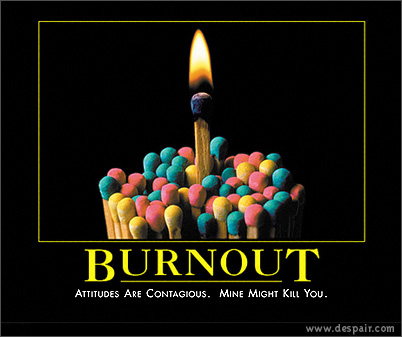 For youth workers (paid or volunteer), there can be nothing more frightening than the belief that something terrible might happen to a student that you have invested so much time and energy in. As a substance abuse counselor, I struggle with the reality that one day someone could overdose and die regardless of how much I try to help. I live with the often frantic sense that “there had to be something I could have done!”
Never knowing when crisis or tragedy might happen we learn to be hypervigilant…always on our guard. Is today the day I get the call? Will it be a car accident? A school shooting? Suicide?
Sometimes we feel as though we’re in a lethal game of chess with our kids, always trying to be two moves ahead and aware of the possible counter-moves. This type of hypervigilance can be exhausting.
As a youth worker of At-risk kids, you may find yourself on a constant emotional rollercoaster with no scheduled stops. In times of crisis we often set aside our own needs entirely and as a result we risk burnout and compassion fatigue. Be reassured that the time for balance will come if you’re intentional, but there are some things you can do now.
1. Seek supportive relationships – This will be essential in avoiding burnout. Build a network of friends, family, and peers who are kind and encouraging. Don’t isolate yourself in fear or shame. Seek respite in these relationships from the intensity of the situations your kids are facing.
2. Develop health-conscious behaviors– This is three-fold as I see it; rest, exercise, nutrition. Get adequate sleep, avoid snack foods, take a brisk walk daily. All three are important for emotional stability and combating low levels of energy.
3. Have fun – A life that is overrun with doom and gloom and that is absent of joy is not one worth having. We need recreation. It brings balance. Laughter releases endorphins which cause us to feel pleasure in our brain. Often, when working with At-risk kids we lose our ability to laugh. The best cure for a “lost laugh” is a “Three Stooges-I Love Lucy-Gilligan’s Island” marathon.
4. Spiritual retreat – It is essential that we create time for retreat. We should develop the discipline, schedule in our calendars, add to our budgets, the practice of seeking spiritual direction. There’s something magical and refreshing about pulling away from the insanity and seeking Abba’s face in solitude or with a spiritual companion. Jesus would often pull away after a busy day of ministry to connect with his Father. He would travel across the lake, go up the mountain, or into the garden to pray.
This simple act breaks us of our dependency on ourselves. It causes us to reflect on whether or not we are growing a savior complex. Have I, with the best intentions, placed myself in the position of God? I have found that when my levels are the lowest it’s because I have been the one trying to “save” and “fix” kids myself. Being God is hard work and I’m just not cut out for it.
If we expect to be in this for the long-haul we must pace ourselves. It is an intentional discipline that we need help in cultivating. I am thankful for the other youth workers God has placed in my life that help me find balance. They constantly remind me I am not God. And, we laugh a lot. As a result we have a better chance of loving and ministering to the kids in our community out of an overflow instead of a deficiency.
Share this:

There’s a new viral ad for McDonald’s in France that’s causing quite a stir. What are you’re thoughts on the video? What do you like about the ad? What do you dislike about the ad? How can this stimulate healthy discussion about the issue of LGBTQ teens?

 conversations on the fringe