Search

conversations on the fringe

Category

Mental Health

I’m A Huge Rock Star (youth pastor life skills series pt.6)


I am currently reading The Narcissism Epidemic: Living in the Age of Entitlement and was struck by the following paragraph:

“It’s difficult to say based on hard data whether older adults have shown the same trend toward greater narcissism, as people older than college age have not completed the NPI very often.  Are, say, thirty-somethings today more narcissistic than thirty-somthings 25 years ago?  Our guess is a confident “maybe.”  For one thing, young adulthood looks more like adolescence now than it used to.  Baby Boomers in the 1970s typically settled into employment, married, and had at least one child well before they turned 25.  Today’s average 25 year-old has not achieved any of these milestones; their lives more closely resemble those of adolescents, the time in life when narcissism peaks.  So our best estimate is that adults in their twenties, thirties, and forties are more narcissistic now than they were a few decades ago.  The movement into a less narcissistic adult life may now take longer – or not happen at all, a stark contrast with a few decades ago, when 25 year-olds didn’t live with their parents and 45 year-olds didn’t wear jeans and listen to hip bands.”

If the above is true then it seems plausible that the increase in narcissism personality traits (not to be mistaken with the DSM – IV Narcissism Personality Disorder) among the American population is connected to extended adolescence and systemic abandonment of our youth by the adult culture as a whole.

If this is true then part of the solution lies in reversing and combating the growing narcissism and self-worship.  The best tool we have at our disposal to do that may be the example and life of Jesus, who prayed “Less of me and more of You.”  That sounds like a prayer that we should be praying more often, daily even.

Too often we, youth workers, believe the hype about how awesome we are.  When we lose sight of the fact that we are simply called and empowered by God to answer that calling, we tend to give ourselves more credit than we deserve.  This can unwittingly be reinforced by our students, their parents, and other staff.  To think that narcissism hasn’t crept into the ministry is to live in denial.

Still not buying it.  Here’s a good litmus test:

Will the youth ministry continue to function if you were unable to do it?  Or, would it grind to a halt because it was all dependent on you to make it happen?

ScreenWorld vs. RealWorld


I ‘ve been reading a challenging new book, Virtually You – The Dangerous Power of the E-Personality, written by Elias Aboujaoude, MD from Stanford.  In this book he pulls on years of research the looks at how our online personalities (e-personalities) are shaping how we interact with the offline world.  While he recognizes the unlimited potential of the internet for good he has identified some very dangerous changes in how we relate to, communicate with, and behave in the real world.  He identifies correlations between how we act and interact on the internet and how that in turn shapes us in non-screenworld.  I think this is a must read for anyone living in the technological age.

I have long wondered how the advent of instant, social, and mobile technology impacts our real world lives and here’s just a few things I’m thinking about in no particular order:

LinkedIn – Everyone I connect with is just a means to an end.  Every connection I make is meant to be a networking opportunity, on this site.  But when I become conditioned to see others through a “what can you do for me” lens this has the potential to negatively impact my real time relationships in the same way.

iProducts – With such a focus on individualization in how we experience our technology we can further reinforce this self-centered worldview that we fight so hard to diminish.  With apps on every interface I can make everything I use completely customized to my preferences.  It is precisely this behavior that sabotages our real time relationships.  Everything is about me and every encounter we have with others should be about reinforcing the idea that I am the center of the universe.  iAM.

Also, we can not only add apps that we want we can filter out anything we don’t want or that we don’t like.  I love Facebook’s content filters on my wall so I can hide or delete content from my “friends” that I don’t agree with, that is embarrassing to me, or I just flat out disagree with.  The ability to do this seriously retards our ability to tolerate anything that doesn’t conform to my ideology and beliefs.  I never have to be challenged or held accountable for anything online because I can just unfriend you or hide you news feed.  This also conditions us in real time to be intolerant to those who are different than us and does not lend itself to diversity.

I’m not even going to spend much time on the subject of instant gratification.  This should be a no-brainer.  If it’s not just Google it.

I’ve noticed that people tend to say things online that they would NEVER say in real life.  It’s like we can hide behind the wall of technology and convince ourselves that this isn’t real because I can’t see the other person.  Or, I am not even really being myself online so nobody knows it’s even me.  We tend to be more snarky, pretentious, and just downright mean.  When we spend inordinate amounts of time interacting behind a façade online we soon forget how to interact with people in real time and adopt many of our online behaviors as the new norm.

One last thing I’d like to mention is how disposable the internet makes things (i.e., relationships, apps, websites, etc.).  If this displeases us I will just move on to the next one.  We have been conditioned to not be content.  If a “friend” says something you don’t like, DELETE!  If you beat that game, DELETE!  If you are tired of Facebook, Google+.  There is always another option.  We are all free agents.  Loyalty is hard to come by on the web.  Can you see how dangerous this can be in real time?  Do we treat others the same way?

As we spend increasing amounts of time “connected” online we must know that it can, will, and is shaping how we interact with the real world around us, and not always for the better.  There are assuredly other ways technology is impacting us (i.e., shorted attention spans, impulsive shopping, compulsive gambling, shaping our sexual experiences and lives, etc.).  As we work with kids who have never know a world without mobile phones or the internet we must be increasingly aware of our own online behaviors and seek to bring the two world together as much as possible in a healthy and balanced manner.

Warning Signs You May Be Taking Your Spouse For Granted


This happens more often than not in ministry and we can justify it by claiming we are doing “God’s work” or “Kingdom work”.  But too often those we love most sit home while we “run the race set before us”.  Christian’s a divorcing at a rate comparable to non-Christians and I think neglect is one of the bigger offenders.  Here’s a quick checklist to see if you are in danger of taking your spouse (if you’re married in ministry) for granted. 

  • Do you spend more time on work, ministry, trips, camps, and the youth than you do alone with your spouse?
  • Do you spend nonquality time with your spouse feeling either bored or stressed?
  • Do you share your feelings, thoughts, and dreams more easily and more openly with friends, colleagues, students and strangers at conferences than you do with your spouse?
  • Do you view going home as something you have to do between ministry gatherings and meetings, not something you look forward to?
  • Do you seldom make an effort to look your best when you are with your spouse?
  • Do you seldom play or spend spontaneous time together?
  • Do you say more negative comments to your spouse than  warm, loving ones?
  • Do you treat your mate more like a roommate or “friend with benefits” than a loving partner?

If you answered yes to any of these questions you may need to take a serious look at the lack of balance in your life.  Ministry demands a lot from us but it should never come at the expense of those closest to us.

Unhealthy Family System Model (Exploring Family pt. 2)


Most members of unhealthy family models oscillate between extremes of behavior choosing, mostly unconsciously, whichever behavior promises the greatest chance of surviving the moment.  You may see many of the following extremes in youth in your ministries.  It’s important to understand that these behaviors are functional and serve a purpose for these kids.  Understanding that will help you know what they need from us most.

High Intensity vs. Shutdown:  Alternating between feeling overwhelmed with emotional vs. physiological responses and shutting down.

Overfunctioning vs. Underfunctioning:  Alternating between working overtime to fill in what is missing vs. falling apart or barely holding it together.

Enmeshment vs. Disengagement:  Alternating between being overclose or fused in identities vs. avoidance, or cutting off leading to disengagement.

Impulsivity vs. Rigidity:  Alternating between behavior that leads to chaos vs. rigid, controlling behavior.

Grandiosity vs. Low Self-Worth:  Alternating between grandiose ideas and fantasies vs. feelings of low self-worth.

Denial vs. Despair:  Alternating between a state in which reality is denied or rewritten vs. despair, helplessness (or rage at having life as we know it slip away).

Abuser vs. Victim:  Alternating between the role of victim vs. the role of perpetrator.

Caretaking vs. Neglect:  Alternating between over concern leading toward enmeshment vs. underconcern leading toward disengagement.

Living with dysfunction is traumatizing to the body as well as the mind.  And living in this kind of system can lead to the kind of emotional deregulation that makes us want to turn to high-risk behaviors (substance use, unsafe sexual behavior, self-injury or violence towards others) to regain a sense of calm and regulation that dysfunction undermines.  The kids in our ministries are not typically “bad kids” making immoral choices because they lack long-term consequential thought processes.  Often the behaviors we see in our kids is simply their best attempt to manage life and survive in a world where most of the adults have left them to fend for themselves.

National Eating Disorder Awareness Week


For more information on and help for eating disorders please visit the following:


National Eating Disorders

National Institute of Mental Health

Something Fishy

Conversations on the Fringe

Mercy Ministries

Balance (youth pastor life skills series pt. 5)


Often, our lives in youth ministry seem like a never-ending whirlwind of activity. With deadlines on the one hand, and student athletic events/school activities on the other, most youth workers are caught in a perpetual motion machine of doing, going, and giving too much. Studies continue to show an unequal division of conjugal labour, a situation most of us understand only too readily. We also tend to feel the dual burden of the pressure to be both “perfect youth workers and husbands/wives” due to the often unrealistic expectations from our faith communities. Juggling multiple roles at home, work, and within the community, youth workers are consummate caretakers, workers, volunteers, and friends. What we aren’t so good at, however, is self-care. If you’re finding it difficult to let go of the guilt and strike up a balance in your life, this is an important article for you.

As youth workers, we tend to dismiss how significant it is to find time for ourselves. Caring for yourself is a necessity, not a privilege. The fallout of a constant go-go-go state of being can be dangerous as failing to make time for ourselves takes its toll, physically, emotionally, and spiritually. Most youth workers, especially paid staff, are quick to cut corners on three of the most critical elements of our health and well-being: diet and exercise, sleep and mental health. However, it is when we’re dealing with a hectic schedule that it is important to think about how much of ourselves are we giving away. Here are some ways to bring your energy back and create a balance between mind and body.

EAT WELL! Make nutritious dinners ahead of time, add apples and carrot sticks to your lunch, and choose cholesterol-reduced recipes for your heart health. Yet, how many of us rely on a constant stream of IV caffeine and chocolate bars for an energy boost while rushing through the daily grind? By heeding this nutritional advice you likely have enough energy to tackle your objectives for the day without the inevitable crash and you’ll be setting an example for the youth you lead. Pack-lunching it is both economical and ensures you’ll be fuelling your mind and body with the proper nutrients it needs to get through the day. Keep a stash of healthy snacks like almonds in your office to keep your blood sugar stable and avoid late-night overeating. Set aside twenty minutes of your lunch for a brisk walk and make a point of stretching once an hour. The effects of short spurts of exercise are more invigorating and longer-lasting than those of your favourite caffeine-loaded latte.

LIGHTS OUT! Fatigue. It’s probably the most oft-cited complaint of the youth worker.  I know. How many times have you skimped on sleep to go to an early morning meeting, or taken that late night call over a break-up after a long day, or had to watch over your own feverish child at 3am? Sleep deprivation causes irritability, diminished concentration, high blood pressure, and depression, so by building up a sleep debt, we are essentially hindering our ability to get things done. Before you affect your efficiency, try to keep your Blackberries away and shut down your computer a few hours before bedtime. Working late into the night not only leaves your brain over-stimulated, but it sets you up for a night of tossing and turning if you’re preoccupied with tomorrow’s to-do list.

INVEST IN YOURSELF! Achieving a work-life balance is one of the biggest challenges we face. When we neglect “me-time”, we run the risk of losing ourselves and stifling our souls. So, it’s time to lose the guilt and invest in a balanced lifestyle. Pencil in a monthly brunch with someone that you don’t have to perform for, or hire a babysitter for an afternoon and indulge in a silent retreat at a local monastery or get an extra hour of sleep. Set yourself free from controlling everything and admit to yourself that God is actually in charge of your ministry and that we are not controller of the stars.. Whether it is a hobby, an exercise or a tempting meal with glass of wine, go through relaxation activities that work best for you.

Instead of allowing the “shoulds” to dictate your schedule, realize that reflection and self-care are necessary in keeping the balance in our “round the clock” lives.  Scheduling some time with a spiritual director can help you become more aware of and practice the presence of God in an otherwise busy life without feeling bad about it. Because, we are not the Savior.  He is in control and He loves us and our students infinitely more than we can or ever could.  Rest in that knowledge today.

What We’re Reading 02/15/2011


The Rise and Fall of the American Teenager – Thomas Hine

This book takes a look at the historical context of the American teenager experience.  Hine gives a great overview of the invention and development of the “adolescent” and their unique roles throughout our country’s history.  It drags at times but if hang in there you will walk away with a better sense of how the current state of affairs facing our youth today came to be.

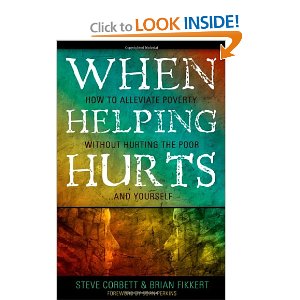
When Helping Hurts – Corbett & Fikkert

The subtitle of this book says it all, “How to alleviate poverty without hurting the poor and yourself”.  Many serve with the best of intentions but those intentions often don’t really help and can often make the problems worse.  This is a must read if your calling is to work with those in poverty regardless if the poverty is found in a third-world, urban city, or rural community.

Growing Up In America (the power of race in the lives of teens) – Christerson, Edwards, & Flory

Kara Powell at Fuller Youth Institute first brought this book to our attention.  If you work in a diverse population and want to understand how race shapes the experiences of our youth then this is a good primer.


Fist Stick Knife Gun – Geoffrey Canada

“If you wonder how a fourteen-year old can shoot another child his own age in the head and then go home to dinner, you need to know you don’t get there in a day, or week, or month.  It takes years of preparation to be willing to commit murder, to be willing to kill or die for a corner, a color, or a leather jacket.” (from inside flap)

This is a challenging book for us to read.  As we turned page after page we realized that we were part of the problem.  We all were.  For anyone  working in community where violence is the norm, this also is a must read.

The Anatomy Of Honesty


We encourage students to explore the role of honesty and confession as a discipline in the Way of Jesus.  Issues relevant to this topic include: What is the cost of dishonesty?  When is it safe to confess?  What if the other person doesn’t accept honesty?

“I haven’t told my parents that I use pot.  I don’t want them to be mad at me.”

“My abuse can’t be as bad as I’ve made it out to be; I must be making things up.”

“If I tell my family about the abuse, I’ll be the black sheep.”

“I don’t want to date that person, but I can’t say ‘no’.”

Honesty, with God, oneself and others, is a central principle of the Way of Jesus.  Secrecy, lies, and avoidance are hallmarks of sin as well as abuse.  In cases of abuse, young people may have been punished or ignored if they spoke out regarding their abuse, and thus learned to suppress their truths.  When the consequence of telling the truth is greater than that of telling lies it makes sense that one would choose the latter of the two.

Students are therefore encouraged to recognize the cost of dishonesty: It alienates them from others and perpetuates the idea that something about them is unacceptable and must be hidden. (Think Adam and Eve)  In contrast honesty is liberating. 

The term “honesty” conveys an ideal that goes beyond just expressing one’s views.  It is meant to convey integrity, the notion of “owning” one’s experiences, and a spiritual sense of acceptance. 

Honesty is a complicated subject, however, as real risks are on the line for the abused student.  Honesty needs to be selective.  It may not be safe, for example, for a young person to confront their abuser. 

One particularly difficult situation is when a student asks the youth worker to hide information from parents or other adults, such as substance abuse.  In such scenarios, it is strongly recommended that the youth worker not keep secrets that would further place the student at risk of hurting themselves or others.  It usually helps to suggest to the student to try talking honestly with the parents, setting a date by which it would happen (such as a few days).  After the specified date, the youth worker then talks with the parents directly to confirm that the information has been shared.  Although there may be a risk of the student dropping out of our program, the greater risk is keeping substance abuse secrets on behalf of the student.  Not only would this reinforce lying about substance abuse, but it puts the youth worker in the position of being an “enabler” and may at times put other people in jeopardy (i.e., driving while under the influence). 

In encouraging students to be honest, a key issue is helping them cope with others’ negative reactions.  It helps to view honesty as a positive goal in and of itself, regardless of how the other person feels.  This is the Way of Jesus.  He routinely spoke truth for the sake of truth and not because He was concerned with how the others would react to it.  There will be growth either way: If the person has a positive reaction, the relationship has increased in closeness; if the person has a negative reaction, the student has learned more about the other person and can proceed accordingly.  Unfortunately, young people too often take a negative reaction to truth not as information about the other person, but as condemnation of themselves.  Preparing for negative reactions is then very important because when we can see that often dishonesty is nothing more than a functional protective skill, developed to keep someone safe from threats, we can move from a place of compassion into the messiness of their world.

Because it can be so difficult for students to be honest, respecting their defenses and locating areas where they are able to make some disclosure is more helpful than trying to convince them reveal when they resist.  Thus, if a student cannot be honest in a particular situation we should use this defensive posture as a thermostat for our relationship with that student.  Resistance can sometimes, often time, be a gift.  It lets us know there is still work to be done to develop a trusting relationship with a hurt and scared student. 

If we are fortunate enough to gain their trust, we dare not do anything to lose it.  It is a sacred thing when a person allows you entrance into their innermost hurt.  We must tread carefully.  Take off your shoes because you are walking on holy ground.  It is here that we have the opportunity to witness the miracle of Jesus making someone whole again.

Personal Inventory (youth pastor life skills series pt.3)


It’s important that we stop from time to time and take a sober look at the that of our life and ministry.  Scripture says to be “sober minded” and that requires a regular honest evaluation of or current state of affairs.  The following is not an exhaustive list but will give you a good idea, if you’re honest, as to whether or not there’s strategic balance in place.  This is essential for avoiding burnout, compassion fatigue, or avoiding a train wreck.  Take a few moments to ask yourself these questions but first ask God to reveal to us our blind spots…

O God,
by your Spirit tell us what we need to hear,
and show us what we ought to do,
to obey Jesus Christ our Savior. Amen.

Anger

How do you feel about the way you handle anger?

How do you feel when anger is directed at you?

What strategies or behaviors help you cope with anger?

Codependence

How do you understand the concept of codependence?

With whom do you have a codependent relationship?

How do these relationships affect your ministry?

What strategies will you use to avoid codependence in the future?

Commitment

What people or things have you been committed to in the past?

What are you committed to now?

How important is the commitment of family and friends to your life and ministry?

How will you support these commitments while serving in ministry?

Depression

How do you recognize that you’re depressed?

How do you respond when you recognize you are depressed?

What strategies or behaviors help you avoid becoming depressed?

What strategies or behaviors help you get over being depressed?

Emotions

How do you cope with dangerous emotions, such as loneliness, anger, and feelings of deprivation?

What strategies and techniques help you maintain an emotional balance?

Fear

When you entered ministry, what aspects of it were you afraid of?

Have your fears about ministry changed since you entered?

What has helped you move past your fear?

Friendship

Before you entered ministry, what were your friendships based on?

Now, what qualities do you look for in a friend?

Are they based on how they can support your ministry goals? Is this good or bad?

What plans do you have for making new, supportive friends and maintaining current friendships?

Fun

How have your fun and relaxing activities changed since you’ve been in ministry?

What do you do now to have fun and relax?

With whom do you have fun?

What role does having fun play in staying balanced in your ministry?

How will you incorporate new activities and hobbies into your life?

Grief

What experience have you had with grief?

How do you cope with feelings of grief now?

To whom do you turn when you experience grief?

Happiness

Since you’ve been in ministry, when have you been the most happy?

What made you happy?

Isolation

Are free time and being alone difficult for you?

Do you have a sense of feeling isolated since entering ministry?

In what ways is your drive to connect with kids driven by a fear of loneliness?

What activities can you pursue, outside of ministry, which will help you avoid isolation?

Motivation

Has your motivation for impacting young people changed since you’ve been in ministry?

What has been your biggest challenge so far?

Do you have a support network to help you through the hard times?

As you move forward in your ministry, what are the most important aspects for you to focus on?

Overwhelmed

What contributes to you feeling overwhelmed?

How risk does feeling overwhelmed pose to your ministry?

What can you do to ensure that you do not feel overwhelmed?

These would be great questions to talk over with your staff/team/volunteers.  We don’t pay enough attention to the well being of those we depend on to make our ministries successful.  Spend some time asking others these questions and in essence you’ll be saying, “I care about you and your well being.”

A WordPress.com Website.

Up ↑