Search

conversations on the fringe

Author

CotF Admin

Angry Urban Youth – Survival Of Fittest


Anger and fear are closely related emotions.  For instance, they both travel through the amygdala in the brain.  They need to be closely connected in our brain because people often have to decide quickly between standing their ground or running away in the face of immediate danger.  That’s the classic fight-or-flight choice.  However, kids growing up in impoverished, urban settings seem to have a strong fight and flight reaction when they perceive a threat.

Imagine you are one of a small group of soldiers conducting a search for enemy troops.  You’re expecting to run into a few of the enemy at a time.  Instead, though, you stumble across a much larger unit.  The enemy greatly outnumbers you.  So now, what do you do?  You must shoot and run at the same time.  That’s the only way to survive.  And what are you feeling?  Both anger and fear.  Your anger helps you fire at the enemy.  Your fear helps you escape.

It’s easy to see that for urban youth survival or defensive behaviors are usually triggered by mixed (and very strong) feelings of fear and anger.  It’s the combination of these two emotions that overwhelms reason.  True, when someone is raging, all you can see is the anger.  But remember the core message: “I’ve got to kill you before you kill me.”  That’s very different than “I want to kill you and get what I want” or “I want to kill you to get you out of my way.”  It’s the fear of death that directs the attack.

Why is this so important?  It means that when helping urban youth we are likely going to have to equip them to deal with their his or her fear as well as his or her anger.  It means that feeling safe is key to overcoming such a reflexive response.  We’re talking about helping youth change how they relate to the world.

Now here’s the dilemma.  Traumatized people (many urban youth have been traumatized) see danger everywhere, anywhere, with everyone.  There is no safe place.  There are no safe people.  Most importantly, they often see danger where there is no danger.  So how can youth quit experiencing survival rage?  The answer, obviously, is complex.  He or she must experience places in their lives that they are safe enough, so he or she can stop running and stop shooting.  Note the words “safe enough” – not perfectly safe.  None of us live in a perfectly safe world.  A safe enough world is one in which you feel no immediate danger to your life and well-being.  A safe enough place is one in which you believe that most people, especially those closest to you, are on your side and want to protect rather than harm you.

That is a beautiful picture of the body of Christ coming alive in these forgotten places.  Providing refuge and sanctuary for weary urban youth simply looking for a place safe enough to stop running.

Bullying (part 1): Profile Of A Bully


This is the first in a series of post exploring the complex issue of bullying in all of its various forms.

The Ways and Means of Bullying


1.            Verbal Bullying (boys & girls equally use this)


2.            Physical Bullying (mostly boys)


3.            Relational Bullying (mostly girls)


4.            Cyber-Bullying (boys & girls equally use this)


The Makeup of a Bully


1.            The Confident Bully (arrogant)

2.            The Social Bully (gossip)

3.            The Detached Bully (dissociative)

4.            The Hyperactive Bully (learning disability)

5.            The Bullied Bully (transference)

6.            The Bunch of Bullies (mob mentality)

7.            The Gang of Bullies (strategic alliance seeking power)


Common Bully Traits


1.            Like to dominate people

2.            Like to use other people to get what they want

3.            Lack of empathy

4.            Self-Seeking

5.            Violence in the absence of adults

6.            View other as weak and potential prey

7.            Uses blame, criticism, and false allegations

8.            Refuse to accept responsibility

9.            Lacks foresight and short term and long term consequences

10.         Crave attention

11.         Is NOT about anger


Contempt


1.            A sense of entitlement – the privilege and right to control, dominate, subjugate, and otherwise abuse another human being

2.            An intolerance toward differences – different equals inferior and thus not worthy of respect

3.            A liberty to exclude – to bar, isolate, and segregate a person deemed not worthy of respect or care

Shame


Shame is both a feeling and a belief.  The feeling is very unpleasant.  People usually talk about noticing their face getting red, wanting to run away but finding themselves virtually paralyzed, being unable to maintain eye contact with anyone, losing all their strength and becoming incredibly weak and powerless, feeling totally exposed to people’s scrutiny and criticism, and collapsing inside into nothingness.  This feeling can be almost intolerable.  That’s why people find ways to make it go away, including converting shame into rage.

The belief that goes with shame is that somehow you are defective.  Broken.  Useless.  Flawed.  Damaged goods.  Ugly.  Worthless.  The deeper the shame, the more this damage seems impossible to mend.  Eventually, powerfully shamed people come to belive these messages:

  • “I am no good.”
  • “I am not good enough.”
  • “I am unlovable.”
  • “I don’t belong.”
  • “I should not exist.”


These are terribly damaging messages.  People who think this way about themselves suffer.  They see themselves as total losers.

Shame affects people’s behaviors as well.  Strongly shamed people tend to avoid others.  That’s because they are sure everyone else will see all their flaws.  They might not want to talk about themselves either, for the same reason. 

Shame has a spiritual component as well.  Deeply shamed people often feel cut off from spiritual support.  Judging themselves as unworthy of love or respect, they think of themselves as God’s mistake.  Consequently , they often feel empty inside.  While we acknowledge that we all have a sin condition, we must remember that we are made in the image of God as well.  We are the Imago Dei.

How Vulnerable Are You To Shame-Based Thinking?

Shame-based thinking is terrifying and dangerous.  If you have shame, you need to recognize how it infiltrates your thinking.  Otherwise, you won’t be able to stop them.  So ask yourself these questions:

  • Do people say that you are way too sensitive?
  • Do people often tell you that they don’t understand why something they said bothered you so much?
  • Do you become furious when people seem to disrespect you?
  • Is your reputation – your good name – something you strongly defend?
  • Do you frequently worry that people think you are stupid, worthless, ugly, or incompetent?
  • Do you get really mad after a moment of embarrassment, for instance, if someone points out something you did wrong?
  • Do you dwell upon put-downs that you believe people have made about you?
  • Do you become irate when people seem to be ignoring you?
  • Is anger, even really strong anger, easier for you to handle than feeling shame?
  • Do you sense that you convert feelings of shame to anger or rage?


Challenge The Validity Of The 5 Core Shame Messages

  • What thoughts do you already have that help you believe in your own essential goodness?
  • What new thoughts could you think that would also help in this way?
  • What do you do that helps you feel you are making a contribution to the world?
  • Who in your life regularly respects you, praises you, and/or appreciates you?
  • How are you kind to and accepting and forgiving of yourself?
  • How else could you become kinder to and more accepting and forgiving of yourself?

*Taken from “Rage – A Step-By-Step Guide To Overcoming Explosive Anger” by Ronald T. Potter-Efron, MSW, PH.D

National Eating Disorder Awareness Week


For more information on and help for eating disorders please visit the following:


National Eating Disorders

National Institute of Mental Health

Something Fishy

Conversations on the Fringe

Mercy Ministries

Balance (youth pastor life skills series pt. 5)


Often, our lives in youth ministry seem like a never-ending whirlwind of activity. With deadlines on the one hand, and student athletic events/school activities on the other, most youth workers are caught in a perpetual motion machine of doing, going, and giving too much. Studies continue to show an unequal division of conjugal labour, a situation most of us understand only too readily. We also tend to feel the dual burden of the pressure to be both “perfect youth workers and husbands/wives” due to the often unrealistic expectations from our faith communities. Juggling multiple roles at home, work, and within the community, youth workers are consummate caretakers, workers, volunteers, and friends. What we aren’t so good at, however, is self-care. If you’re finding it difficult to let go of the guilt and strike up a balance in your life, this is an important article for you.

As youth workers, we tend to dismiss how significant it is to find time for ourselves. Caring for yourself is a necessity, not a privilege. The fallout of a constant go-go-go state of being can be dangerous as failing to make time for ourselves takes its toll, physically, emotionally, and spiritually. Most youth workers, especially paid staff, are quick to cut corners on three of the most critical elements of our health and well-being: diet and exercise, sleep and mental health. However, it is when we’re dealing with a hectic schedule that it is important to think about how much of ourselves are we giving away. Here are some ways to bring your energy back and create a balance between mind and body.

EAT WELL! Make nutritious dinners ahead of time, add apples and carrot sticks to your lunch, and choose cholesterol-reduced recipes for your heart health. Yet, how many of us rely on a constant stream of IV caffeine and chocolate bars for an energy boost while rushing through the daily grind? By heeding this nutritional advice you likely have enough energy to tackle your objectives for the day without the inevitable crash and you’ll be setting an example for the youth you lead. Pack-lunching it is both economical and ensures you’ll be fuelling your mind and body with the proper nutrients it needs to get through the day. Keep a stash of healthy snacks like almonds in your office to keep your blood sugar stable and avoid late-night overeating. Set aside twenty minutes of your lunch for a brisk walk and make a point of stretching once an hour. The effects of short spurts of exercise are more invigorating and longer-lasting than those of your favourite caffeine-loaded latte.

LIGHTS OUT! Fatigue. It’s probably the most oft-cited complaint of the youth worker.  I know. How many times have you skimped on sleep to go to an early morning meeting, or taken that late night call over a break-up after a long day, or had to watch over your own feverish child at 3am? Sleep deprivation causes irritability, diminished concentration, high blood pressure, and depression, so by building up a sleep debt, we are essentially hindering our ability to get things done. Before you affect your efficiency, try to keep your Blackberries away and shut down your computer a few hours before bedtime. Working late into the night not only leaves your brain over-stimulated, but it sets you up for a night of tossing and turning if you’re preoccupied with tomorrow’s to-do list.

INVEST IN YOURSELF! Achieving a work-life balance is one of the biggest challenges we face. When we neglect “me-time”, we run the risk of losing ourselves and stifling our souls. So, it’s time to lose the guilt and invest in a balanced lifestyle. Pencil in a monthly brunch with someone that you don’t have to perform for, or hire a babysitter for an afternoon and indulge in a silent retreat at a local monastery or get an extra hour of sleep. Set yourself free from controlling everything and admit to yourself that God is actually in charge of your ministry and that we are not controller of the stars.. Whether it is a hobby, an exercise or a tempting meal with glass of wine, go through relaxation activities that work best for you.

Instead of allowing the “shoulds” to dictate your schedule, realize that reflection and self-care are necessary in keeping the balance in our “round the clock” lives.  Scheduling some time with a spiritual director can help you become more aware of and practice the presence of God in an otherwise busy life without feeling bad about it. Because, we are not the Savior.  He is in control and He loves us and our students infinitely more than we can or ever could.  Rest in that knowledge today.

What We’re Reading 02/15/2011


The Rise and Fall of the American Teenager – Thomas Hine

This book takes a look at the historical context of the American teenager experience.  Hine gives a great overview of the invention and development of the “adolescent” and their unique roles throughout our country’s history.  It drags at times but if hang in there you will walk away with a better sense of how the current state of affairs facing our youth today came to be.

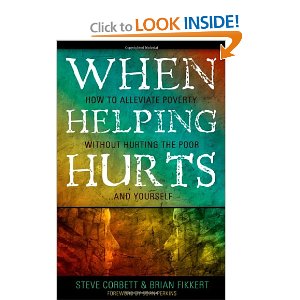
When Helping Hurts – Corbett & Fikkert

The subtitle of this book says it all, “How to alleviate poverty without hurting the poor and yourself”.  Many serve with the best of intentions but those intentions often don’t really help and can often make the problems worse.  This is a must read if your calling is to work with those in poverty regardless if the poverty is found in a third-world, urban city, or rural community.

Growing Up In America (the power of race in the lives of teens) – Christerson, Edwards, & Flory

Kara Powell at Fuller Youth Institute first brought this book to our attention.  If you work in a diverse population and want to understand how race shapes the experiences of our youth then this is a good primer.


Fist Stick Knife Gun – Geoffrey Canada

“If you wonder how a fourteen-year old can shoot another child his own age in the head and then go home to dinner, you need to know you don’t get there in a day, or week, or month.  It takes years of preparation to be willing to commit murder, to be willing to kill or die for a corner, a color, or a leather jacket.” (from inside flap)

This is a challenging book for us to read.  As we turned page after page we realized that we were part of the problem.  We all were.  For anyone  working in community where violence is the norm, this also is a must read.

Interesting Statistics On Cell Phone Usage


Cell Phone Usage
Via: Online IT Degree

Overseeing Boundary Issues Among Volunteers


A boundary is a real or understood line in what is acceptable adult volunteer behavior, what falls within their responsibility and competency. A boundary crossing is a benign deviation from the standards of care that is done so in a way that is not harmful or exploitive to the student. An example of this is to catch a student who trips on your desk on the way out of a mentoring or discipleship meeting or picking up a same gender student in your car and transporting him/her to a safe place when you see that student standing in a blizzard, with no means of transport.  A boundary violation is a significant deviation from standards of care that likely is harmful or exploitive of the student.

Where is the line between a boundary crossing and a boundary violation?  Here are some clues:

  • Is it a repetitive pattern for the volunteer?
  • To what extend is the behavior out of context or the culture in which the  mentoring/discipleship is provided?  Or outside the normal youth ministry frame?
  • Time, place, purpose and intent are key indicators of potential violation (meetings lasting longer for certain students, meetings help outside of normal times, excessive contact between meetings, inappropriate self-disclosure).
  • Meetings lack focus and purpose, adrift or repetitive.
  • There are discrepancies between the adult’s behavior and what’s being reported.
  • Sexual fantasies about students.

What happens for youth ministry volunteers and staff that think a boundary violation is appropriate?  Some people have “magical thinking”, a rescue complex, believing they are the only one who can help a certain student(s).  Some want to be idolized by the students and their peers.  Some use the students to work out their own life issues.  Some need to be needed.  But, most often, the problem is we have an “exception fantasy,” the belief that “I’m different.  I don’t need to abide by that code.”

There are unique concerns also for certain students: those with a history of trauma or abuse; needy and highly dependent individuals; and manipulative students who want to set a quid pro quo between themselves and the youth worker (“I will do something for you if you do something for me”).  Another area of concern  regarding boundaries in ministry ought to be new frontiers with technology: email, texting, Skype, IM, Facebook, Twitter and other social networking sites.

The following are risk management approaches to for staff supervising volunteers in a litigious society and to reduce the potential for boundary violations:

  1. Monitor performance through direct observation of the volunteer or staff member.
  2. Minimize the degree of direct, unsupervised contact between adults and students by clearly defining the limits of the mentoring/discipleship relationship.
  3. Ask “cui bono,” who benefits from this interaction?  Is this in the student’s best interest?  Does this enhance or detract from the spiritual growth of the student?
  4. Documenting questionable conversations and immediate reporting of such information to direct supervisor.
  5. Watch for the warning signs of boundary crossings and violations.
  6. Help the adults to identify the issues, conflicting values, duties, and impact on various supportive others and possible alternative courses of action.
  7. Examine with the adult the reasons for/against a particular action, including what’s in the best interest of the student, and what  are the ministry’s policies and procedures.
  8. Be clear, it is always the adult’s responsibility (not the student’s) to set the boundary.  And we do not blame the student if a boundary violation occurs.  Boundary testing can lead to a boundary violation.  On the other hand, boundary testing is an important part of defining the nature of the relationship.

It is important to broaden the question of boundary violations from a simple “don’t ever do that.”  That’s a simplistic, legalistic approach.  Instead we need to  acknowledge that there are times when there is intentional breaking of confidentiality, such as duty to warn, mandated reporting and the such.

2011 Poll for CotF


A WordPress.com Website.

Up ↑