Search

conversations on the fringe

Author

CotF Admin

Building Bridges (art of connecting pt. 1)


One of the Apostle Paul’s most famous speeches took place at Mars Hill, the Areopagus, in Athens.  He noted that they appeared to be a very religious lot of people due to the sheer number of statues they had to their gods.  In a brilliant move he identified the one statue that was for the “unknown” god and he saw his bridge.  Paul then launched into his epic sermon about the “unknown” God and described our Father to the Greeks.  He masterfully used a technique called bridge building to connect with his audience.

Kids today are completely enmeshed in pop culture.  We could, and should be aware of what is shaping our youth today and much of what we see and hear impacts them more than we know.  But I’m not simply talking about knowing what the newest Katy Perry song is blazing up the charts, what I’m talking about is building a bridge with a language of the soul.

In order to connect with young people they first have to know that you’re interested and trustworthy.  They are most likely already suspicious of adults anyway.  Too often we have an agenda for them and they know that.  It’s what drives them underground many times.  What we’re talking about here is a fundamental belief that we have something in common with the young people we love and hope to reach.

If we say things like, “Teens today are just so much more _________ than we were.” or “Kids today are just lazy and apathetic.” we create distance between us and them.  If we fail to see that they have the same longings that drove us then and drive us now there will be no bridge to walk across.  All we will have to work with is a shallow relationship and all the change we’re likely to affect is shallow compliance to an empty belief system.  We have to find common ground and that common ground should be our shared humanity.

In his ground breaking book Hurt: Inside the World of Today’s Teenagers, Chap Clark identifies six intrinsic longings of all students.  Those longings are: to belong, to matter, to be wanted, to be uniquely ourselves, for a safe place, and to be taken seriously.  Who among us can’t relate to those longings?  I work with drug addicted emerging adults.  Daily they express to me their desire to satisfy those very longings and that much of their behavior was an attempt to do just that.

After some small talk I usually ask a student where in their life do they feel they belong.  Where do they and what do they do that makes them feel like they matter?  Who takes you seriously?  Where are the safest places for you to just be yourself?  These are the questions that matter to students even if they don’t have the language to articulate them.

What the Apostle Paul did was provide an opportunity for those in the crowd to have their longings satisfied in a permanent manner by depending on the One true God.  A civilization that worships everything is an empty civilization desperately searching for meaning.  They apparently hadn’t found that in the many false gods they worshipped.

We have the same opportunity to connect the kids in our community to the very God that Paul preached about to the Greeks but first we must take to time to build a bridge by learning about them and their longings.  There is ALWAYS a bridge and it’s up to us to find it.

The Art of Connecting with Kids on the Fringe


After a workshop I facilitated on working with kids who have been abused, an elderly woman approached me to ask me a question.  She shocked me with the simplicity and depth of the question.  Here’s what she said,

“I love the kids in my community but I don’t know how to connect with the.  I want to reach out but don’t know where to start.  How do you do it?”

I can’t really remember what I told her, probably an overly simplified answer.  I never thought about it to be honest.  I just did what felt natural when reaching out to others.  Plus, I have the added benefit of being pretty simple, if I didn’t know someone I would just introduce myself and talk to them.  It wasn’t until I talked to my wife that she opened my eyes to the idea that for some this comes easy.  For others though it is an anxiety inducing event.  Imaging, you long to reach out to this generation, a generation that is slipping through the cracks right before your very eyes, but the words escape you when needed.  You don’t know how to connect beyond a simple “Hello, how are you today?”

My wife and I talked about this for several hours over the next few days.  We explored what is involved in connecting with these kids that seemed so different from us.  Asking me how I connect with fringe kids is like asking a fish to describe water.  I spend so much time out there on the fringe that it has become normal.   I have developed, over the years, skills to navigate those waters.  But many others haven’t and don’t know where to start.  That’s what this series in aimed at doing, equipping willing adults to connect with a generation where the gap is ever increasing.  Our thoughts are not exhaustive and it is my hope that other voices will chime in with their experience, wisdom, and insight.

We will cover the following over the next several weeks:

  • Bridge Building – How to make that initial contact in a meaningful way?
  • Cultivating a spirit of learning – Curiosity is key in connecting with others.  How do we foster a spirit of curiosity?
  • Law of the Lid – We will explore our preconceived expectations of these fringe kids and how they impede our interactions with them.
  • The Culture of an Individual – Each student is a culture unto themselves.  We will discuss how to explore that culture as it relates to effectively ministering to them.
  • Doing away with my Agenda – How my agenda actually breeds a distrust that is nearly impossible to overcome.
  • What is our Purpose of our Interactions – Moving from meaningless to Meaningful interactions.
  • Checking our Personal Bias at the Door – Often our personal biases impact how well we connect with others, especially those different than us.
  • Finding Common Ground – Discovering shared experiences, dreams, fear, and failures.
  • What is being said without Words – What story are they telling with their clothes, hairstyle, and nonverbal communication.

I hope you will contribute to this discussion because at the end of the day it will close the gap between us and the adolescents that reside in the world beneath…

Disabled Youth and Youth Ministry Gatherings (pt. 6 – marketing to disabled youth and families)


It is not enough for a youth ministry program to simply be ready to serve the Disabled Youth Community.  Rather, the ministry should be proactive in making the Disabled Youth Community aware of it’s accessability.  It is hoped that any ministry targeting  youth with disabilities will be in contact from the outset with any known families or organizations serving them. It would not be a bad idea to contact such agencies to present your willingness to provide ministry opportunities for students and families that are interested, thereby providing a person contact for any of the referring staff.  Of course, the best promotion for your youth group are students with positive experiences of interacting with your youth group. 

Outreach

Outreach material should assure potential students that your ministry gatherings are able to provide accessible, age appropriate youth ministry experiences for persons with a disability.  In addition to stating that accommodations and alternative communication strategies can be provided as needed, you may wish to assure the students with disabilities that they are welcome by including the universal accessibility symbol on your literature or website.


There are many facets of an outreach ministry that can be modified to accommodate the needs of youth with disabilities:

  • Tailor marketing materials, including signage, messages, brochures, website, and yellow pages ads to people with disabilities.  Have all such material state that accommodations are available.
  • If the ministry is committed to serving persons who are deaf or hard of hearing, have a dedicated line for a TDD, and have that TDD number printed on all outreach communications.
  • Provide a sign interpreter if one is available.
  • Create and use mailing lists of organizations that serve people with disabilities.
  • Conduct specialized training and presentations (include students with disabilities in the creation of) for adult volunteers and student leaders.
  • Adapt conference trips, camps, retreats, etc. with the disabled youth in mind.
  • Recruit students with disabilities to the student leader team or hire an intern/staff with a disability.
  • Work with family and support agencies (if necessary) to determine style of learning for students with cognitive impairments.
  • Link with particular disability groups for their expertise and to create staff training opportunities.
  • Be conscious of intersections (e.g. Latino youth who is gay and disabled)

Every ministry should expect to have students for whom they will have to make accommodations, but many of these accommodations will not require extensive or expensive changes.  Perhaps even more importantly, making accommodations and adapting your ministry for youth based on their functional limitation should create and environment in which they can be restored to community.  Often these disabilities carry with them stigmas that separate and isolation occurs.  God’s purpose for all of us is to participate in the restorative activity of God in this world.  This is just one of many ways we can do that.


Disabled Youth and Youth Ministry Gatherings (pt. 5 – physical disabilities)


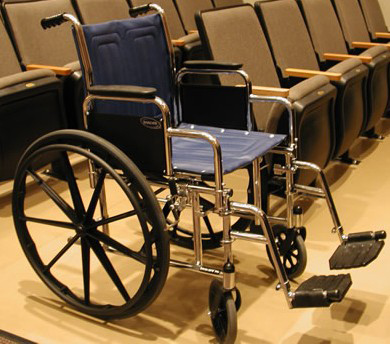
As a general modification to the typical youth ministry gathering, it is necessary to accept different types of body positioning for people with disabilities – some people may need to stand up or move during group, and this activity should not be considered rude.  Youth workers may have to keep group meetings short or schedule frequent breaks to help people who lack physical stamina and make allowances for increased travel time to gatherings for people who use wheelchairs or rely on public transportations. 

Sometimes students with spasticity or other motor problems, such as those associated with quadriplegia, have voluntary or involuntary movements that are sudden and unusual for people not familiar with them.  The youth worker should ensure that group members are not distracted by these movements and understand that they are a normal manifestation of some disabilities.

Youth workers are weary, and rightfully should be, of personal boundary issues (e.g. the side hug with members of the opposite sex).  With a student with a physical disability that sense of what is proper may need to be modified for some in need of assistance, such as adjusting a wheelchair, etc.  When the proper course of assistance is not apparent, ask the student of family for guidance. 

The relative height of the youth worker and disabled student, when seated and talking, may also be an important consideration when working with a student who has a physical disability.  Disproportionately great differences in seated height can hinder communication, especially relative to body language.

If a student with a disability has limited transportation options, the creative youth worker will find ways to minster to them and their family.  Often visiting them at home or at an alternative site is will allow the youth worker to gain valuable insights into a person’s life and ultimately facilitate effective ministry.  It also communicates to the student that they are valued enough to make the effort (we’re hopefully doing this to all students).  Going to the residence of a student with disability also provides invaluable information about that student’s lifestyle, interests, and immediate environmental challenges.

Lastly, we must take into consideration not only the physical limitations the student might have, such as; playing certain games or traveling over certain terrain, but also the psychological and social consequences of the disability.  Issues that may need to be addressed can include impulsivity, social isolation, low self-awareness relative to medical or psychological needs, anger, feelings of hopelessness, or outright fear at living life with the disability.  These issues are hardly new to a seasoned youth worker, nor are the unique to persons with disabilities; however, a disability may exaggerate the severity of these conditions or their impact on your ministry efforts.

Disabled Youth and Youth Ministry Gatherings (pt. 4 – cognitive disabilities)


Accommodations for students with cognitive impairments can include the use of visual cues, mixed media, and the repetition of major points.  Experiential exercises is often effective for a young person with intellectual or cognitive disabilities.  Role-playing works well for a person with developmental disabilities – the process of playing a role themselves helps them to internalize it.

The use of verbal and nonverbal cues will help increase participation and learning for students with cognitive disabilities and make the group run more smoothly for all.  People with cognitive impairments are often impulsive because they lack normal feedback mechanisms.  They do not wish to be impulsive, but lack the ability to regulate this behaviors for themselves.  Therefore, youth workers and peer students should try to provide external cueing until the student can internalize it.  The youth worker and the youth with a disability can design the cues but should keep them simple, such as touching the person’s leg and saying a trigger word (e.g. “interrupting”).  If cues are used in a setting where other people will observe them, alert the group to the cue in a matter of fact way as you would alert them to a use of a dog or the space needed for a wheelchair.  Cueing can be useful for people with other types of disabilities and for other purposes as well.

For students with Ad/HD, it is helpful to establish a maximum length of time, for example, 10 minutes, for presentations.  Another modification to the group setting, which is beneficial for those with developmental disabilities or brain injury (as well as for other students), is to set aside 10 minutes at the end of the meeting to reinforce what was taught during the group.  Such discussion ensures that content is retained and promotes active rather than passive learning.  Some students with cognitive disabilities may have problems with time management and will need to be reminded of group meeting times with an email, call, or text.

It may be necessary to make changes to group learning activities in order to accommodate students with cognitive disabilities.  The use of alternative media to replace traditional learning tools, such as writing and reading, can be very useful.  An individual who has an expressive language disorder may be unfairly judged as uncooperative in participating in group discussions.  However, given the opportunity to express himself or herself through artwork, they may be able to communicate quite a bit.

Mixed media can be incorporated in other ways as well.  As a group learning exercise, students could work together to “draw the narrow way” depicting all the potential stumbling blocks they might expect to encounter as they go back to school.  Students can create memory books or journals (to capture the content of each bible study), or flash cards (or words or pictures) to jog memory of previously taught stories or lessons.

Youth workers should not assume, however, that one student’s experience will be understood by another, particularly in the case of a student with a cognitive disability.  There may be a great deal of shared experience, but the student with a disability may not understand it unless it is made specific and pertinent to their own life.

Disabled Youth and Youth Ministry Gatherings (pt. 3 – hearing impairments)


If a student who is deaf is using an interpreter, group members will need to take turns during discussions.  If several people are talking at the same time, which is not uncommon in youth group meetings, the interpreter will be unable to communicate all the information. 

Requiring people to raise their hands before speaking is a good method to ensure that only one person is speaking at a time, as decided beforehand the order in which students will speak.  In a group setting the student who is deaf will normally be a few seconds or minutes behind the hearing group members; it will usually take longer to interpret a sentence that it took for the person to speak it.  An interpreter must understand the context before interpreting and it may happen that a message will require more signs than words. 

The youth leader should make a point of asking students who are dear for their responses and questions to ensure they are included in the discussion.  If a group lasts more than an hour, two interpreters may be necessary, because interpreting can be very fatiguing.

Not all individuals who are deaf are fluent in sign language, and some, such as a student who is deaf and blind, may have some very particular communication needs.  You can learn about these accommodations simply by talking to the student or their family.

Other considerations:

  • Lighting is important when there is a person who is deaf in a ministry program.  Lighting needs to be sufficient for the person who is deaf to see the interpreter, especially during a movie or video clip when the lights need to be dimmed.
  • Blinds or curtains might need to be closed to minimize glare and enable the person who is deaf to see their interpreter.

Disabled Youth and Youth Ministry Gatherings (pt. 2 – visual impairments)


Youth who are visually impaired need to orient themselves to the group setting in a different manner than those who are sighted.  They will need to understand the group environment, including the position of all the participants and the format or structure of learning activities such as readings, or breakout discussions, so that they can prepare for them in advance.  Other group members should be aware that they cannot use eye contact to communicate with members of the group who are blind, and must rely on different methods such as:

  • To guide a person who is blind, let him or her take your arm.  When encountering steps, curbs, or other obstacles, identify them.
  • When giving directions, be as clear and specific as possible including distance and obvious obstacles.
  • Speak to the person in a normal tone and speed.
  • It’s okay to touch a blind person on the shoulder or arm to convey communication.
  • Don’t touch or play with a working guide dog.
  • Ask the person how much vision he or she has and what communication modality  they are most comfortable using.
  • When leaving a room, say so.

Solutions to access problems:

  • Keep pathways clear and raise low-hanging signs or lights.
  • Use large letter signs and add braille labels to all signs.
  • Keep doors closed or wide open; half open doors are hazardous.
  • Have adaptive equipment available so people who are blind can be full ministry participants (i.e., talking computer, Brailler, etc.).
  • Make oral announcements; don’t depend on postings, electronic or otherwise.
  • Any printed material must be created with larger font size and clear script that is easy to read.
  • Add raised or Braille lettering to elevator control buttons, and install entrance indicators at doorways.
  • Utilize audio communication tools such as podcasts, streaming sermons, etc.
  • Make optical magnifiers and aids available for people with visual impairments.

Disabled Youth and Youth Ministry Gatherings (pt. 1 – overview)


This is the first in a series of posts on youth ministry and youth with disabilities.

While accommodations may be needed to integrate people with disabilities into your youth ministry group settings, it is important to first emphasize what all group members have in common.  Youth workers can emphasize to the group that, despite a wide variety of individual differences, all members are there for the same reasons.  Everyone is present to explore what it means to be a part of God’s unfolding story.

Some groups with a single person who has a visible disability may meet on a regular basis, and disabilities are never discussed.  For other groups, this topic may emerge quickly.  Although it’s not possible to have one rule that applies to all situations, there are some common considerations.  Group members should be oriented to any special considerations that someone with a disability may require in order to effectively participate.  Discussions about an individual’s disability can be quite therapeutic to the one with a disability and likewise educational to those who do not.

Group members (students and adults) can be trained to assist in making accommodations for peers who have disabilities.  It is important, however, to work with nondisabled students to minimize their enabling of or overcompensating for people with disabilities.  It is appropriate to describe to the group the practical aspects of helping the person with a disability, and ask that person to describe what he or she expects people around him or her to do.  It is not uncommon for a person with a disability to ask for assistance when needed however, for a person with less awareness or acceptance of their disability, it is important that peers are aware of what is appropriate help to offer.

When working with people with disabilities in a group setting, youth workers may find it useful to alter group participation expectations, limit the time in group, and work with the group to extend the group learning experience outside the confines of the group meeting.  While the actual accommodations used will likely be tailored to each individual, there are some general strategies (to be discussed in future posts) that have been successful in making the youth group gatherings more accessible for individuals with particular types of disabilities. (i.e., sensory disabilities, cognitive and intellectual disabilities, and physical disabilities)

One simple question:

Are your youth group gatherings welcoming and accessible to youth with disabilities?

Sex and Violence in Youth Ministry


In today’s urban dating culture many express how frustrating and unsatisfied they are because dating patterns encourage young men to be aggressive and young women to be accommodating.

Unfortunately, sex and violence are so intertwined for men that an easy separation is impossible.  Violence is constantly glamorized and sexualized in the urban culture.  The multibillion-dollar pornography industry is the clearest example of how we learn that power and control are tied to sexual arousal.  Even in children’s comic books, popular music and videos, and magazine advertisements, we are constantly reminded that dominating and subduing women is sexy and arousing.  The primary message young men receive is that having sexual access to women and having someone sexually vulnerable to you are the quintessential signs of male power, the epitome of success.  Women are constantly shown accompanying other signs of male power and success, such as fast cars, fancy stereos, money, and guns.

Some of these images portray the women as protesting vigorously at first, then finally giving up and enjoying sex.  In this way young men are taught that women are somehow turned on by the aggression displayed by men.  They may protest or say no at first to protect their reputation, but when they relax and enjoy it, they will grow aroused by the man’s aggression.  If they don’t, then there is something wrong with them.

The result of this training is that men are given permission to use sexual aggression to control women, to deny what they’re doing and then assert that it’s no big deal anyway.  If this goes on long enough it soon becomes the norm.  Young men assume this is the way relations between men and women are naturally.  If there is any guilt or remorse, the young women gets the blame.

  • She’s a tease
  • She’s frigid
  • She’s too emotional
  • She shouldn’t have said that
  • She knew that would make me angry
  • She asked for it
  • She said no but she meant yes
  • If she didn’t want it she wouldn’t dress like that

There are so many layers of aggression, blame, and denial that there is no way for young men to see the impact their thoughts and behaviors have on the women around them.  We can even use the Scriptures to reinforce these ideas that women are inferior, further damaging the inherent dignity and value each young woman has, leading to a fractured image of who she was created to be by God.

  • What role does the church/your ministry have in (inadvertently) reinforcing these false beliefs?
  • When was the last time you had a conversation about male gender training with the young men in your ministry?
  • What are new values/beliefs that need to be taught from Scripture to replace old, harmful beliefs?
  • How can we affirm young males without encouraging male privilege?

A WordPress.com Website.

Up ↑