Search

conversations on the fringe

Category

Teens

Compassion on the Decline Among College Students


The results of research done at the University of Michigan tells us that compassion among college students is declining.   Researchers analyzed data on empathy collected from almost 14,000 college students over the last 30 years.   “We found the biggest drop in empathy after the year 2000,” said Sara Konrath, a researcher at the U-M Institute for Social Research.

You can read the entire article here.

I wonder if there is any correlation between the consumer mindset so prevalent in modern churches today and the decline of the hallmark personality trait of Jesus.  The scriptures regularly address the issue of compassion or the lack thereof.

What are we doing to challenge ourselves and those we serve to grow in compassion?

What are we doing, inadvertently or intentionally, that may be contributing to the decline in empathy and compassion in out young people today?

What does this mean as we do bridge-building work among marginalized communities? (i.e., LGBTQ, Homeless, Substance Abusers, Incarcerated, etc.)

Here’s a great video to get the discussions started about compassion. 

Constance – Mr. J. Medeiros


We know this video was released a couple years ago but it warrants being recycled every now and again because of the powerful message it has.

WARNING:  The content of this video addresses themes of pornography and the internet.  It is useful for beginning discussion with you teens on the long reaching effects of pornography.

Next time you’re tempted to click…remember.

Self Injury Quick Reference


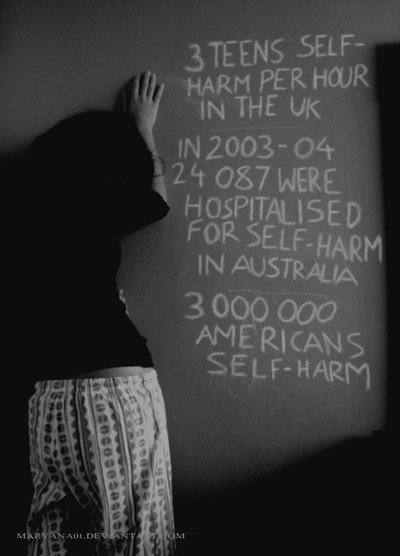
Self-injury is increasingly becoming a recognized problem in youth ministry, and all youth pastors and volunteer staff (in Jr. High, High School, and College Ministries) need a general understanding of self-injury, signs to look out for, and what to do if they become aware that a pupil is self-injuring.

Self-injury in middle and high school students should not be minimized or dismissed as “attention seeking” or “just a fad”. When people take the radical step of harming their bodies, they should be taken seriously and the sources of their stress addressed.” (Walsh, 2006, p.38)

Signs that someone is self-injuring:

People who self-injure often go to great lengths to conceal their injuries so it can be hard to know if a person does self-injure:

  • People who self-injure can seem withdrawn or depressed.
  • You may notice cuts or bruises that are always accompanied by excuses that don’t seem to fit.
  • Many people who self-injure will cut their arms and so they may wear long sleeves, even when it is very hot.
  • Within school pupils who self-injure may look for excuses not to have to wear shorts or short sleeves and therefore may avoid activities like PE or swimming.

Particularly where younger children are concerned it is important to keep a close eye on especially vulnerable pupils such as those with a history of abuse.

General advice for Youth Pastors and volunteers:

  • Listen to the student and try not to show them if you are angry, frustrated or upset. “Adults should learn that the best way to respond to common self-injury is with a ‘low-key, dispassionate demeanor’ and ‘respectful curiosity’ “(Walsh, 2006, p.245)
  • Learn about the difference between self-injury and suicide.
  • If someone tells you they self-injure it means they trust you and are willing to share this very personal problem.
  • Some people will just want to be heard and empathized with. Try not to push them by asking questions that may overwhelm them.

Ensure that your youth ministry has a self-harm policy – guidelines for writing a policy and further information can be found by emailing us at cschaffner@fringeconversations.com.

Things for Youth Pastors and volunteers to remember:

  • Anyone from any walk of life or any age can self-injure, including very young children.Self-injury affects people from all family backgrounds, religions, cultures and demographic groups.
  • Self-injury affects both males and females.
  • People who self-injure can often keep the problem to themselves for a very long time which means opening up to anyone about it can be difficult.
  • You can’t just tell someone who self-injures to stop – it is not that easy.

Bullying: Everyone Plays A Role


Most of the time when we think of bullying we only see two parties as being involved; the bully and the bullied.  Olweus theory suggests that everyone plays a role in bullying.  If this is true then to combat bullying would require a collaborative effort by all parties.  Below is a diagram of the various parties involved in bullying.

After seeing this chart I began noticing the specific roles in the youth in our community.  Bullying is a systemic problem that requires a well thought out approach if we are going to quell this dangerous behavior and it’s consequences.  Below is Olweus’s components for addressing bullying in our communities.

Our churches and ministries can and should take the lead in confronting this behavior and implementing a plan of action to address bullying.

What might it say should a church take the lead in this fight?

What does this communicate to our kids when a community fights for their safety?

How does this impact an adolescents search for identity and autonomy?

Sobering Statistics On Eating Disorders


PREVALENCE

It is estimated that 8 million Americans have an eating disorder – seven million women and one million men One in 200 American women suffers from anorexia

Two to three in 100 American women suffers from bulimia

Nearly half of all Americans personally know someone with an eating disorder (Note: One in five Americans suffers from mental illnesses.)

An estimated 10 – 15% of people with anorexia or bulimia are males

MORTALITY RATES

Eating disorders have the highest mortality rate of any mental illness

A study by the National Association of Anorexia Nervosa and Associated Disorders reported that 5 – 10% of anorexics die within 10 years after contracting the disease; 18-20% of anorexics will be dead after 20 years and only 30 – 40% ever fully recover

The mortality rate associated with anorexia nervosa is 12 times higher than the death rate of ALL causes of death for females 15 – 24 years old. 20% of people suffering from anorexia will prematurely die from complications related to their eating disorder, including suicide and heart problems

ACCESS TO TREATMENT

Only 1 in 10 people with eating disorders receive treatment

About 80% of the girls/women who have accessed care for their eating disorders do not get the intensity of treatment they need to stay in recovery – they are often sent home weeks earlier than the recommended stay

Treatment of an eating disorder in the US ranges from $500 per day to $2,000 per day. The average cost for a month of inpatient treatment is $30,000. It is estimated that individuals with eating disorders need anywhere from 3 – 6 months of inpatient care. Health insurance companies for several reasons do not typically cover the cost of treating eating disorders

The cost of outpatient treatment, including therapy and medical monitoring, can extend to $100,000 or more

ADOLESCENTS

Anorexia is the 3rd most common chronic illness among adolescents

95% of those who have eating disorders are between the ages of 12 and 25

50% of girls between the ages of 11 and 13 see themselves as overweight 80% of 13-year-olds have attempted to lose weight

RACIAL AND ETHNIC MINORITIES

Rates of minorities with eating disorders are similar to those of white women

74% of American Indian girls reported dieting and purging with diet pills

Essence magazine, in 2008, reported that 53.5% of their respondents, African-American females were at risk of an eating disorder

Eating disorders are one of the most common psychological problems facing young women in Japan.

While the previous statistics are sobering there is hope.  This hope is in direct proportion to those who are willing to get involved in the messiness that comes with loving those with an ED and an increase in awareness and education of this horrible condition.  If you have suffered from, or someone you love has suffered from an ED we invite you to join the fight.  We invite you to use your voice and influence. We invite you to share your experience, strength, and hope to those who have lost theirs.  You can do that in one of several ways:

1.)  Leave a comment here.

2.)  Refer your friends and loved ones to this and other websites as an ED resource.

3.)  Utilize your social networking sites (Facebook, Twitter, etc.) and provide links to ED websites.

4.)  Talk to your local school/park districts/churches/etc. and educate them on ED.

5.)  Share your stories of overcoming ED. (If you have a story you’d like to share to inspire others feel free to email us at cschaffner@fringeconversations.com.

The Sun Is Shining


I found this interesting article on the USA Today website and wanted to share it with all of you…

The sun is shining. Flowers are blooming. It’s May, and many of us feel great.

But the thoughts of some vulnerable people grow dark at this seemingly bright time of year. In fact, if there is a season for suicide, springtime is it.

“It’s a new beginning, but some people don’t feel that new beginning,” says Jerry Reed, executive director of the Suicide Prevention Action Network.

Despite popular myths that suicides peak in the winter, particularly around the holidays, close observers have long noticed that suicides actually rise with the return of warmer, longer days, says Richard McCleary, a researcher at the University of California-Irvine.

Aristotle believed suicidal thoughts arose from overheated brains, McCleary says. More modern thinkers offer other biological or social explanations but still see the pattern — at least in some places and among some people.

In one study of 28 countries, McCleary and colleagues found that, overall, suicide deaths were lowest in winter and highest in spring. They reached a peak in May in the Northern Hemisphere.

But the researchers found that the peak existed only in temperate climates — places with distinct seasonal changes in weather. The link was strongest in agricultural societies and weakest in urban areas.

In a separate study of 357,393 suicide deaths in the USA from 1973 to 1985, McCleary found:

•The fewest suicides occurred in December. The most occurred in March, April and May.

•The spring peaks were mostly the results of suicides among males.

•Men older than 80 were at the most pronounced increased springtime risk.

•Boys under 16 showed a reversed pattern: They were most likely to kill themselves in the winter.

McCleary theorizes that vulnerable, isolated people with weak social ties — such as many elderly men — get left out of the spring upswing in social activity. “Maybe you visit your grandparents in winter,” he says. “But you don’t visit them in the spring and summer because you’ve got so many other things to do.”

Psychiatrist Eric Caine of the University of Rochester Medical Center says most people who attempt suicide have long-standing mental health problems that play roles. But springtime changes may be a trigger for some, he says.

For example, he says, “we know there are some people with bipolar disorder who get very energized in the spring.” Some of those still-distressed people may use their renewed vigor to plan and carry out a suicide, he says.

Still, suicide can happen in any month. “We lose 32,000 people a year, and those losses are spread throughout the year,” Reed says.

In fact, in a report in April, the U.S. Centers for Disease Control and Prevention said there was little month-to-month variation in nearly 9,000 suicide deaths reported in 16 (not necessarily representative) states in 2005. The numbers did, however, hint at a drop in winter and a rise in spring.

The bottom line, Reed says, is that some people are at a very low point and need the help of loved ones, friends and professionals right now — no matter what the calendar says or how pleasant the weather seems.

Dangers and Diseases Associated with Eating Disorders


ALL Eating Disorders are Dangerous

It is important to understand that even though a person may be suffering specifically with Anorexia, Bulimia or Compulsive Overeating, it is not uncommon for them to exhibit behaviors from each of the three. It is also not uncommon for one Eating Disorder to be swapped for another (Example: a person who is suffering with Anorexia switches to Bulimia; a persons suffering with Compulsive Overeating switches to Anorexia). This is why it is important to be aware of THE DANGERS BELOW, all of which are risks no matter what Eating Disorder you suffer with.

DO NOT FALL INTO THE TRAP OF THINKING “I ONLY DO THIS A FEW TIMES A MONTH SO I CAN’T BE AT RISK” OR “I DON’T DO THIS ALL THE TIME, I JUST GO THROUGH HEALTHY AND NON-HEALTHY CYCLES” — THAT DOES NOT MEAN YOU ARE NOT IN DANGER, NOR DOES IT MEAN YOU DO NOT SUFFER FROM AN EATING DISORDER.

For a list of eating disorder associated dangers and diseases click here.

What I Learned @ UYWI West Coast Conference 2010


For urban youth workers who want to attract youth away from the seductive life of the streets or the violence and sexual exploitation promoted in much of commercial entertainment, their organizations must stand at the center of effectiveness of the gospel.  Contexts for learning and doing must be communally connected, highly credible and predictable, clearly and consistently structured, and strongly supportive of diverse talents.  Young people must find in these organizations opportunities to bond with each other in a united purpose and a commitment to authenticity.  They must feel secure, knowing they will not be singled out randomly for censure before the group.  Through the sense of belonging that comes from inclusion in such an organization, young people achieve layers of conviction in their ability to be worthy of the calling placed on them.

Unreliability and inconsistency build a way of life in inner cities; effective youth organizations make explicit efforts to follow through with commitments, to provide stable relations with adults, and to be consistent, predictable resources for youth.  Youth workers know, “When people pop in and out of kids’ lives, it leads to a feeling of insecurity; we are trying to give predictability.”  Kids will likely assume that God is not dependable if this is all they see in their daily relationships.  If you want to be a change agent with these kids, you’ve got to interact with them more than one hour a week, and you’ve got to address the whole person.

Stability and consistency are essential to establishing a climate of trust and to making credible claims of caring and support.  Young people are in desperate need of the things that adults can provide, but they learn from the streets and family to trust no one but themselves.  It’s then that we blame them for the way the act in response to our abandonment of them.  The most essential contribution that youth organizations can make to the lives of young people is that of a caring adult, who recognizes a young person as an individual and who serves as a mentor, coach, gentle but firm critic, and advocate.

If you work with youth, this is our calling…

Parents In Denial About Sexually Active Children


In an article from PsychCentral a new study from North Carolina State University shows that many parents think that their children aren’t interested in sex — but that everyone else’s kids are.

The article suggests that many parents have certain beliefs about adolescent sexual behavior that may be, albeit unintentionally, reinforcing certain stereotypes that shape the sexual behavior of their kids.

You can read the full article here.

We want to know more about the stereotypes you hold about teen sexual behavior.  What are the beliefs you have and how did you develop them?  We also want to know if you think they contribute to adolescent sexual behaviors?

A WordPress.com Website.

Up ↑