Search

conversations on the fringe

Category

Teens

Common Conflict Resolution Mistakes


Conventional wisdom (and research) says that good communication can improve relationships, increasing intimacy, trust and support. The converse is also true: poor communication can weaken bonds, creating mistrust and even contempt! The Scriptures also tell us that it is wise to be slow to speak and quick to listen.  Here are some examples of negative and even destructive attitudes and communication patterns that can exacerbate conflict in a relationship. How many of these sounds like something you’d do?

1. Avoiding Conflict Altogether:

Rather than discussing building frustrations in a calm, respectful manner, some people just don’t say anything to their partner until they’re ready to explode, and then blurt it out in an angry, hurtful way. This seems to be the less stressful route—avoiding an argument altogether—but usually causes more stress to both parties, as tensions rise, resentments fester, and a much bigger argument eventually results. It’s much healthier to address and resolve conflict.

2. Being Defensive:

Rather than addressing a partner’s complaints with an objective eye and willingness to understand the other person’s point of view, defensive people steadfastly deny any wrongdoing and work hard to avoid looking at the possibility that they could be contributing to a problem. Denying responsibility may seem to alleviate stress in the short run, but creates long-term problems when partners don’t feel listened to and unresolved conflicts and continue to grow.

3. Overgeneralizing:

When something happens that they don’t like, some blow it out of proportion by making sweeping generalizations. Avoid starting sentences with, “You always…” and “You never…” as in, “You always come home late!” or “You never do what I want to do!” Stop and think about whether or not this is really true. Also, don’t bring up past conflicts to throw the discussion off-topic and stir up more negativity. This stands in the way of true conflict resolution, and increases the level of conflict.

4. Being Right:

It’s damaging to decide that there’s a ‘right’ way to look at things and a ‘wrong’ way to look at things, and that your way of seeing things is right. Don’t demand that your partner see things the same way, and don’t take it as a personal attack if they have a different opinion. Look for a compromise or agreeing to disagree, and remember that there’s not always a ‘right’ or a ‘wrong’, and that two points of view can both be valid.

5. “Psychoanalyzing” / Mind-Reading:

Instead of asking about their partner’s thoughts and feelings, people sometimes decide that they ‘know’ what their partners are thinking and feeling based only on faulty interpretations of their actions—and always assume it’s negative! (For example, deciding a late mate doesn’t care enough to be on time, or that a tired partner is denying sex out of passive-aggressiveness.) This creates hostility and misunderstandings.

 6. Forgetting to Listen:

Some people interrupt, roll their eyes, and rehearse what they’re going to say next instead of truly listening and attempting to understand their partner. This keeps you from seeing their point of view, and keeps your partner from wanting to see yours! Don’t underestimate the importance of really listening and empathizing with the other person!

7. Playing the Blame Game:

Some people handle conflict by criticizing and blaming the other person for the situation. They see admitting any weakness on their own part as a weakening of their credibility, and avoid it at all costs, and even try to shame them for being ‘at fault’. Instead, try to view conflict as an opportunity to analyze the situation objectively, assess the needs of both parties and come up with a solution that helps you both.

8. Trying to ‘Win’ the Argument:

I love it when Dr. Phil says that if people are focused on ‘winning’ the argument, “the relationship loses”! The point of a relationship discussion should be mutual understanding and coming to an agreement or resolution that respects everyone’s needs. If you’re making a case for how wrong the other person is, discounting their feelings, and staying stuck in your point of view, you’re focused in the wrong direction!

9. Making Character Attacks:

Sometimes people take any negative action from a partner and blow it up into a personality flaw. (For example, if a husband leaves his socks lying around, looking it as a character flaw and label him ‘inconsiderate and lazy’, or, if a woman wants to discuss a problem with the relationship, labeling her ‘needy’, ‘controlling’ or ‘too demanding’.) This creates negative perceptions on both sides. Remember to respect the person, even if you don’t like the behavior.

10. Stonewalling:

When one partner wants to discuss troubling issues in the relationship, sometimes people defensively stonewall, or refuse to talk or listen to their partner. These shows disrespect and, in certain situations, even contempt, while at the same time letting the underlying conflict grow. Stonewalling solves nothing, but creates hard feelings and damages relationships. It’s much better to listen and discuss things in a respectful manner.


Ten Strategies for Working with Boys


Research from Nancy Bayley’s at UCLA showed that for boys more than girls there is indeed a direct link to learning difficulties when early childhood touch and attachment doesn’t occur or occurs inconsistently.  In her study, boys who experienced insecure attachment as infants tested out lower in adolescent intellectual skills than girls who did not receive secure attachment.  Although girls can end up with severe problems or diseases, the effect of lack of early attachment is harsher on the learning brains” of boys.  This does not negate the vulnerability of girl but only highlights the vulnerability of boys.

In all this, the bottom line is, often we receive damaged goods into our care.  Michael Gurian, of the Gurian Institute has developed in conjunction with Pat Crum, the director of the Family Nurturing Center of Michigan ten key strategies to promote attachment in boys, which in turn enables an adolescent male to master necessary life skills.

  1. Bursts of Attention – Offer at least five long bursts – many minutes at a time – and many shorter, intermittent periods of undivided attention throughout every day.
  2. Lots of Affirmation – Notice and support the young boy’s efforts and accomplishments verbally and, when appropriate, with other rewards, including physical hugs.
  3. Verbal Mirroring – Describe in words back to the boy what he is doing, “I like how you just put that book back on the shelf.”
  4. Physical Play – Because play is organic learning time for the body and brain, engage in play with boys a number of times per day.
  5. Leadership – In work and play relationships, let boys take the lead as much as you lead him.
  6. Enthusiasm – Infuse your interaction with joy, enthusiasm, and the pleasure of being together.  Find things to do that inspire him and provide an outlet for his often untamed passion.
  7. Predictability – Provide consistent, predictable structure and clear limits.
  8. Self-Management – Implement behavior management strategies that are based on the boy’s developmental stage.  Many adolescent males have not yet developed their cognitive processes that guide decision making.  Understanding this prevents unrealistic expectations.
  9. Choice-Making – Teach boys to make acceptable decisions.  Making the right choice builds that crucial learning center in the brain – the frontal lobe.  Do as little “for” the boy as you can, making him do as much for himself as he can.
  10. Appropriate Discipline – Avoid behavior management strategies designed to frighten boys into right behavior.  If punitive threat worked there would be no repeat offenders in our jails today.  And, often, all that a boy learns from punishment is that he’s a failure.  Identifying his reward system (what motivates him) is a better approach to making lasting change in behavior.

While this is pretty straight forward behavioral stuff there’s a lot of value in the above ten suggestions.  While they are based in science they do not take into account the activity of the Holy Spirit dwelling inside our boys.  This doe not mean they are contradictory, it does mean that there is a variable that we can’t predict or control.  We must add one more important strategy to this list for us to maintain fidelity to our calling; teaching boys to discern the leadings of the Spirit.

If we do all of the above our boys will pray, play and obey in a way that makes a lasting difference in their lives, in our lives, and in the world that they live in.

To Be A Boy


When I pause and watch the teenage age boys in our community, and when I reflect on my own adolescent experience, I begin to understand the struggle that every boy confronts in his efforts to navigate adolescence.  He is faced with a complex set of internal demands: sexual drives, longing to give and receive love, the drive to prove his masculinity – and through it all he doesn’t want to get hurt or rejected.  This is a daunting emotional challenge, because each of these internal demands involves difficult obstacles and consequences if handled wrong.

Boys yearn for emotional connections, but they are allowed very little practice at it.  Most have spent a majority of their free time engaged in competitive games, trying to “man up” and prove themselves superior.  I still see constant teasing and “bashing” during their regular interactions.  As they get older, often the consumption of alcohol allows them a psuedo-sense of emotional connection.

Boys also long for an intimate connection between themselves and girls but developmentally lack the emotional language to connect in a meaningful way.  They often lack the ability to pick up on emotional cue and other non-verbal communications such as facial expressions or body-language.  This impedes their ability to empathetically connect with members of the opposite sex and since modern culture doesn’t encourage boys to cultivate empathy, they misread social and sexual cues from the girls.  This is obviously reiterated in the statement I hear regularly from these boys, “I just don’t understand girls”.  The natural follow statement to that is, “Screw it, let’s just go shoot hoops”, and they remain aloof, never learning to untangle the emotional ball of string they are presented with.

Whether boys become kind, devoted lovers and sexual partners, or heartless and exploitative, depends on the boy, his early experiences with gender roles, his social environment, the kind of “script” that is written for him by his family, peers, and the culture in which he lives.  From his earliest gender experiences, and the adolescent stirrings of lust and curiosity, a boy develops his own sense of what relationships and sexuality are all about.

Reference: Raising Cain by Dan Kindlon Ph.D & Michael Thompson Ph.D

We all play a role in shaping our young men and women.  If you don’t like what you see today we must first accept partial, if not total, responsibility for systematically abandoning them.  We have, in many cases, left them to figure out the adolescent journey by themselves. 

Here are some questions to wrestle with your teams/families.  How you answer them has potential consequences for the youth in your care.

  • Are there older men and women in your church that seek out young people, outside of  “programs”?
  • Are the youth in your community left to fend for themselves the other six days of the week?
  • Do you mainly use other young adults, often not much older than the youth themselves, to provide a majority of spiritual and life guidance?  What are the pro’s and con’s of doing this?
  • Has your pastor lifted up the value of the older generations pouring themselves into the younger generations?  Why or why not?
  • How does your church culture reinforce positive/negative gender stereotypes?
  • Is sexuality openly discussed in your current faith context?  Why or why not?
  • Does how you handle “sex and sexuality” in your church impact young people’s sexual behaviors?  How?

Stigma, Identity, and Risk in LGBT Youth


LGBT youth have the same developmental tasks as their heterosexual peers, but they also face additional challenges in learning to manage a stigmatized identity.  This extra burden puts LGBT youth at increased risk for substance abuse and unsafe sexual behaviors and can intensify psychological distress and risk for suicide.

Studies of more recent generations of lesbian and gay youth suggest that the period between becoming aware of same-sex attraction and self-identifying as lesbian or gay is much shorter that in previous generations exposing them to greater potential social stressors at important developmental stages. (see chart below)

Average Age (Years) Event Onset

Behavior/Identity

Earlier Studies*

More Recent Studies**

Males

Females Males

Females

First awareness of same-sex attraction

13

14-16 9

10

First same-sex experience

15 20 13-14

14-15

First self-identified as lesbian or gay

19-21 21-23 14-16

15-16

From “A Providers Introduction to Substance Abuse Treatment for LGBT Individuals” www.samhsa.gov

*Studies of adults who remembered their experiences as children and adolescents

** Studies of adolescents who describe their experiences as they were happening or right after they happened

Although people may be more aware that an adolescent may be gay, they are generally no more tolerant and may even be less accepting of homosexuality in adolescents.  In fact, violence and harassment against LGBT youth appear to be increasing.  For those youth who choose to self-disclose or are found out, coping with this stressful life event is most challenging.  Adolescents at this point in their lives have not developed coping strategies and are more likely than adults to respond poorly to these stressors.  These youth must adapt to living in a hostile environment and learn how to find safety.  Combine this with other intersections such as; race, ethnicity, socio-economic, etc. and you have a kids on the fringe.

So my question is this…

What would an appropriate response from youth ministry look like to the problems LGBT youth face today?

Andrew Marin, founder of the Marin Foundation has been working to build bridges between the LGBT communities and the church.  I have the privilege of calling him my friend and support his work around the world.  If you’re not familiar with the work the Marin Foundation is doing you can visit their website here.

Andrew wrote a book last year entitled, “Love is an Orientation“.  In it he says this,

“We’re not called to posit theories that support our assumptions.  We’re not called to speculate about genetics or developmental experiences or spiritual oppression in faceless groups of other people.  We’re called to build bridges informed by the Scriptures and empowered by the Spirit.  We’re called to let a just God be the judge of his creation.  We’re called to let the Holy Spirit whisper truth into each person’s heart.  And we’re called to show love unconditionally, tangibly, measurably.”

So how do we move into that?  How do we move past our fears and judgements?  What will it take?

Roles Of Children In Dysfunctional Families


When we think of a DYSFUNCTIONAL FAMILY it’s like a machine which is run by gears with weak or cracked cogs. As one cog breaks it puts more stress on the other cogs of that gear and then on other cogs of other gears. Eventually the whole machine shuts down. DYSFUNCTION means just that: unable to FUNCTION properly. Each individual in a family is like a gear and each perceived responsibility is like the cog. The main or original DYSFUNCTIONAL person may show their DYSFUNCTION in many ways: they may have difficulty coping, may yell, rage, isolate, verbally abuse, physically abuse, chemically abuse, gamble, cheat on their partner, threaten to leave, threaten suicide, give the silent treatment etc. This causes everyone to walk on eggshells and lots of CRAZY MAKING goes on.

The grown-ups or parent figures assume two roles: DYSFUNCTIONAL PERSON and the other plays the ENABLER. You decide which applies to your situation. In some cases the mother may be the DYSFUNCTIONAL PERSON and father the ENABLER and visa versa in other cases. Both roles play off each other. The DYSFUNCTIONAL PERSON is trapped in self delusion. They actually believe that they are justified in what they do and how they act. They have very distorted thinking. They seem to find ways to strengthen their own credibility and weaken everyone else’s in the family. Therefore, if anyone were to tell someone outside the family who the DYSFUNCTIONAL PERSON really was, many people would not really believe them because of the way they present themselves to the public.

The ENABLER also has distorted thinking and believes that they are basically responsible for the other person’s DYSFUNCTION. And they are therefore very fixated on the other person and often times appear to be uncaring or neglectful toward their children. But this person has only so much energy to go around and most of it goes toward the “squeakiest wheel,” the DYSFUNCTIONAL PERSON.

The children in the family may play more than one role at a time or only one. Each role gives the child their basic identity and shapes their script and future. The role also gives them their sense of worth and value. So they too get trapped in their roles and also develop distorted thought patterning. This is how the tapes, to be carried through life, about who we are and who we will become, begin to develop. Each role carries some aspect about the DYSFUNCTION of the whole family.

The following suggestions are for dealing with some of the typical behaviors of children from dysfunctional families.

A. “The Hero” is……always volunteering, very responsible and manifests a drive, almost a compulsion, to be on top. These students have an insatiable need for attention and approval and are often class leaders who are parental or bossy in their relationships with other peers. They tend to be very disappointed when losing, superior or snobbish when winning, and are frequently labeled “teacher’s pet” by other students.

Recommended adult behaviors:

1. Give attention at times when the student is not achieving.
2. Validate the student’s intrinsic worth, and try to separate his or her feelings or self-worth from achievements.
3. Let the student know it’s OK to make a mistake.

Adult behaviors to avoid:

1. Letting the student monopolize conversations or always be the first to answer a question or to volunteer.
2. Letting the student validate his or her self-worth by achieving.

B. “The Scapegoat”……tends to blame others, makes strong peer alliances, and is often disciplined by teachers or other adults for breaking rules. The rebel tends to talk back, neglects work, and can be very frustrating to work with. The typical adult comments are “I don’t know what to do with that kid,” or “I’ve tried everything!”

Recommended adult behaviors:

1. Let the student know when the behavior is inappropriate.
2. Give the student strokes whenever he or she takes responsibility for something.
3. Attempt to develop empathy for the student. This prevents adults from being angry or getting defensive.
4. Set limits. Give clear explanations of the student’s responsibilities and clear choices and consequences.

Adult Behaviors to avoid:

1. Feeling sorry for the student.
2. Treating the student as special and giving him/her more power.
3. Agreeing with the student’s complaints about other students or other adults.
4. Taking the student’s behavior personally or as a sign of one’s own incompetence as a teacher, counselor, pastor, volunteer, etc.

C. “The Mascot”……

tends to be funny or distracting and gets attention frequently. This student likes to hide, make faces, pull the chair out from someone else, stick chalk in the erasers and otherwise act out.

Recommended adult behaviors:

1. It’s OK to get appropriately angry at the “class clown’s” behavior.
2. Try to give the student a job in the class with some importance and responsibility.
3. Hold him/her accountable.
4. Encourage responsible behavior.
5. Encourage appropriate sense of humor.
6. Insist on eye contact.

Adult behaviors to avoid:

1. Do not try to “laugh with” the clown. He/she will not understand it.
2. Remember the class clown’s underlying fear.
3. Remember the underlying depression this behavior often masks.

D. “The Lost Child”……

often gets lost in the shuffle. Adults sometimes can’t remember the student’s name because he/she is so quiet and is seldom a behavior problem. These students tend to have few, if any, friends and like to work alone in group settings, often in very creative though non-verbal ways. Other students either leave them alone or tend to tease them about never getting involved.

Recommended adult behaviors:

1. Every adult should take an inventory. If there are names that you consistently cannot remember, that may be a lonely or lost student.
2. Try to pick on their personal interests and often they will begin to talk.
3. Try some contact on a one-to-one basis. Find out who they are!
4. Point out and encourage the student’s strengths, talents and creativity.
5. Use touch slowly.
6. Help the student to be in a relationship. There will usually be one student they are drawn to in the class.
7. Encourage working in small groups, two’s and three’s, to build trust and confidence.

Adult behaviors to avoid:

1. Do not let the student off the hook by allowing him/her to remain silent or never calling on them.
2. Do not let other kids take care of the student by talking or answering for him/her.

E. “The Caretaker”……

tends to focus on helping other people feel better. They are motherly in their relationships to other students. This is usually a “liked” child by friends and adults. This student’s sensitivity is noticeable.

Recommended adult behaviors:

1. Assist the student on focusing on him/herself.
2. Ask the student to identify their desires for themselves.
3. Help this kids learn to play.
4. When they are assisting another, ask them to identify how they are feeling about the other’s pain.
5. Validate the student’s intrinsic worth, separating their worth from their care-taking.

Adult behaviors to avoid:

1. Calling on these students to focus on another’s emotional pain.

sources:

http://www.thechildrensplaceprogram.org

http://www.samhsa.org


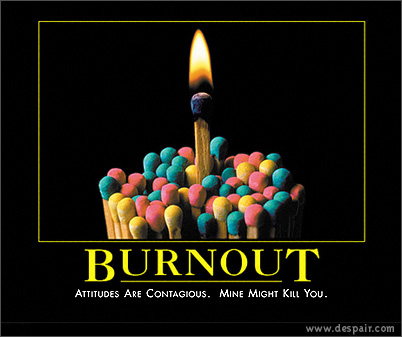
Coping With Burnout


For youth workers (paid or volunteer), there can be nothing more frightening than the belief that something terrible might happen to a student that you have invested so much time and energy in.  As a substance abuse counselor, I struggle with the reality that one day someone could overdose and die regardless of how much I try to help.  I live with the often frantic sense that “there had to be something I could have done!”

Never knowing when crisis or tragedy might happen we learn to be hypervigilant…always on our guard.  Is today the day I get the call?  Will it be a car accident?  A school shooting?  Suicide?

Sometimes we feel as though we’re in a lethal game of chess with our kids, always trying to be two moves ahead and aware of the possible counter-moves.  This type of hypervigilance can be exhausting.

As a youth worker of At-risk kids, you may find yourself on a constant emotional rollercoaster with no scheduled stops.  In times of crisis we often set aside our own needs entirely and as a result we risk burnout and compassion fatigue.  Be reassured that the time for balance will come if you’re intentional, but there are some things you can do now.

1.  Seek supportive relationships – This will be essential in avoiding burnout.  Build a network of friends, family, and peers who are kind and encouraging.  Don’t isolate yourself in fear or shame.  Seek respite in these relationships from the intensity of the situations your kids are facing.

2.  Develop health-conscious behaviors– This is three-fold as I see it; rest, exercise, nutrition.  Get adequate sleep, avoid snack foods, take a brisk walk daily.  All three are important for emotional stability and combating low levels of energy.

3.  Have fun – A life that is overrun with doom and gloom and that is absent of joy is not one worth having.  We need recreation.  It brings balance.  Laughter releases endorphins which cause us to feel pleasure in our brain.  Often, when working with At-risk kids we lose our ability to laugh.  The best cure for a “lost laugh” is a “Three Stooges-I Love Lucy-Gilligan’s Island” marathon.

4.  Spiritual retreat – It is essential that we create time for retreat.  We should develop the discipline, schedule in our calendars, add to our budgets, the practice of seeking spiritual direction.  There’s something magical and refreshing about pulling away from the insanity and seeking Abba’s face in solitude or with a spiritual companion.  Jesus would often pull away after a busy day of ministry to connect with his Father.  He would travel across the lake, go up the mountain, or into the garden to pray.

This simple act breaks us of our dependency on ourselves.  It causes us to reflect on whether or not we are growing a savior complex.  Have I, with the best intentions, placed myself in the position of God?  I have found that when my levels are the lowest it’s because I have been the one trying to “save” and “fix” kids myself.  Being God is hard work and I’m just not cut out for it.

If we expect to be in this for the long-haul we must pace ourselves.  It is an intentional discipline that we need help in cultivating.  I am thankful for the other youth workers God has placed in my life that help me find balance.  They constantly remind me I am not God.  And, we laugh a lot.  As a result we have a better chance of loving and ministering to the kids in our community out of an overflow instead of a deficiency.

2nd Annual Abbey’s Walk


In March of 2009, our community lost one of our young people, Abbey, to a drug addiction. The loss has been disheartening. Since this loss, it has become our goal to prevent other friends and families from suffering a similar loss. Abbey’s family and friends have put together a walk to raise funds to be donated to local treatment providers. The money raised is then used to develop resources to help people in our community in overcoming addiction.

This year, you may choose to walk in memory of someone, or in support of someone dealing with addiction. To participate in this year’s walk click here to register.

The walk will be held on the 3rd Saturday of September (Sept. 18th).
The walk will begin at 9:00 a.m., and will take place at the Pekin Park Lagoon.
There will be a walk fee of $15.  $20 if you would like a t-shirt.  $5 for window decals.

If your community has a campaign that addresses the issue of substance abuse I would encourage you to participate.  If you have been touched by substance abuse, please donate your time, resources, and financial support.

Sometimes It Blows Up In Your Face


You pour your life into students, let someone else pour some life into you. At the National Youth Workers Convention they create an environment where times of worship, seminar speakers, and communicators pour some life back into you. Learn more at http://nywc.com/

French Gay Friendly McDonald’s Commercial Causing Quite A Stir


There’s a new viral ad for McDonald’s in France that’s causing quite a stir.  What are you’re thoughts on the video?  What do you like about the ad?  What do you dislike about the ad?  How can this stimulate healthy discussion about the issue of LGBTQ teens?

A WordPress.com Website.

Up ↑