Search

conversations on the fringe

Category

Teens

A Prayer When I Feel Hated


Loving God, you made me who I am.
I praise you and I love you, for I am wonderfully made,
in your own image.

But when people make fun of me,
I feel hurt and embarrassed and even ashamed.
So please God, help me remember my own goodness,
which lies in you.
Help me remember my dignity,
which you gave me when I was conceived.
Help me remember that I can live a life of love.
Because you created my heart.

Be with me when people make fun of me,
and help me to respond how you would want me to,
in a love that respects other, but also respects me.
Help me find friends who love me for who I am.
Help me, most of all, to be a loving person.

And God, help me remember that Jesus loves me.
For he was seen as an outcast, too.
He was misunderstood, too.
He was beaten and spat upon.
Jesus understands me, and loves me with a special love,
because of the way you made me.

And when I am feeling lonely,
help me remember that Jesus welcomed everyone as a friend.
Jesus reminded everyone that God loved them.
And Jesus encouraged everyone to embrace their dignity,
even when others were blind to that dignity.
Jesus loved everyone with the love that you gave him.
And he loves me, too.

One more thing, God:
Help me remember that nothing is impossible with you,
that you have a way of making things better,
that you can find a way of love for me,
even if I can’t see it right now.
Help me remember all these things in the heart you created,
loving God. Amen.

James Martin, SJ, is a Jesuit priest and the author of The Jesuit Guide to (Almost) Everything and My Life with the Saints.

Would Jesus Sit In The Smoking Section With A Gay Huckleberry Finn?


In Mark Twain’s novel The Adventures of Huckleberry Finn, Huck wrestles through a moral dilemma about demonstrating true friendship to a stigmatized person of his day – a man who bore a dual stigma of being black in a racist society and slavery in an exploitative one.  To help his friend Jim escape meant violating not only human law but also divine law as it had been interpreted in that society, because to help a slave escape meant stealing property from his or her owner.  Not only did Huck worry about God and about going to hell for obeying the impulse of his heart, but he also worried about what people would think of him.  “It would get all around that Huck Finn helped a negro to et his freedom; and if I was eer to see anybody from that town again I’d be ready to get down and lick his boots for shame.”  But such worries did not prevent him from doing what he knew to be right.

Jesus knew all about stigma.  He never hesitated to move among the oppressed people of his day, including the most despised social outcasts.  He went about his ministry without worrying about what others would say about his character, his motives, his righteousness.  “If this man were a prophet,” said some, “he would have known who and what kind of woman this is who is touching him – that she is a sinner” (Luke 7:39).  He also ignored the insinuations and seemed unconcerned about his reputation among the townspeople.  “Look,” said those who criticized Jesus and passed judgment on him, “a glutton and a drunkard, a friend of tax collectors and sinners!” (Luke 7:34).

Jesus was not afraid of being called names, nor was he afraid to be identified with the most hated, discredited people in the society in which he lived.  He cared about them.  He felt their pain, knew their hunger and thirst, recognized their humanity, saw the image of God in them.  In short, he loved them.  And he longed to minister to them – even if others misunderstood and vilified him.  Name calling was as common then as it is now, and to label someone with a scornful term identified with a stigmatized group has always been considered an extreme insult.  Today, terms of insult are frequently associated with homosexuality – “queer,” “fag,” “dyke,” “lezbo.”

During the time that Jesus walked the earth, the stigmatized people were the Samaritans, and the term of insult was “You Samaritan!”  Samaritans were half-breed leftovers from previous generations when God’s people were enslaved, raped, and plundered by the Assyrians.  Not only were they bi-racial and therefore not clean, they were reminders of the horrible atrocities committed against the Israelites during that time.  That’s what is so powerful about the story of the Good Samaritan.  The hero in the story was one of the most despised people in all of the New Testament yet Jesus refused to dissociate himself from this disdained group of people that he loved.

Have our youth ministries become sanctified segregation machines?  Why is it that most of the churches in the suburbs are all white?  Why don’t diverse inner-city churches adopt-a-block in affluent neighborhoods?  Why do LGBTQ students still avoid the church like the plague?

We should long for the day when people call us “faggots,” and “cutters,” and accuse us of having AIDS because of the company we keep and we aren’t compelled to defend ourselves because we don’t care what man has to say about us.  I think if Jesus came back today you might find him hanging out at a Gay-Straight Alliance meeting or with kids who were at a skittles party the night before or out on the corner with all the smokers.  You would probably be able to smell cigarette smoke on his robe so he’d be accused of being a smoker too…

The Anatomy Of Honesty


We encourage students to explore the role of honesty and confession as a discipline in the Way of Jesus.  Issues relevant to this topic include: What is the cost of dishonesty?  When is it safe to confess?  What if the other person doesn’t accept honesty?

“I haven’t told my parents that I use pot.  I don’t want them to be mad at me.”

“My abuse can’t be as bad as I’ve made it out to be; I must be making things up.”

“If I tell my family about the abuse, I’ll be the black sheep.”

“I don’t want to date that person, but I can’t say ‘no’.”

Honesty, with God, oneself and others, is a central principle of the Way of Jesus.  Secrecy, lies, and avoidance are hallmarks of sin as well as abuse.  In cases of abuse, young people may have been punished or ignored if they spoke out regarding their abuse, and thus learned to suppress their truths.  When the consequence of telling the truth is greater than that of telling lies it makes sense that one would choose the latter of the two.

Students are therefore encouraged to recognize the cost of dishonesty: It alienates them from others and perpetuates the idea that something about them is unacceptable and must be hidden. (Think Adam and Eve)  In contrast honesty is liberating. 

The term “honesty” conveys an ideal that goes beyond just expressing one’s views.  It is meant to convey integrity, the notion of “owning” one’s experiences, and a spiritual sense of acceptance. 

Honesty is a complicated subject, however, as real risks are on the line for the abused student.  Honesty needs to be selective.  It may not be safe, for example, for a young person to confront their abuser. 

One particularly difficult situation is when a student asks the youth worker to hide information from parents or other adults, such as substance abuse.  In such scenarios, it is strongly recommended that the youth worker not keep secrets that would further place the student at risk of hurting themselves or others.  It usually helps to suggest to the student to try talking honestly with the parents, setting a date by which it would happen (such as a few days).  After the specified date, the youth worker then talks with the parents directly to confirm that the information has been shared.  Although there may be a risk of the student dropping out of our program, the greater risk is keeping substance abuse secrets on behalf of the student.  Not only would this reinforce lying about substance abuse, but it puts the youth worker in the position of being an “enabler” and may at times put other people in jeopardy (i.e., driving while under the influence). 

In encouraging students to be honest, a key issue is helping them cope with others’ negative reactions.  It helps to view honesty as a positive goal in and of itself, regardless of how the other person feels.  This is the Way of Jesus.  He routinely spoke truth for the sake of truth and not because He was concerned with how the others would react to it.  There will be growth either way: If the person has a positive reaction, the relationship has increased in closeness; if the person has a negative reaction, the student has learned more about the other person and can proceed accordingly.  Unfortunately, young people too often take a negative reaction to truth not as information about the other person, but as condemnation of themselves.  Preparing for negative reactions is then very important because when we can see that often dishonesty is nothing more than a functional protective skill, developed to keep someone safe from threats, we can move from a place of compassion into the messiness of their world.

Because it can be so difficult for students to be honest, respecting their defenses and locating areas where they are able to make some disclosure is more helpful than trying to convince them reveal when they resist.  Thus, if a student cannot be honest in a particular situation we should use this defensive posture as a thermostat for our relationship with that student.  Resistance can sometimes, often time, be a gift.  It lets us know there is still work to be done to develop a trusting relationship with a hurt and scared student. 

If we are fortunate enough to gain their trust, we dare not do anything to lose it.  It is a sacred thing when a person allows you entrance into their innermost hurt.  We must tread carefully.  Take off your shoes because you are walking on holy ground.  It is here that we have the opportunity to witness the miracle of Jesus making someone whole again.

The Importance Of Harmonious Peer Relationship


Just how important is it for human beings to establish and maintain harmonious relationships with their peers?  Apparently it is very important.  One recent review of more than 30 studies revealed that youngsters who had been rejected by their peers during grade school are much more likely that those who had enjoyed good peer relations to drop out of school, to become involved in delinquent or criminal activities, and to display serious psychological difficulties later in adolescence and young adulthood. (Parker & Asher, 1987; see also Kupersmidt & Coie, 1990)  So merely having contact with peer associates is not enough to ensure normal developmental outcomes; getting along with peers in important too.

How can we measure children’s peer acceptance and identify those youth who are at risk of experiencing adverse outcomes later in life?  Researchers generally rely on sociometric techniques. In a sociometric survey each child in a peer group might be asked to name several peers whom she likes and several whom she dislikes; or, alternatively, each child might be asked to rate all peer-group members in terms of their desirability as companions.  By analyzing the choices that kids make, it is usually possible to classify each group member into one of the following categories: (1) popular children (those liked by most peers and rejected by few), (2) amiables, or “accepteds” (those who are chosen less frequently than “populars” but who receive a clear preponderance of positive nominations), (3) neglectees (children who are rarely nominated as liked or disliked and who seem almost invisible to peers), and (4) rejectees (those who are disliked by many peers and accepted by few).*  And it seems that rejected children fall in roughly equal numbers into two distinct subcategories: those who are highly and inappropriately aggressive (aggressive rejectees) and others who are anxious, low in self-esteem, and inclined to withdraw from peer contacts (nonaggressive rejectees) (Boivin & Begin, 1989, French, 1988).

Notice that both neglectees and rejectees are low in peer acceptance.  Yet it is not nearly as bad to be ignored by one’s peers as to be rejected by them.  Neglectees do not feel as lonely as rejectees do (Asher & Wheeler, 1985), and they are much more likely than rejected children to eventually become accepted or even popular should they enter a new class or new peer group (Coie & Dodge, 1983).  In addition, it is the rejected child, particularly the aggressive rejectee, who faces the greater risk of displaying deviant, antisocial behavior or other serious adjustment problems later in life (Asher & Coie, 1990; Kupersmidt & Coie, 1990; Roff, 1974).

All of this underlies the importance of community.  Not psuedo-community but genuine community.  See, Jesus came to bring reconciliation.  He came to bring it to those who have been rejected and neglected.  His chief aim was to reconcile them first to Himself and then to community with others.  This is why we, as God’s people, must actively seek out relationships with those marginalized.  It is because of God’s original design for community that this is how He choses to be known, through relationships.

We have the task of redefining what is “acceptable” or the “norm” and what is “valuable” when it comes to relational capital.  Those factors, such as; attractiveness, economic status, and position do not determine placement in God’s relational economy.  We must fight against adopting the worlds class system and embrace those who have been cast off as not having value because it is what God did with us.  Our families and ministries should reflect God’s heart for all of mankind.  If it doesn’t then we’ve missed the mark.

Mad As Hell


Conversations on the Fringe vehemently opposes bullying of any kind.  When what we say and do to another person causes so much pain and suffering that the only option they can come up with is to end their own life, that is a travesty!  We mourn the loss of Billy Lucas 15, Asher Brown 13, Seth Walsh 13, Tyler Clementi 19, Raymond Chase 18.   All took their life for fear of being ridiculed, bullied, or marginalized.  This cannot be tolerated and CotF will stand with the other voices denouncing these AVOIDABLE deaths.

Please watch the following videos and share them with your friends.

Suicide Grief: Living in the Aftermath of a Suicide


A student’s suicide can be emotionally devastating. Using and modeling healthy coping strategies — such as seeking support — will help you and others on the journey to healing and acceptance.

When a student dies, your grief may be heart-wrenching. When a student commits suicide, your reaction may be more complicated. Overwhelming emotions may leave you reeling — and you may be consumed by guilt, wondering if you could have done something to prevent this young person’s death. As you face life after a student’s suicide, remember that you don’t have to go through it alone.

Brace for powerful emotions

Suicide can trigger intense emotions. For example:

  • Shock. Disbelief and emotional numbness may set in. You may think that student’s suicide couldn’t possibly be real.
  • Anger. You may be angry with your student for abandoning their family, ministry, and friends or for leaving a legacy of grief — or angry with yourself or others for missing clues about suicidal intentions.
  • Guilt. You may replay “what if” and “if only” scenarios in your mind, blaming yourself for your student’s death.
  • Despair. You may be gripped by sadness, depression and a sense of defeat or hopelessness. You may have a physical collapse or even consider suicide yourself.

You may continue to experience intense reactions during the weeks and months after a student’s suicide — including nightmares, flashbacks, difficulty concentrating, social withdrawal and loss of interest in usual activities — especially if you were the last person they called or you witnessed or discovered the suicide.

Adopt healthy coping strategies

The aftermath of a student’s suicide can be physically and emotionally exhausting. As you work through your grief and help others with theirs, be careful to protect your own well-being.

  • Keep in touch. Reach out to family, friends and spiritual leaders for comfort, understanding and healing. Surround yourself with people who are willing to listen when you need to talk, as well as those who will simply offer a shoulder to lean on when you’d rather be silent.
  • Grieve in your own way. Do what’s right for you, not necessarily someone else. If you find it too painful to visit your student’s gravesite or share the details of their death, wait until you’re ready.  It is not healthy to be “Superman” or “Superwoman”.
  • Be prepared for painful reminders. Anniversaries, holidays and other special occasions can be painful reminders of a student’s suicide. Don’t chide yourself for being sad or mournful. Instead, consider changing or suspending ministry meetings that are too painful to continue.
  • Don’t rush yourself. Losing someone to suicide is a tremendous blow, and healing must occur at its own pace. Don’t be hurried by anyone else’s expectations that it’s been “long enough.”
  • Expect setbacks. Some days will be better than others, even years after the suicide — and that’s OK. Healing doesn’t often happen in a straight line.
  • Consider a support group for families/friends affected by suicide. Sharing your story with others who are experiencing the same type of grief may help you find a sense of purpose or strength.

Suicide grief: Healing after a student’s suicide

Know when to seek professional help

If you experience intense or unrelenting anguish or physical problems, consider asking your doctor or mental health provider for help. Seeking professional help is especially important if you think you might be depressed or you have recurring thoughts of suicide. Keep in mind that unresolved grief can turn into complicated grief, where painful emotions are so long lasting and severe that you have trouble resuming your own life.

Depending on the circumstances, you might benefit from individual or family therapy — either to get you through the worst of the crisis or to help you adjust to life after the suicide. Medication can be helpful in some cases, too.

Face the future with a sense of peace

In the aftermath of a student’s suicide, you may feel like you can’t continue in ministry or that you’ll never enjoy life again. In truth, you may always wonder why it happened — and reminders may trigger painful feelings even years later. Eventually, however, the raw intensity of your grief will fade. The tragedy of the suicide won’t dominate your days and nights. Understanding the complicated legacy of suicide and God, through the Holy Spirit, will guide us through the palpable grief will help you find peace and healing, without forgetting you’re your student.

Basic Brain Function and Emotional Hijacking


Understanding a few basics of what is happening in the brain of an adolescent prior to an impulsive and destructive behavior (i.e., self-injury, fighting, etc.) will help you walk through the lies, negative thoughts, and emotions that often drive these behaviors.

The goal is to teach them when they are being hooked by lies from the enemy, self-doubt, and old negative patterns of behaviors and thought so they can step back, get centered, and make life-giving choices instead of life-stealing choices.  Choices that honor God and support their value as created beings.

The brain is divided into three major areas:

  1. The Cerebral Cortex
  2. The Limbic System, and
  3. The Brainstem
  • The Cerebral Cortex is out thinking brain.  It is the part of the brain that surrounds the Limbic System and fills the upper part of the skull.  The Cerebral Cortex helps us to reason, reflect on our experiences and consider various options for responding.  This part of the brain enables us to put words to our feelings, to settle ourselves when we are upset, and to make intentional choices.
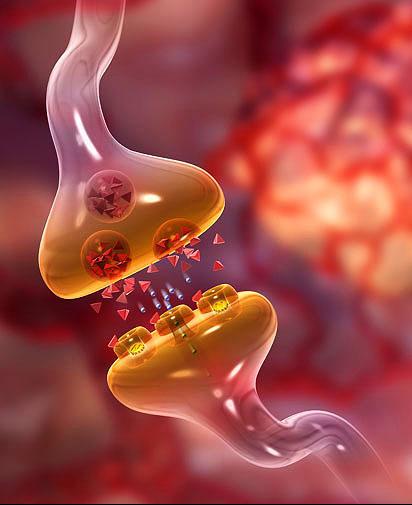
  • The Limbic System is our feeling brain.  It surrounds the brain stem, and is the primary center for storage and processing of emotional memory.  It is the key player in the triggering of the brain’s alarm system (fight or flight) when we perceive threat or danger.  It is a place of no words, no thoughts.
  • The Brainstem is the automatic brain.  It surrounds the top of the spinal cord and is responsible for regulating basic life functions such as breathing and heartbeat.  It regulates functions you don’t have to think about to make happen.  It does it automatically.
  • The Alarm Mechanism of the Limbic System is said to be sloppy.  What this means is that when we are in a situation that we think is dangerous or threatening, we respond emotionally first, before we are aware of what we are responding to.
  • An Emotional Hijacking occurs when the Limbic System’s quick alarm system short-circuits the Cerebral Cortex’s ability to more thoroughly process the situation.

This emotional hijacking can sometime be adaptive or helpful.  For example, imagine that you are walking down a deserted street at night, and a large dog jumps out from between two buildings, starts to snarl and bark, and begins to run toward you.  If you were to pause, think about the situation, and consider alternatives, you might get eaten.  Instead, this event sets off a full-body hormonal response that bypasses the thinking part of the brain and is experienced physically as overwhelming and possibly uncontrollable fear.  Before we are aware of it, our Limbic System signals our brainstem to increase breathing and heart rate, and we are primed to fight or flight.

Emotional hijacking can be destructive; however, when the Limbic System’s short-circuiting of the thinking brain occurs in situations in which it is not helpful or adaptive for the Cerebral Cortex to shut down.  For example, imagine that your student is with a group of friends, and somebody says something to him/her that is hurtful or mean.  This experience brings on an immediate and painful escalation of negative emotions – shame, fear, embarrassment and anger.  They are not able to pause, think things through, and act or speak in a positive manner.  They literally can’t think straight.  Instead, he/she either lashes out in anger (fight), which results in greater escalation, or they shut down (flight), and tell themselves that they are “no good,” “a loser,” or that “nothing ever works out” for them.  In either case, your student may feel hooked, or taken over by the negative thoughts and emotions, and later, in an attempt to make those feelings go away; engage in a negative and destructive behavior.  This process often happens so quickly that when it does happen it seems like they are on autopilot.  When internal reactions result in repeating old unhealthy and ineffective patterns of speech and behavior, this is known as emotional hijacking.

Fortunately their brains have a tremendous capacity to change, to reorganize and restructure neural connections over the entire lifespan.  In order to restructure negative neural connections, they need to learn how to step back (Galatians. 5:23) and settle themselves a bit before acting or speaking (Psalm 34:13, 1 Peter 3:10) when they become overwhelmed with painful emotions and the quick alarm mechanism of the Limbic System.

In terms of brain operation, this literally gives the thinking brain a chance to catch up with the alarm signals of the feeling brain, to make a more thorough analysis of the present situation and avoid an emotional hijacking that results in repeating old habitual behaviors.

The practices of prayer and meditation enables young people to break their old emotional habits and replaces them with more thoughtful and effective ways of thinking (Romans 12:2).  These practices allow the old brain circuits conditioned by fear to die out as we help replace them with new neural circuits created by God’s word and the Spirit’s activity in their lives.

How does this help us better understand adolescent behavior?

What implications do this have on how we practice youth ministry?

Are there times when we are inadvertantly reinforcing our students negative emotions, behaviors, and stories?

Examining False Core Beliefs


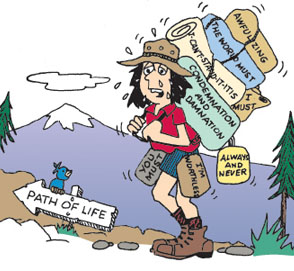
Research has found that a number of core beliefs identified by the psychologist Albert Ellis are consistently linked to self-dislike and depression.  I see these in many young  people today and they go largely unchallenged by adults because many of the adults in their lives are handicapped by the same irrational beliefs.  Below is a list of commonly held false core beliefs.  As an exercise, print this list and have your students circle those that they hold.  You might further discuss scriptural responses that challenge these false beliefs.


  1. I must be loved or approved of by everyone I consider significant.
  2. I must be thoroughly competent and adequate in everything I do.  I should not be satisfied with myself unless I’m the best or excelling.
  3. If something is or may be dangerous or fearsome I must be terribly concerned about it or keep on guard in case it happens.
  4. It is easier to avoid than face life’s difficulties and responsibilities.
  5. It’s bad to think well of oneself.
  6. I can’t be happy unless a certain condition – like success, money, love, approval, or perfect achievement – is met.
  7. I can’t feel worthwhile unless a certain condition if met.
  8. I’m entitled to happiness (or success, health, self-respect, pleasure, love) without having to work for it.
  9. One day when I make it, I’ll have friends and be able to enjoy myself.
  10. Work should be hard and in some way unpleasant.
  11. Joy is only gained through hard work.
  12. I am inadequate.
  13. Worrying insures that I’ll be prepared to face and solve problems.  So the more I worry the better.  (Constant worrying helps prevent future mistakes and problems and gives me extra control.)
  14. Life should be easy.  I can’t enjoy it if there are problems.
  15. The past makes me unhappy.  There’s no way around it.
  16. There’s a perfect solution, and I must find it.
  17. If people disapprove of (reject, criticize, mistreat) me, it means I’m inferior, wrong, or no good.
  18. I’m only as good as the work I do.  If I’m not productive, I’m no good.
  19. If I try hard enough, all people will like me.
  20. If I try hard enough, my future will be happy and trouble free.

How Thin Is Thin Enough?


Our friends over at Fuller Youth Institute published a great post today about the messages we are sending our young girls.

They referred to an article in the Huffington Post about photos of models that have been touched up to make the model look thinner.

As a father of three young girls I’m concerned that when they see the touched up photos they compare and contrast themselves to a fictional image.  We have got to continue to pull back the curtain on these tricks of the trade or our girls will kill themselves striving for something that is impossible.

Now I know this may sound fanatical but we work first hand with young girls who suffer from image distortions and eating disorders.  It’s no wonder they struggle so much when confronted with images such as this.

Here’s a great song by Jonny Diaz called “More Beautiful You” that speaks to this same issue:

A WordPress.com Website.

Up ↑