Search

conversations on the fringe

Category

Teens

ScreenWorld vs. RealWorld


I ‘ve been reading a challenging new book, Virtually You – The Dangerous Power of the E-Personality, written by Elias Aboujaoude, MD from Stanford.  In this book he pulls on years of research the looks at how our online personalities (e-personalities) are shaping how we interact with the offline world.  While he recognizes the unlimited potential of the internet for good he has identified some very dangerous changes in how we relate to, communicate with, and behave in the real world.  He identifies correlations between how we act and interact on the internet and how that in turn shapes us in non-screenworld.  I think this is a must read for anyone living in the technological age.

I have long wondered how the advent of instant, social, and mobile technology impacts our real world lives and here’s just a few things I’m thinking about in no particular order:

LinkedIn – Everyone I connect with is just a means to an end.  Every connection I make is meant to be a networking opportunity, on this site.  But when I become conditioned to see others through a “what can you do for me” lens this has the potential to negatively impact my real time relationships in the same way.

iProducts – With such a focus on individualization in how we experience our technology we can further reinforce this self-centered worldview that we fight so hard to diminish.  With apps on every interface I can make everything I use completely customized to my preferences.  It is precisely this behavior that sabotages our real time relationships.  Everything is about me and every encounter we have with others should be about reinforcing the idea that I am the center of the universe.  iAM.

Also, we can not only add apps that we want we can filter out anything we don’t want or that we don’t like.  I love Facebook’s content filters on my wall so I can hide or delete content from my “friends” that I don’t agree with, that is embarrassing to me, or I just flat out disagree with.  The ability to do this seriously retards our ability to tolerate anything that doesn’t conform to my ideology and beliefs.  I never have to be challenged or held accountable for anything online because I can just unfriend you or hide you news feed.  This also conditions us in real time to be intolerant to those who are different than us and does not lend itself to diversity.

I’m not even going to spend much time on the subject of instant gratification.  This should be a no-brainer.  If it’s not just Google it.

I’ve noticed that people tend to say things online that they would NEVER say in real life.  It’s like we can hide behind the wall of technology and convince ourselves that this isn’t real because I can’t see the other person.  Or, I am not even really being myself online so nobody knows it’s even me.  We tend to be more snarky, pretentious, and just downright mean.  When we spend inordinate amounts of time interacting behind a façade online we soon forget how to interact with people in real time and adopt many of our online behaviors as the new norm.

One last thing I’d like to mention is how disposable the internet makes things (i.e., relationships, apps, websites, etc.).  If this displeases us I will just move on to the next one.  We have been conditioned to not be content.  If a “friend” says something you don’t like, DELETE!  If you beat that game, DELETE!  If you are tired of Facebook, Google+.  There is always another option.  We are all free agents.  Loyalty is hard to come by on the web.  Can you see how dangerous this can be in real time?  Do we treat others the same way?

As we spend increasing amounts of time “connected” online we must know that it can, will, and is shaping how we interact with the real world around us, and not always for the better.  There are assuredly other ways technology is impacting us (i.e., shorted attention spans, impulsive shopping, compulsive gambling, shaping our sexual experiences and lives, etc.).  As we work with kids who have never know a world without mobile phones or the internet we must be increasingly aware of our own online behaviors and seek to bring the two world together as much as possible in a healthy and balanced manner.


Unhealthy Family System Model (Exploring Family pt. 2)


Most members of unhealthy family models oscillate between extremes of behavior choosing, mostly unconsciously, whichever behavior promises the greatest chance of surviving the moment.  You may see many of the following extremes in youth in your ministries.  It’s important to understand that these behaviors are functional and serve a purpose for these kids.  Understanding that will help you know what they need from us most.

High Intensity vs. Shutdown:  Alternating between feeling overwhelmed with emotional vs. physiological responses and shutting down.

Overfunctioning vs. Underfunctioning:  Alternating between working overtime to fill in what is missing vs. falling apart or barely holding it together.

Enmeshment vs. Disengagement:  Alternating between being overclose or fused in identities vs. avoidance, or cutting off leading to disengagement.

Impulsivity vs. Rigidity:  Alternating between behavior that leads to chaos vs. rigid, controlling behavior.

Grandiosity vs. Low Self-Worth:  Alternating between grandiose ideas and fantasies vs. feelings of low self-worth.

Denial vs. Despair:  Alternating between a state in which reality is denied or rewritten vs. despair, helplessness (or rage at having life as we know it slip away).

Abuser vs. Victim:  Alternating between the role of victim vs. the role of perpetrator.

Caretaking vs. Neglect:  Alternating between over concern leading toward enmeshment vs. underconcern leading toward disengagement.

Living with dysfunction is traumatizing to the body as well as the mind.  And living in this kind of system can lead to the kind of emotional deregulation that makes us want to turn to high-risk behaviors (substance use, unsafe sexual behavior, self-injury or violence towards others) to regain a sense of calm and regulation that dysfunction undermines.  The kids in our ministries are not typically “bad kids” making immoral choices because they lack long-term consequential thought processes.  Often the behaviors we see in our kids is simply their best attempt to manage life and survive in a world where most of the adults have left them to fend for themselves.

What You Assume Is What You Get


“Most of us are aware that our expectations affect our own behavior.  If you envision yourself losing this afternoon’s tennis match, you are more likely to lose.  If you assume you will win, your chances of winning increase significantly.  We call these self-fulfilling prophesies.  What many people don’t know is that one person’s beliefs can contribute to another’s outcomes.

Time and again, research has demonstrated that our assumptions shape the outcomes.  In an experiment, the Harvard professor Robert Rosenthal told students he had developed a strain of highly intelligent rats that could zip through a maze in record time.  Then he passed our regular old rats to all the students.   He told half of them they were getting the smart rats; the other half, he said, were getting dull rats.  The “smart” rats became faster and more accurate every day; the “dull” rats wouldn’t even leave the starting gate 29 percent of the time.”

The Art of Connecting by claire Raines and Laura Ewing

I read this today and wondered how many kids we leave at the starting gate, not because of their ability or capacity but because of our preconceived beliefs about them. 

It’s sad enough when we self-impose limitations on ourselves but when we do the same to others we fail at our fundamental task as youth workers…seeing what God sees in them and calling it out.

Where are we limiting the kids we influence?

Where are we calling out what God intended?

What Are We Saying When We Don’t Say Anything?


“When we block our awareness of feelings, they continue to affect us anyway.  Research has shown repeatedly that even without conscious awareness, neural input from the internal world of the body and emotion influences our reasoning and our decision making.  Even facial expressions we’re not aware of, even changes in heart rhythm we may not notice, directly affect how we feel and so how we perceive the world.  In other words, you can run but you can’t hide.”

excerpt from Mindsight by Daniel J. Siegel, M.D.

If what Dr. Siegel suggests is true then this holds implications for how we interact with young people in our ministries.  For example, a 14 year old girl in your youth group asks to talk to you privately.  She reveals that she is a victim of sexual abuse and to cope with it she cuts herself.  How we respond to her, including our tone, facial expressions, and body posture will all communicate something to her. 

What are we communicating to our young people beyond our words? 

How does this help or hinder their ability to trust us? 

How can we grow in our own emotional management?

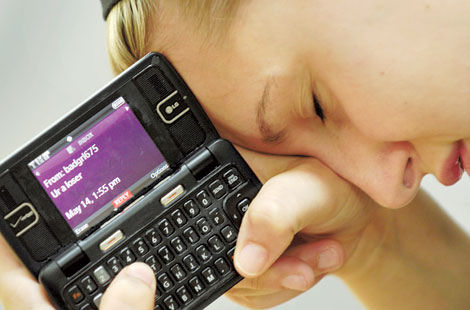
Bullying (part 3): Text-Bullying And Mobile Technology


Adults are becoming more and more savvy about protecting kids from cyber bullying—harassment using technology, such as email, instant messaging, or social networking sites like MySpace, Facebook, and Twitter. But during the upcoming spring break, when kids have more unstructured time than usual, they are also at risk of exposure to bullying through text messaging (“text bullying”), or even being “sexted,” using the text-messaging feature on cell phones, which a reported 87 percent of teens own (National Campaign to Prevent Teen and Unplanned Pregnancy, 2008).

Sexting” is sending nude or sexually suggestive pictures and accompanying text via cell phone. Although the original “sexter” may only send the suggestive message to one person—a girlfriend or boyfriend, for example—that message can be forwarded to anyone in the recipient’s address book, and from there, all across a school or community. Once it’s out there, there’s no way to take back the message or the accompanying embarrassment or humiliation.

There are possible long-term consequences, too. Since school admissions officers and potential employers often look at online profiles, the repercussions of sending an inappropriate message could be endless. And one newspaper reports that sexters can “face felony charges for child pornography” (Borgman, 2009), landing them on the registry for sexual predators, a label they’ll bear for the rest of their lives.

What Kids Can Do About It

According to the Anti-Defamation League, critical thinking is “the best tool against hate” (Tiven, 2003). You can coach kids to use the same problem-solving skills for text bullying that they would use in any other situation. The more they think before pressing the “send” key, the less likely they will be to disseminate a photo or message that will get them in trouble and ruin their reputation.

When kids receive harassing or inappropriate text messages, there are several things they can do:

  • Never, ever respond to the message sender.
  • Report it as soon as possible to a trusted adult (and if that person doesn’t help, tell others until someone does).
  • Save or print the message to keep a record, then delete it from the phone.
  • Only keep contact information of close friends and family in their address book.
  • Talk to their wireless provider about how they can help (such as blocking the messages or changing their number).

What Parents Can Do About It

If critical thinking is a kid’s best defense against text bullying, communication is yours. Just as you talk to your kids about sex, relationships, and drugs, it’s also important to talk to them about how they use their phones, and with whom.  “Supervising and monitoring your kids’ whereabouts in real life and in cyberspace doesn’t make you a nag; it’s just part of your job as a parent” (NCPTUP, 2008).

It’s best not to take away kids’ phone privileges when they come to you with a text bullying problem. That might make them feel as if they’re being punished for someone else’s transgression. Here are some things you can do instead:

  • Talk to your kids about text bullying and sexting, especially the short- and long-term consequences.
  • Monitor their cell phone use: Who are they texting? Who is texting them?
  • Suggest that everyone’s cell phone stay on the kitchen counter or another centralized place while they’re home.
  • Set rules about the kind of behavior that is and is not acceptable—on a cell phone, or anywhere else. Remind kids of the rules periodically.
  • Many cell phone provider’s website allow for varying degrees of parental control available from their website.  This allows for parents to control the hours of which a child may receive or send text/pix messages, block callers/numbers from any activity on that specific phone line, and keep record of your child’s mobile activities.

References

Borgman, L. (2009, February 24). Safe sexting? There’s no such thing. Lexington Herald-Leader.

Brock, K. (2008, May 6). Text bullying. WLS-TV Chicago, IL. Retrieved February 24, 2009 from http://abclocal.go.com/wls/story?section=news/national_world&id=6124134.

National Campaign to Prevent Teen and Unplanned Pregnancy. (2008). Sex and tech: Results from a survey of teens and young adults. Washington, DC: Author.

NCH: The Children’s Charity. (2005). Stoptextbully top 10 tips. Retrieved February 24, 2009 from http://www.pkc.gov.uk/NR/rdonlyres/F1ABA3FA-C050-4913-BD29-0AC7A531F110/0/StoptextBullyingTop10Tips.pdf.

Tiven, L. (2003). Hate on the Internet: A response guide for educators and families. Albany, NY: Anti-Defamation League.

Angry Urban Youth – Survival Of Fittest


Anger and fear are closely related emotions.  For instance, they both travel through the amygdala in the brain.  They need to be closely connected in our brain because people often have to decide quickly between standing their ground or running away in the face of immediate danger.  That’s the classic fight-or-flight choice.  However, kids growing up in impoverished, urban settings seem to have a strong fight and flight reaction when they perceive a threat.

Imagine you are one of a small group of soldiers conducting a search for enemy troops.  You’re expecting to run into a few of the enemy at a time.  Instead, though, you stumble across a much larger unit.  The enemy greatly outnumbers you.  So now, what do you do?  You must shoot and run at the same time.  That’s the only way to survive.  And what are you feeling?  Both anger and fear.  Your anger helps you fire at the enemy.  Your fear helps you escape.

It’s easy to see that for urban youth survival or defensive behaviors are usually triggered by mixed (and very strong) feelings of fear and anger.  It’s the combination of these two emotions that overwhelms reason.  True, when someone is raging, all you can see is the anger.  But remember the core message: “I’ve got to kill you before you kill me.”  That’s very different than “I want to kill you and get what I want” or “I want to kill you to get you out of my way.”  It’s the fear of death that directs the attack.

Why is this so important?  It means that when helping urban youth we are likely going to have to equip them to deal with their his or her fear as well as his or her anger.  It means that feeling safe is key to overcoming such a reflexive response.  We’re talking about helping youth change how they relate to the world.

Now here’s the dilemma.  Traumatized people (many urban youth have been traumatized) see danger everywhere, anywhere, with everyone.  There is no safe place.  There are no safe people.  Most importantly, they often see danger where there is no danger.  So how can youth quit experiencing survival rage?  The answer, obviously, is complex.  He or she must experience places in their lives that they are safe enough, so he or she can stop running and stop shooting.  Note the words “safe enough” – not perfectly safe.  None of us live in a perfectly safe world.  A safe enough world is one in which you feel no immediate danger to your life and well-being.  A safe enough place is one in which you believe that most people, especially those closest to you, are on your side and want to protect rather than harm you.

That is a beautiful picture of the body of Christ coming alive in these forgotten places.  Providing refuge and sanctuary for weary urban youth simply looking for a place safe enough to stop running.

Shame


Shame is both a feeling and a belief.  The feeling is very unpleasant.  People usually talk about noticing their face getting red, wanting to run away but finding themselves virtually paralyzed, being unable to maintain eye contact with anyone, losing all their strength and becoming incredibly weak and powerless, feeling totally exposed to people’s scrutiny and criticism, and collapsing inside into nothingness.  This feeling can be almost intolerable.  That’s why people find ways to make it go away, including converting shame into rage.

The belief that goes with shame is that somehow you are defective.  Broken.  Useless.  Flawed.  Damaged goods.  Ugly.  Worthless.  The deeper the shame, the more this damage seems impossible to mend.  Eventually, powerfully shamed people come to belive these messages:

  • “I am no good.”
  • “I am not good enough.”
  • “I am unlovable.”
  • “I don’t belong.”
  • “I should not exist.”


These are terribly damaging messages.  People who think this way about themselves suffer.  They see themselves as total losers.

Shame affects people’s behaviors as well.  Strongly shamed people tend to avoid others.  That’s because they are sure everyone else will see all their flaws.  They might not want to talk about themselves either, for the same reason. 

Shame has a spiritual component as well.  Deeply shamed people often feel cut off from spiritual support.  Judging themselves as unworthy of love or respect, they think of themselves as God’s mistake.  Consequently , they often feel empty inside.  While we acknowledge that we all have a sin condition, we must remember that we are made in the image of God as well.  We are the Imago Dei.

How Vulnerable Are You To Shame-Based Thinking?

Shame-based thinking is terrifying and dangerous.  If you have shame, you need to recognize how it infiltrates your thinking.  Otherwise, you won’t be able to stop them.  So ask yourself these questions:

  • Do people say that you are way too sensitive?
  • Do people often tell you that they don’t understand why something they said bothered you so much?
  • Do you become furious when people seem to disrespect you?
  • Is your reputation – your good name – something you strongly defend?
  • Do you frequently worry that people think you are stupid, worthless, ugly, or incompetent?
  • Do you get really mad after a moment of embarrassment, for instance, if someone points out something you did wrong?
  • Do you dwell upon put-downs that you believe people have made about you?
  • Do you become irate when people seem to be ignoring you?
  • Is anger, even really strong anger, easier for you to handle than feeling shame?
  • Do you sense that you convert feelings of shame to anger or rage?


Challenge The Validity Of The 5 Core Shame Messages

  • What thoughts do you already have that help you believe in your own essential goodness?
  • What new thoughts could you think that would also help in this way?
  • What do you do that helps you feel you are making a contribution to the world?
  • Who in your life regularly respects you, praises you, and/or appreciates you?
  • How are you kind to and accepting and forgiving of yourself?
  • How else could you become kinder to and more accepting and forgiving of yourself?

*Taken from “Rage – A Step-By-Step Guide To Overcoming Explosive Anger” by Ronald T. Potter-Efron, MSW, PH.D

National Eating Disorder Awareness Week


For more information on and help for eating disorders please visit the following:


National Eating Disorders

National Institute of Mental Health

Something Fishy

Conversations on the Fringe

Mercy Ministries

What We’re Reading 02/15/2011


The Rise and Fall of the American Teenager – Thomas Hine

This book takes a look at the historical context of the American teenager experience.  Hine gives a great overview of the invention and development of the “adolescent” and their unique roles throughout our country’s history.  It drags at times but if hang in there you will walk away with a better sense of how the current state of affairs facing our youth today came to be.

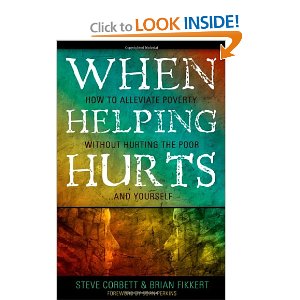
When Helping Hurts – Corbett & Fikkert

The subtitle of this book says it all, “How to alleviate poverty without hurting the poor and yourself”.  Many serve with the best of intentions but those intentions often don’t really help and can often make the problems worse.  This is a must read if your calling is to work with those in poverty regardless if the poverty is found in a third-world, urban city, or rural community.

Growing Up In America (the power of race in the lives of teens) – Christerson, Edwards, & Flory

Kara Powell at Fuller Youth Institute first brought this book to our attention.  If you work in a diverse population and want to understand how race shapes the experiences of our youth then this is a good primer.


Fist Stick Knife Gun – Geoffrey Canada

“If you wonder how a fourteen-year old can shoot another child his own age in the head and then go home to dinner, you need to know you don’t get there in a day, or week, or month.  It takes years of preparation to be willing to commit murder, to be willing to kill or die for a corner, a color, or a leather jacket.” (from inside flap)

This is a challenging book for us to read.  As we turned page after page we realized that we were part of the problem.  We all were.  For anyone  working in community where violence is the norm, this also is a must read.

A WordPress.com Website.

Up ↑