Search

conversations on the fringe

Category

Substance Abuse

The Anatomy Of Honesty


We encourage students to explore the role of honesty and confession as a discipline in the Way of Jesus.  Issues relevant to this topic include: What is the cost of dishonesty?  When is it safe to confess?  What if the other person doesn’t accept honesty?

“I haven’t told my parents that I use pot.  I don’t want them to be mad at me.”

“My abuse can’t be as bad as I’ve made it out to be; I must be making things up.”

“If I tell my family about the abuse, I’ll be the black sheep.”

“I don’t want to date that person, but I can’t say ‘no’.”

Honesty, with God, oneself and others, is a central principle of the Way of Jesus.  Secrecy, lies, and avoidance are hallmarks of sin as well as abuse.  In cases of abuse, young people may have been punished or ignored if they spoke out regarding their abuse, and thus learned to suppress their truths.  When the consequence of telling the truth is greater than that of telling lies it makes sense that one would choose the latter of the two.

Students are therefore encouraged to recognize the cost of dishonesty: It alienates them from others and perpetuates the idea that something about them is unacceptable and must be hidden. (Think Adam and Eve)  In contrast honesty is liberating. 

The term “honesty” conveys an ideal that goes beyond just expressing one’s views.  It is meant to convey integrity, the notion of “owning” one’s experiences, and a spiritual sense of acceptance. 

Honesty is a complicated subject, however, as real risks are on the line for the abused student.  Honesty needs to be selective.  It may not be safe, for example, for a young person to confront their abuser. 

One particularly difficult situation is when a student asks the youth worker to hide information from parents or other adults, such as substance abuse.  In such scenarios, it is strongly recommended that the youth worker not keep secrets that would further place the student at risk of hurting themselves or others.  It usually helps to suggest to the student to try talking honestly with the parents, setting a date by which it would happen (such as a few days).  After the specified date, the youth worker then talks with the parents directly to confirm that the information has been shared.  Although there may be a risk of the student dropping out of our program, the greater risk is keeping substance abuse secrets on behalf of the student.  Not only would this reinforce lying about substance abuse, but it puts the youth worker in the position of being an “enabler” and may at times put other people in jeopardy (i.e., driving while under the influence). 

In encouraging students to be honest, a key issue is helping them cope with others’ negative reactions.  It helps to view honesty as a positive goal in and of itself, regardless of how the other person feels.  This is the Way of Jesus.  He routinely spoke truth for the sake of truth and not because He was concerned with how the others would react to it.  There will be growth either way: If the person has a positive reaction, the relationship has increased in closeness; if the person has a negative reaction, the student has learned more about the other person and can proceed accordingly.  Unfortunately, young people too often take a negative reaction to truth not as information about the other person, but as condemnation of themselves.  Preparing for negative reactions is then very important because when we can see that often dishonesty is nothing more than a functional protective skill, developed to keep someone safe from threats, we can move from a place of compassion into the messiness of their world.

Because it can be so difficult for students to be honest, respecting their defenses and locating areas where they are able to make some disclosure is more helpful than trying to convince them reveal when they resist.  Thus, if a student cannot be honest in a particular situation we should use this defensive posture as a thermostat for our relationship with that student.  Resistance can sometimes, often time, be a gift.  It lets us know there is still work to be done to develop a trusting relationship with a hurt and scared student. 

If we are fortunate enough to gain their trust, we dare not do anything to lose it.  It is a sacred thing when a person allows you entrance into their innermost hurt.  We must tread carefully.  Take off your shoes because you are walking on holy ground.  It is here that we have the opportunity to witness the miracle of Jesus making someone whole again.

Stigma, Identity, and Risk in LGBT Youth


LGBT youth have the same developmental tasks as their heterosexual peers, but they also face additional challenges in learning to manage a stigmatized identity.  This extra burden puts LGBT youth at increased risk for substance abuse and unsafe sexual behaviors and can intensify psychological distress and risk for suicide.

Studies of more recent generations of lesbian and gay youth suggest that the period between becoming aware of same-sex attraction and self-identifying as lesbian or gay is much shorter that in previous generations exposing them to greater potential social stressors at important developmental stages. (see chart below)

Average Age (Years) Event Onset

Behavior/Identity

Earlier Studies*

More Recent Studies**

Males

Females Males

Females

First awareness of same-sex attraction

13

14-16 9

10

First same-sex experience

15 20 13-14

14-15

First self-identified as lesbian or gay

19-21 21-23 14-16

15-16

From “A Providers Introduction to Substance Abuse Treatment for LGBT Individuals” www.samhsa.gov

*Studies of adults who remembered their experiences as children and adolescents

** Studies of adolescents who describe their experiences as they were happening or right after they happened

Although people may be more aware that an adolescent may be gay, they are generally no more tolerant and may even be less accepting of homosexuality in adolescents.  In fact, violence and harassment against LGBT youth appear to be increasing.  For those youth who choose to self-disclose or are found out, coping with this stressful life event is most challenging.  Adolescents at this point in their lives have not developed coping strategies and are more likely than adults to respond poorly to these stressors.  These youth must adapt to living in a hostile environment and learn how to find safety.  Combine this with other intersections such as; race, ethnicity, socio-economic, etc. and you have a kids on the fringe.

So my question is this…

What would an appropriate response from youth ministry look like to the problems LGBT youth face today?

Andrew Marin, founder of the Marin Foundation has been working to build bridges between the LGBT communities and the church.  I have the privilege of calling him my friend and support his work around the world.  If you’re not familiar with the work the Marin Foundation is doing you can visit their website here.

Andrew wrote a book last year entitled, “Love is an Orientation“.  In it he says this,

“We’re not called to posit theories that support our assumptions.  We’re not called to speculate about genetics or developmental experiences or spiritual oppression in faceless groups of other people.  We’re called to build bridges informed by the Scriptures and empowered by the Spirit.  We’re called to let a just God be the judge of his creation.  We’re called to let the Holy Spirit whisper truth into each person’s heart.  And we’re called to show love unconditionally, tangibly, measurably.”

So how do we move into that?  How do we move past our fears and judgements?  What will it take?

Roles Of Children In Dysfunctional Families


When we think of a DYSFUNCTIONAL FAMILY it’s like a machine which is run by gears with weak or cracked cogs. As one cog breaks it puts more stress on the other cogs of that gear and then on other cogs of other gears. Eventually the whole machine shuts down. DYSFUNCTION means just that: unable to FUNCTION properly. Each individual in a family is like a gear and each perceived responsibility is like the cog. The main or original DYSFUNCTIONAL person may show their DYSFUNCTION in many ways: they may have difficulty coping, may yell, rage, isolate, verbally abuse, physically abuse, chemically abuse, gamble, cheat on their partner, threaten to leave, threaten suicide, give the silent treatment etc. This causes everyone to walk on eggshells and lots of CRAZY MAKING goes on.

The grown-ups or parent figures assume two roles: DYSFUNCTIONAL PERSON and the other plays the ENABLER. You decide which applies to your situation. In some cases the mother may be the DYSFUNCTIONAL PERSON and father the ENABLER and visa versa in other cases. Both roles play off each other. The DYSFUNCTIONAL PERSON is trapped in self delusion. They actually believe that they are justified in what they do and how they act. They have very distorted thinking. They seem to find ways to strengthen their own credibility and weaken everyone else’s in the family. Therefore, if anyone were to tell someone outside the family who the DYSFUNCTIONAL PERSON really was, many people would not really believe them because of the way they present themselves to the public.

The ENABLER also has distorted thinking and believes that they are basically responsible for the other person’s DYSFUNCTION. And they are therefore very fixated on the other person and often times appear to be uncaring or neglectful toward their children. But this person has only so much energy to go around and most of it goes toward the “squeakiest wheel,” the DYSFUNCTIONAL PERSON.

The children in the family may play more than one role at a time or only one. Each role gives the child their basic identity and shapes their script and future. The role also gives them their sense of worth and value. So they too get trapped in their roles and also develop distorted thought patterning. This is how the tapes, to be carried through life, about who we are and who we will become, begin to develop. Each role carries some aspect about the DYSFUNCTION of the whole family.

The following suggestions are for dealing with some of the typical behaviors of children from dysfunctional families.

A. “The Hero” is……always volunteering, very responsible and manifests a drive, almost a compulsion, to be on top. These students have an insatiable need for attention and approval and are often class leaders who are parental or bossy in their relationships with other peers. They tend to be very disappointed when losing, superior or snobbish when winning, and are frequently labeled “teacher’s pet” by other students.

Recommended adult behaviors:

1. Give attention at times when the student is not achieving.
2. Validate the student’s intrinsic worth, and try to separate his or her feelings or self-worth from achievements.
3. Let the student know it’s OK to make a mistake.

Adult behaviors to avoid:

1. Letting the student monopolize conversations or always be the first to answer a question or to volunteer.
2. Letting the student validate his or her self-worth by achieving.

B. “The Scapegoat”……tends to blame others, makes strong peer alliances, and is often disciplined by teachers or other adults for breaking rules. The rebel tends to talk back, neglects work, and can be very frustrating to work with. The typical adult comments are “I don’t know what to do with that kid,” or “I’ve tried everything!”

Recommended adult behaviors:

1. Let the student know when the behavior is inappropriate.
2. Give the student strokes whenever he or she takes responsibility for something.
3. Attempt to develop empathy for the student. This prevents adults from being angry or getting defensive.
4. Set limits. Give clear explanations of the student’s responsibilities and clear choices and consequences.

Adult Behaviors to avoid:

1. Feeling sorry for the student.
2. Treating the student as special and giving him/her more power.
3. Agreeing with the student’s complaints about other students or other adults.
4. Taking the student’s behavior personally or as a sign of one’s own incompetence as a teacher, counselor, pastor, volunteer, etc.

C. “The Mascot”……

tends to be funny or distracting and gets attention frequently. This student likes to hide, make faces, pull the chair out from someone else, stick chalk in the erasers and otherwise act out.

Recommended adult behaviors:

1. It’s OK to get appropriately angry at the “class clown’s” behavior.
2. Try to give the student a job in the class with some importance and responsibility.
3. Hold him/her accountable.
4. Encourage responsible behavior.
5. Encourage appropriate sense of humor.
6. Insist on eye contact.

Adult behaviors to avoid:

1. Do not try to “laugh with” the clown. He/she will not understand it.
2. Remember the class clown’s underlying fear.
3. Remember the underlying depression this behavior often masks.

D. “The Lost Child”……

often gets lost in the shuffle. Adults sometimes can’t remember the student’s name because he/she is so quiet and is seldom a behavior problem. These students tend to have few, if any, friends and like to work alone in group settings, often in very creative though non-verbal ways. Other students either leave them alone or tend to tease them about never getting involved.

Recommended adult behaviors:

1. Every adult should take an inventory. If there are names that you consistently cannot remember, that may be a lonely or lost student.
2. Try to pick on their personal interests and often they will begin to talk.
3. Try some contact on a one-to-one basis. Find out who they are!
4. Point out and encourage the student’s strengths, talents and creativity.
5. Use touch slowly.
6. Help the student to be in a relationship. There will usually be one student they are drawn to in the class.
7. Encourage working in small groups, two’s and three’s, to build trust and confidence.

Adult behaviors to avoid:

1. Do not let the student off the hook by allowing him/her to remain silent or never calling on them.
2. Do not let other kids take care of the student by talking or answering for him/her.

E. “The Caretaker”……

tends to focus on helping other people feel better. They are motherly in their relationships to other students. This is usually a “liked” child by friends and adults. This student’s sensitivity is noticeable.

Recommended adult behaviors:

1. Assist the student on focusing on him/herself.
2. Ask the student to identify their desires for themselves.
3. Help this kids learn to play.
4. When they are assisting another, ask them to identify how they are feeling about the other’s pain.
5. Validate the student’s intrinsic worth, separating their worth from their care-taking.

Adult behaviors to avoid:

1. Calling on these students to focus on another’s emotional pain.

sources:

http://www.thechildrensplaceprogram.org

http://www.samhsa.org


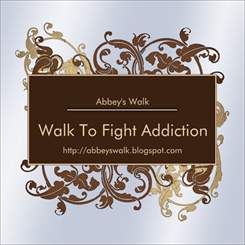
2nd Annual Abbey’s Walk


In March of 2009, our community lost one of our young people, Abbey, to a drug addiction. The loss has been disheartening. Since this loss, it has become our goal to prevent other friends and families from suffering a similar loss. Abbey’s family and friends have put together a walk to raise funds to be donated to local treatment providers. The money raised is then used to develop resources to help people in our community in overcoming addiction.

This year, you may choose to walk in memory of someone, or in support of someone dealing with addiction. To participate in this year’s walk click here to register.

The walk will be held on the 3rd Saturday of September (Sept. 18th).
The walk will begin at 9:00 a.m., and will take place at the Pekin Park Lagoon.
There will be a walk fee of $15.  $20 if you would like a t-shirt.  $5 for window decals.

If your community has a campaign that addresses the issue of substance abuse I would encourage you to participate.  If you have been touched by substance abuse, please donate your time, resources, and financial support.

A WordPress.com Website.

Up ↑