Search

conversations on the fringe

Category

Depression

Roles Of Children In Dysfunctional Families


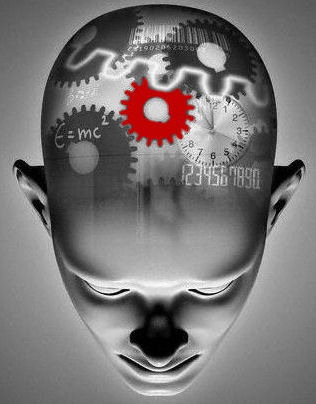
When we think of a DYSFUNCTIONAL FAMILY it’s like a machine which is run by gears with weak or cracked cogs. As one cog breaks it puts more stress on the other cogs of that gear and then on other cogs of other gears. Eventually the whole machine shuts down. DYSFUNCTION means just that: unable to FUNCTION properly. Each individual in a family is like a gear and each perceived responsibility is like the cog. The main or original DYSFUNCTIONAL person may show their DYSFUNCTION in many ways: they may have difficulty coping, may yell, rage, isolate, verbally abuse, physically abuse, chemically abuse, gamble, cheat on their partner, threaten to leave, threaten suicide, give the silent treatment etc. This causes everyone to walk on eggshells and lots of CRAZY MAKING goes on.

The grown-ups or parent figures assume two roles: DYSFUNCTIONAL PERSON and the other plays the ENABLER. You decide which applies to your situation. In some cases the mother may be the DYSFUNCTIONAL PERSON and father the ENABLER and visa versa in other cases. Both roles play off each other. The DYSFUNCTIONAL PERSON is trapped in self delusion. They actually believe that they are justified in what they do and how they act. They have very distorted thinking. They seem to find ways to strengthen their own credibility and weaken everyone else’s in the family. Therefore, if anyone were to tell someone outside the family who the DYSFUNCTIONAL PERSON really was, many people would not really believe them because of the way they present themselves to the public.

The ENABLER also has distorted thinking and believes that they are basically responsible for the other person’s DYSFUNCTION. And they are therefore very fixated on the other person and often times appear to be uncaring or neglectful toward their children. But this person has only so much energy to go around and most of it goes toward the “squeakiest wheel,” the DYSFUNCTIONAL PERSON.

The children in the family may play more than one role at a time or only one. Each role gives the child their basic identity and shapes their script and future. The role also gives them their sense of worth and value. So they too get trapped in their roles and also develop distorted thought patterning. This is how the tapes, to be carried through life, about who we are and who we will become, begin to develop. Each role carries some aspect about the DYSFUNCTION of the whole family.

The following suggestions are for dealing with some of the typical behaviors of children from dysfunctional families.

A. “The Hero” is……always volunteering, very responsible and manifests a drive, almost a compulsion, to be on top. These students have an insatiable need for attention and approval and are often class leaders who are parental or bossy in their relationships with other peers. They tend to be very disappointed when losing, superior or snobbish when winning, and are frequently labeled “teacher’s pet” by other students.

Recommended adult behaviors:

1. Give attention at times when the student is not achieving.
2. Validate the student’s intrinsic worth, and try to separate his or her feelings or self-worth from achievements.
3. Let the student know it’s OK to make a mistake.

Adult behaviors to avoid:

1. Letting the student monopolize conversations or always be the first to answer a question or to volunteer.
2. Letting the student validate his or her self-worth by achieving.

B. “The Scapegoat”……tends to blame others, makes strong peer alliances, and is often disciplined by teachers or other adults for breaking rules. The rebel tends to talk back, neglects work, and can be very frustrating to work with. The typical adult comments are “I don’t know what to do with that kid,” or “I’ve tried everything!”

Recommended adult behaviors:

1. Let the student know when the behavior is inappropriate.
2. Give the student strokes whenever he or she takes responsibility for something.
3. Attempt to develop empathy for the student. This prevents adults from being angry or getting defensive.
4. Set limits. Give clear explanations of the student’s responsibilities and clear choices and consequences.

Adult Behaviors to avoid:

1. Feeling sorry for the student.
2. Treating the student as special and giving him/her more power.
3. Agreeing with the student’s complaints about other students or other adults.
4. Taking the student’s behavior personally or as a sign of one’s own incompetence as a teacher, counselor, pastor, volunteer, etc.

C. “The Mascot”……

tends to be funny or distracting and gets attention frequently. This student likes to hide, make faces, pull the chair out from someone else, stick chalk in the erasers and otherwise act out.

Recommended adult behaviors:

1. It’s OK to get appropriately angry at the “class clown’s” behavior.
2. Try to give the student a job in the class with some importance and responsibility.
3. Hold him/her accountable.
4. Encourage responsible behavior.
5. Encourage appropriate sense of humor.
6. Insist on eye contact.

Adult behaviors to avoid:

1. Do not try to “laugh with” the clown. He/she will not understand it.
2. Remember the class clown’s underlying fear.
3. Remember the underlying depression this behavior often masks.

D. “The Lost Child”……

often gets lost in the shuffle. Adults sometimes can’t remember the student’s name because he/she is so quiet and is seldom a behavior problem. These students tend to have few, if any, friends and like to work alone in group settings, often in very creative though non-verbal ways. Other students either leave them alone or tend to tease them about never getting involved.

Recommended adult behaviors:

1. Every adult should take an inventory. If there are names that you consistently cannot remember, that may be a lonely or lost student.
2. Try to pick on their personal interests and often they will begin to talk.
3. Try some contact on a one-to-one basis. Find out who they are!
4. Point out and encourage the student’s strengths, talents and creativity.
5. Use touch slowly.
6. Help the student to be in a relationship. There will usually be one student they are drawn to in the class.
7. Encourage working in small groups, two’s and three’s, to build trust and confidence.

Adult behaviors to avoid:

1. Do not let the student off the hook by allowing him/her to remain silent or never calling on them.
2. Do not let other kids take care of the student by talking or answering for him/her.
E. “The Caretaker”……

tends to focus on helping other people feel better. They are motherly in their relationships to other students. This is usually a “liked” child by friends and adults. This student’s sensitivity is noticeable.

Recommended adult behaviors:

1. Assist the student on focusing on him/herself.
2. Ask the student to identify their desires for themselves.
3. Help this kids learn to play.
4. When they are assisting another, ask them to identify how they are feeling about the other’s pain.
5. Validate the student’s intrinsic worth, separating their worth from their care-taking.

Adult behaviors to avoid:

1. Calling on these students to focus on another’s emotional pain.

sources:

http://www.thechildrensplaceprogram.org

http://www.samhsa.org


Self Injury Quick Reference


Self-injury is increasingly becoming a recognized problem in youth ministry, and all youth pastors and volunteer staff (in Jr. High, High School, and College Ministries) need a general understanding of self-injury, signs to look out for, and what to do if they become aware that a pupil is self-injuring.

Self-injury in middle and high school students should not be minimized or dismissed as “attention seeking” or “just a fad”. When people take the radical step of harming their bodies, they should be taken seriously and the sources of their stress addressed.” (Walsh, 2006, p.38)

Signs that someone is self-injuring:

People who self-injure often go to great lengths to conceal their injuries so it can be hard to know if a person does self-injure:

  • People who self-injure can seem withdrawn or depressed.
  • You may notice cuts or bruises that are always accompanied by excuses that don’t seem to fit.
  • Many people who self-injure will cut their arms and so they may wear long sleeves, even when it is very hot.
  • Within school pupils who self-injure may look for excuses not to have to wear shorts or short sleeves and therefore may avoid activities like PE or swimming.

Particularly where younger children are concerned it is important to keep a close eye on especially vulnerable pupils such as those with a history of abuse.

General advice for Youth Pastors and volunteers:

  • Listen to the student and try not to show them if you are angry, frustrated or upset. “Adults should learn that the best way to respond to common self-injury is with a ‘low-key, dispassionate demeanor’ and ‘respectful curiosity’ “(Walsh, 2006, p.245)
  • Learn about the difference between self-injury and suicide.
  • If someone tells you they self-injure it means they trust you and are willing to share this very personal problem.
  • Some people will just want to be heard and empathized with. Try not to push them by asking questions that may overwhelm them.

Ensure that your youth ministry has a self-harm policy – guidelines for writing a policy and further information can be found by emailing us at cschaffner@fringeconversations.com.

Things for Youth Pastors and volunteers to remember:

  • Anyone from any walk of life or any age can self-injure, including very young children.Self-injury affects people from all family backgrounds, religions, cultures and demographic groups.
  • Self-injury affects both males and females.
  • People who self-injure can often keep the problem to themselves for a very long time which means opening up to anyone about it can be difficult.
  • You can’t just tell someone who self-injures to stop – it is not that easy.

The Sun Is Shining


I found this interesting article on the USA Today website and wanted to share it with all of you…

The sun is shining. Flowers are blooming. It’s May, and many of us feel great.

But the thoughts of some vulnerable people grow dark at this seemingly bright time of year. In fact, if there is a season for suicide, springtime is it.

“It’s a new beginning, but some people don’t feel that new beginning,” says Jerry Reed, executive director of the Suicide Prevention Action Network.

Despite popular myths that suicides peak in the winter, particularly around the holidays, close observers have long noticed that suicides actually rise with the return of warmer, longer days, says Richard McCleary, a researcher at the University of California-Irvine.

Aristotle believed suicidal thoughts arose from overheated brains, McCleary says. More modern thinkers offer other biological or social explanations but still see the pattern — at least in some places and among some people.

In one study of 28 countries, McCleary and colleagues found that, overall, suicide deaths were lowest in winter and highest in spring. They reached a peak in May in the Northern Hemisphere.

But the researchers found that the peak existed only in temperate climates — places with distinct seasonal changes in weather. The link was strongest in agricultural societies and weakest in urban areas.

In a separate study of 357,393 suicide deaths in the USA from 1973 to 1985, McCleary found:

•The fewest suicides occurred in December. The most occurred in March, April and May.

•The spring peaks were mostly the results of suicides among males.

•Men older than 80 were at the most pronounced increased springtime risk.

•Boys under 16 showed a reversed pattern: They were most likely to kill themselves in the winter.

McCleary theorizes that vulnerable, isolated people with weak social ties — such as many elderly men — get left out of the spring upswing in social activity. “Maybe you visit your grandparents in winter,” he says. “But you don’t visit them in the spring and summer because you’ve got so many other things to do.”

Psychiatrist Eric Caine of the University of Rochester Medical Center says most people who attempt suicide have long-standing mental health problems that play roles. But springtime changes may be a trigger for some, he says.

For example, he says, “we know there are some people with bipolar disorder who get very energized in the spring.” Some of those still-distressed people may use their renewed vigor to plan and carry out a suicide, he says.

Still, suicide can happen in any month. “We lose 32,000 people a year, and those losses are spread throughout the year,” Reed says.

In fact, in a report in April, the U.S. Centers for Disease Control and Prevention said there was little month-to-month variation in nearly 9,000 suicide deaths reported in 16 (not necessarily representative) states in 2005. The numbers did, however, hint at a drop in winter and a rise in spring.

The bottom line, Reed says, is that some people are at a very low point and need the help of loved ones, friends and professionals right now — no matter what the calendar says or how pleasant the weather seems.

The State of Male Adolescence Today


Statistics and stories about our homicidal adolescent males are dramatic enough to garner most of the headlines; the fourteen-year old in Mississippi who killed two children and wounded seven; the fourteen- year old in Kentucky who shot three dead; the thirteen-year old in Washington who opened fire in his school and killed three; the eleven and thirteen-year olds who killed five on Jonesboro, Arkansas.  But they don’t describe the whole picture.  It seems impossible for us to fully comprehend the state of male adolescence in our culture, yet it is essential we do so.  There is hardly any social or personal health indicator in which adolescent boys do not show the lion’s share of risk today.  The following show just some of the areas of distress experienced by adolescent males as a group.  You likely know such boys.  Your family life, your business, your neighborhood, your school and your ministries have met them and been affected by them for years.

The Declining Safety of Our Adolescent Boys

  • Boys are significantly more likely than girls to die before the age of eighteen, not just from violent causes but also from accidental death and disease.
  • Boys are significantly more likely than girls to die at the hands of their caregivers.  Two out of three juveniles killed at the hands of their parents or stepparents are male.
  • Boys are fifteen times as likely as peer females to be the victims of violent crime.
  • One-third of male students nationwide carry a gun or other weapon to school.
  • Gunshot wounds are now the second leading cause of accidental death among ten – fourteen-year old males.

The Mental Health of Adolescent Boys

  • Boys are four times more likely than girls to be diagnosed as emotionally disturbed.
  • The majority of juvenile mental patients nationwide are males.  Depending on the state, most often between two-thirds and three-fourths of patients at juvenile mental health facilities are male.
  • Most of the deadliest and longest lasting mental health problems experienced by children are experienced by males.  For example, there are six male adolescent schizophrenics for every one female.  Adolescent autistics out-number females two to one.
  • Adolescent males significantly out-number females in diagnoses of conduct disorders, thought disorders, and brain disorders.

Drug, Alcohol, and the Depression Link

Depression in males has often been overlooked because we don’t recognize the male’s way of expressing depression.  We measure depression by the female’s model of “overt depression”.  She talks about suicide, expresses feelings of worthlessness, shows her fatigue, and is overall more expressive about her emotional state.  Unaware of the male’s less expressive, more stoic way of being, we miss the evidence of drug and alcohol abuse, criminal activity, avoidance of intimacy, and isolation from others, especially family.

Suicide

  • Adolescent males are four times more likely than girls to commit suicide.  Suicide success statistics (i.e., death actually occurs) for adolescent males are rising; suicide success statistics for girls are not.

This statistic is one of the most startling to health professionals not just because lives are lost but because it indicates dramatically how much trouble adolescent males are in and the degree to which adolescent male mental illness is increasing.

Body Image

Steroid use among adolescent boys is now on par with their use of crack cocaine.  Consequences of steroid use range from increased rage to early death.

Attention Deficit Hyperactive Disorder (ADHD)

This brain disorder, like so many others, is almost exclusively a male disorder.  Only one out of six adolescents diagnosed with ADHD is female.

ADHD is one of the reasons for the high rate of adolescent male vehicle accidents and fatalities.  Adolescents with a history of ADHD (or, in fact, any conduct disorder) are significantly more likely to commit traffic offenses and be in accidents.

Sexual Abuse

One out of five males has been sexually abused by the age of eighteen.  Most of our sexual offenders are heterosexual males who have been physically and/or sexually abused as boys themselves.  These numbers should frighten us terribly.  A sexually abuse adolescent male is more likely than his female counterpart to act out against someone else, generally someone younger and weaker than himself, through rape, physical violence, and sexual molestation.

Questions:

The basic fragility of the male self becomes increasingly clear when we see beyond the terrible and reprehensible acts and the internal histories that led up to them; we begin to understand the process to the product.  We are dealing with adolescent males who broke down internally and had no resources to repair the internal damage to their fragile structures.

  1. What are the criteria for masculinity that adolescent boys are expected to meet?
  2. What price do adolescent boys pay for adherence to male gender roles?
  3. Compare the attainment of masculinity for boys with the attainment of femininity for girls.  Which has more advantages?  More adverse outcomes?
  4. What have we overlooked the drop in worth/value that occurs for boys during adolescence?  How do we contribute to their perceived lack of worth/value?
  5. How can, not just our youth ministries, come alongside of our young boys, but how can the entire body embrace our adolescent males better?

References

Pollock, W. (1998).  Real Boys.  New York: Henry Holt

Thompson, M., & Kindlon, D. (1999) Rasing Cain.  New York: Ballantine

Mobile Phones and Adolescent Depression


By Ian Ball

There are increased problems associated with the improper usages of mobile phones by adolescents; however, modern technological advancements also put its footsteps to use mobile phones as a wonderful device to identify adolescent depression. The Murdoch Children Research Institute claims for the crown in this aspect exclusively for its wonderful innovation.

The Murdoch Children Research Institute

The Murdoch Children Research Institute offers its valuable contribution to the field of research primarily focusing on different health aspects of children and adolescents. It is considered as the one of major child health research institutes around the world. The research team comprises of 900 passionate research scholars who are continuously contributing in the research era with their detailed understanding and creative aptitude.

The Innovation

The Murdoch Children Research Institute is offering a Java-based mobile application that enables an understanding of observation and early identification of warning-sign of adolescent depression. It is assumed to be first ever made application that can be used for such purpose.

The research had been conducted in Australia with a focus group consisting of 40 young individuals. The adolescents were supplied with Nokia 6260 where the application was pre-loaded.

As noted by Dr. Sophie Reid, adolescents’ anxiety and depression have become one of the major complications that need to take into serious consideration. The present strength of the adolescent sufferers may include a population of more than 30% and there is an increased possibility that this complication will strike the nation as one of the serious ones during 2020.

The application will primarily concern the idea how youngsters responds to the signal of distress. The application collects all the relevant data pertaining to the adolescents’ response to distress; this essentially comes out with several questionnaires popping up on the screen in a regular interval.

After one week, the researchers downloaded all the data using Bluetooth technology or infrared facilities and then analyzed the data.

The Future

However the application is a promising one in order to find out a real-time application for monitoring and detecting changes in health aspects. In recent future, the researchers are expecting to implement automated code generation technology to make the system more sophisticated refraining from the need to employ programmers. It also plans to include voice capturing facilities especially for open-ended questions. The Murdoch Children Research Institute collaborated with Harvard Medical Institute to make a safer place for implementing this technology in near future.

Teen Grief


What is it like for teenagers when someone close to them dies? How do they respond to the death of a parent, a sibling, a relative, a friend?

In our work with teenagers, we’ve learned that teens respond better to adults who choose to be companions on the grief journey rather than direct it. We have also discovered that adult companions need to be aware of their own grief issues and journeys because their experiences and beliefs impact the way they relate to teens.

Here are the six basic principles of teen grief:

1. Grieving is the teen’s natural reaction to a death.

2. Each teen’s grieving experience is unique.

3. There are no “right” and “wrong” ways to grieve.

4. Every death is unique and is experienced differently.

5. The grieving process is influenced by many issues.

6. Grief is ongoing.

Cognitive Distortions


What’s a cognitive distortion and why do so many young people have them? Cognitive distortions are simply ways that our mind convinces us of something that isn’t really true. These inaccurate thoughts are usually used to reinforce negative thinking or emotions — telling ourselves things that sound rational and accurate, but really only serve to keep us feeling bad about ourselves.

For instance, a young person might tell themselves, “I always fail when I try to do something new; I therefore fail at everything I try.” This is an example of “black or white” (or polarized) thinking. The young person is only seeing things in absolutes — that if they fail at one thing, they must fail at all things. If they added, “I must be a complete loser and failure” to their thinking, that would also be an example of overgeneralization — taking a failure at one specific task and generalizing it their very self and identity.

Cognitive distortions are at the core of what many cognitive-behavioral and other kinds of therapists try and help a young person learn to change in psychotherapy. By learning to correctly identify this kind of “stinkin’ thinkin’,” a teen can then answer the negative thinking back, and refute it. By refuting the negative thinking over and over again, it will slowly diminish overtime and be automatically replaced by more rational, balanced thinking.

The Scriptures say in Romans 12:2 “Do not conform any longer to the pattern of this world, but be transformed by the renewing of your mind. Then you will be able to test and approve what God’s will is—his good, pleasing and perfect will.”

In order to teach students to think critically we must first help them identify any faulty thinking they may have developed over the course of their lives and hold those faulty thoughts up against the light of Scripture.

Below is a list of common distortions…

Cognitive Distortions

Aaron Beck first proposed the theory behind cognitive distortions and David Burns was responsible for popularizing it with common names and examples for the distortions.

1. Filtering.

We take the negative details and magnify them while filtering out all positive aspects of a situation. For instance, a person may pick out a single, unpleasant detail and dwell on it exclusively so that their vision of reality becomes darkened or distorted.

2. Polarized Thinking (or “Black and White” Thinking).

In polarized thinking, things are either “black-or-white.” We have to be perfect or we’re a failure — there is no middle ground. You place people or situations in “either/or” categories, with no shades of gray or allowing for the complexity of most people and situations. If your performance falls short of perfect, you see yourself as a total failure.

3. Overgeneralization.

In this cognitive distortion, we come to a general conclusion based on a single incident or a single piece of evidence. If something bad happens only once, we expect it to happen over and over again. A person may see a single, unpleasant event as part of a never-ending pattern of defeat.

4. Jumping to Conclusions.

Without individuals saying so, we know what they are feeling and why they act the way they do. In particular, we are able to determine how people are feeling toward us.

For example, a person may conclude that someone is reacting negatively toward them but doesn’t actually bother to find out if they are correct. Another example is a person may anticipate that things will turn out badly, and will feel convinced that their prediction is already an established fact.

5. Catastrophizing.

We expect disaster to strike, no matter what. This is also referred to as “magnifying or minimizing.” We hear about a problem and use what if questions (e.g., “What if tragedy strikes?” “What if it happens to me?”).

For example, a person might exaggerate the importance of insignificant events (such as their mistake, or someone else’s achievement). Or they may inappropriately shrink the magnitude of significant events until they appear tiny (for example, a person’s own desirable qualities or someone else’s imperfections).

With practice, you can learn to answer each of these cognitive distortions.

6. Personalization.

Personalization is a distortion where a person believes that everything others do or say is some kind of direct, personal reaction to the person. We also compare ourselves to others trying to determine who is smarter, better looking, etc.

A person engaging in personalization may also see themselves as the cause of some unhealthy external event that they were not responsible for. For example, “We were late to the dinner party and caused the hostess to overcook the meal. If I had only pushed my husband to leave on time, this wouldn’t have happened.”

7. Control Fallacies.

If we feel externally controlled, we see ourselves as helpless a victim of fate. For example, “I can’t help it if the quality of the work is poor, my boss demanded I work overtime on it.” The fallacy of internal control has us assuming responsibility for the pain and happiness of everyone around us. For example, “Why aren’t you happy? Is it because of something I did?”

8. Fallacy of Fairness.

We feel resentful because we think we know what is fair, but other people won’t agree with us. As our parents tell us when we’re growing up and something doesn’t go our way, “Life isn’t always fair.” People who go through life applying a measuring ruler against every situation judging its “fairness” will often feel badly and negative because of it. Because life isn’t “fair” — things will not always work out in your favor, even when you think they should.

9. Blaming.

We hold other people responsible for our pain, or take the other track and blame ourselves for every problem. For example, “Stop making me feel bad about myself!” Nobody can “make” us feel any particular way — only we have control over our own emotions and emotional reactions.

10. Shoulds.

We have a list of ironclad rules about how others and we should behave. People who break the rules make us angry, and we feel guilty when we violate these rules. A person may often believe they are trying to motivate themselves with shoulds and shouldn’ts, as if they have to be punished before they can do anything.

For example, “I really should exercise. I shouldn’t be so lazy.” Musts and oughts are also offenders. The emotional consequence is guilt. When a person directs should statements toward others, they often feel anger, frustration and resentment.

11. Emotional Reasoning.

We believe that what we feel must be true automatically. If we feel stupid and boring, then we must be stupid and boring. You assume that your unhealthy emotions reflect he way things really are — “I feel it, therefore it must be true.”

12. Fallacy of Change.

We expect that other people will change to suit us if we just pressure or cajole them enough. We need to change people because our hopes for happiness seem to depend entirely on them.

13. Global Labeling.

We generalize one or two qualities into a negative global judgment. These are extreme forms of generalizing, and are also referred to as “labeling” and “mislabeling.” Instead of describing an error in context of a specific situation, a person will attach an unhealthy label to themselves.

For example, they may say, “I’m a loser” in a situation where they failed at a specific task. When someone else’s behavior rubs a person the wrong way, they may attach an unhealthy label to him, such as “He’s a real jerk.” Mislabeling involves describing an event with language that is highly colored and emotionally loaded. For example, instead of saying someone drops her children off at daycare every day, a person who is mislabeling might say that “she abandons her children to strangers.”

14. Always Being Right.

We are continually on trial to prove that our opinions and actions are correct. Being wrong is unthinkable and we will go to any length to demonstrate our rightness. For example, “I don’t care how badly arguing with me makes you feel, I’m going to win this argument no matter what because I’m right.” Being right often is more important than the feelings of others around a person who engages in this cognitive distortion, even loved ones.

15. Heaven’s Reward Fallacy.

We expect our sacrifice and self-denial to pay off, as if someone is keeping score. We feel bitter when the reward doesn’t come.

Adolescent Depression


The statistics on teen depression are sobering. Studies indicate that one in five children have some sort of mental, behavioral, or emotional problem, and that one in ten may have a serious emotional problem. Among adolescents, one in eight may suffer from depression. Of all these children and teens struggling with emotional and behavioral problems, a mere 30% receive any sort of intervention or treatment. The other 70% simply struggle through the pain of mental illness or emotional turmoil, doing their best to make it to adulthood.

The consequences of untreated depression can be increased incidence of depression in adulthood, involvement in the criminal justice system, or in some cases, suicide. Suicide is the second leading cause of death among young people ages 15 to 24. Even more shocking, it is the sixth leading cause of death among children ages 5-14. The most troubling fact is that these struggling teens often receive no counseling, therapy, or medical intervention, even though the National Institute of Mental Health reports that studies show treatments of depression in children and adolescents can be effective.

more…

A WordPress.com Website.

Up ↑