Search

conversations on the fringe

Category

Bullying

Mad As Hell


Conversations on the Fringe vehemently opposes bullying of any kind.  When what we say and do to another person causes so much pain and suffering that the only option they can come up with is to end their own life, that is a travesty!  We mourn the loss of Billy Lucas 15, Asher Brown 13, Seth Walsh 13, Tyler Clementi 19, Raymond Chase 18.   All took their life for fear of being ridiculed, bullied, or marginalized.  This cannot be tolerated and CotF will stand with the other voices denouncing these AVOIDABLE deaths.

Please watch the following videos and share them with your friends.

Stigma, Identity, and Risk in LGBT Youth


LGBT youth have the same developmental tasks as their heterosexual peers, but they also face additional challenges in learning to manage a stigmatized identity.  This extra burden puts LGBT youth at increased risk for substance abuse and unsafe sexual behaviors and can intensify psychological distress and risk for suicide.

Studies of more recent generations of lesbian and gay youth suggest that the period between becoming aware of same-sex attraction and self-identifying as lesbian or gay is much shorter that in previous generations exposing them to greater potential social stressors at important developmental stages. (see chart below)

Average Age (Years) Event Onset

Behavior/Identity

Earlier Studies*

More Recent Studies**

Males

Females Males

Females

First awareness of same-sex attraction

13

14-16 9

10

First same-sex experience

15 20 13-14

14-15

First self-identified as lesbian or gay

19-21 21-23 14-16

15-16

From “A Providers Introduction to Substance Abuse Treatment for LGBT Individuals” www.samhsa.gov

*Studies of adults who remembered their experiences as children and adolescents

** Studies of adolescents who describe their experiences as they were happening or right after they happened

Although people may be more aware that an adolescent may be gay, they are generally no more tolerant and may even be less accepting of homosexuality in adolescents.  In fact, violence and harassment against LGBT youth appear to be increasing.  For those youth who choose to self-disclose or are found out, coping with this stressful life event is most challenging.  Adolescents at this point in their lives have not developed coping strategies and are more likely than adults to respond poorly to these stressors.  These youth must adapt to living in a hostile environment and learn how to find safety.  Combine this with other intersections such as; race, ethnicity, socio-economic, etc. and you have a kids on the fringe.

So my question is this…

What would an appropriate response from youth ministry look like to the problems LGBT youth face today?

Andrew Marin, founder of the Marin Foundation has been working to build bridges between the LGBT communities and the church.  I have the privilege of calling him my friend and support his work around the world.  If you’re not familiar with the work the Marin Foundation is doing you can visit their website here.

Andrew wrote a book last year entitled, “Love is an Orientation“.  In it he says this,

“We’re not called to posit theories that support our assumptions.  We’re not called to speculate about genetics or developmental experiences or spiritual oppression in faceless groups of other people.  We’re called to build bridges informed by the Scriptures and empowered by the Spirit.  We’re called to let a just God be the judge of his creation.  We’re called to let the Holy Spirit whisper truth into each person’s heart.  And we’re called to show love unconditionally, tangibly, measurably.”

So how do we move into that?  How do we move past our fears and judgements?  What will it take?

Bullying: Everyone Plays A Role


Most of the time when we think of bullying we only see two parties as being involved; the bully and the bullied.  Olweus theory suggests that everyone plays a role in bullying.  If this is true then to combat bullying would require a collaborative effort by all parties.  Below is a diagram of the various parties involved in bullying.

After seeing this chart I began noticing the specific roles in the youth in our community.  Bullying is a systemic problem that requires a well thought out approach if we are going to quell this dangerous behavior and it’s consequences.  Below is Olweus’s components for addressing bullying in our communities.

Our churches and ministries can and should take the lead in confronting this behavior and implementing a plan of action to address bullying.

What might it say should a church take the lead in this fight?

What does this communicate to our kids when a community fights for their safety?

How does this impact an adolescents search for identity and autonomy?

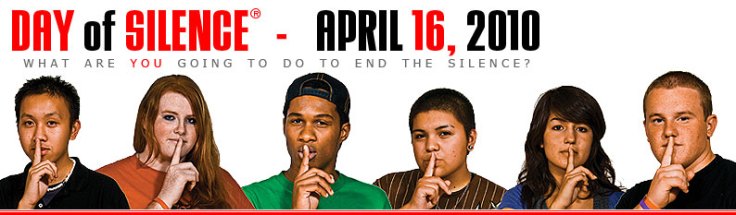
National Day of Silence


Regardless of one’s belief about sexuality we should all agree that bullying, for any reason, is never acceptable.  The National Day of Silence is an attempt to bring awareness and change to the bullying/violence directed at youth who are LGBTQ.

Founded in 1996 at the University of Virginia, the “Day of Silence” is billed by organizers as the largest student-led action towards creating safer schools for all, regardless of sexual orientation, gender identity or gender expression. Scheduled to be held this year on Friday, April 16, hundreds of thousands of students in middle schools, high schools, and colleges across America will take a vow of silence in an effort to encourage their schools and peers to address the problem of anti- lesbian, gay, bisexual, and transgender behavior. The event is now officially sponsored by the Gay, Lesbian and Straight Education Network (GLSEN). According to research from GLSEN, nearly nine out of ten LGBT students report verbal, sexual or physical harassment at school, and more than 30 percent report missing at least a day of school in the past month out of fear for their personal safety. According to the “Day of Silence “ official website (www.dayofsilence.org), there are four truths that address common misinformation about the Day of Silence. These truths are:

1. The Day of Silence’s purpose is to bring attention to anti-LGBT name-calling, bullying and harassment and effective responses.

2. Hundreds of thousands of students of all beliefs, backgrounds and sexual
orientations participate in the Day of Silence.

3. Day of Silence participants encourage schools to implement proven solutions to address anti-LGBT name-calling, bullying and harassment.

4. The day is a positive educational experience.

In 2008, students participating in the “Day of Silence” handed out “speaking cards” which said: “Please understand my reasons for not speaking today. I am participating in the Day of Silence, a national youth movement bringing attention to the silence faced by lesbian, gay, bisexual and transgender people and their allies in schools. My deliberate silence echoes that silence, which is caused by name-calling, bullying and harassment. I believe that ending the silence is the first step toward fighting these injustices. Think about the voices you are not hearing today. What are you going to do to end the silence?”

A WordPress.com Website.

Up ↑