Search

conversations on the fringe

Category

Adolescent Development

Goofus and Gallant in Youth Ministry


Remember the old Highlights Magazine we use to read as kids?  I remember spending hours looking for the hidden objects scattered throughout the magazine.  I also remember the Goofus and Gallant comics.  They were two polar opposite characters meant to teach the children reading about right and wrong.  I used to love reading them but must admit I fell more on the Goofus side of things as a kid.

Having been involved in youth ministry for over a dozen years, in one way or another, I’ve noticed that we still have those Goofus and Gallant kids sitting in our chairs and it got me thinking about the expectations we have for them.  Often, youth workers want contradictory things from their students – docile, “Gallant”-like manners along with extraordinary feats of intellectual, creative, or physical stature.  But the extraordinary talents actually arise from the “Goofus” side of each student’s personality.  As youth workers it’s essential that we learn to see those intense, often irksome traits as the seeds of your student’s greatness, possibly even their God-given giftedness.

Try thinking of:

  • Your stubborn or whining student as persistent.
  • Your complaining student as discerning.
  • Your argumentative student as forthright and outspoken.
  • Your loud student as exuberant.
  • Your shy student as cautious and modest.
  • Your reckless, accident-prone, or rule-breaking student as daring, risk-taking, and adventurous.
  • Your bossy student as commanding and authoritative.
  • Your picky, nervous, obsessive student as serious and detail-oriented.

Too often we only see what lies on the surface of each student and often the problematic behaviors and attitudes are misdirected strengths and giftedness.  Maybe if we only see the negative in our students it’s because we haven’t provided a more appropriate, kingdom-minded outlet for them to direct their energy and passion towards.

Goofus would always take advantage of any opportunity that presented itself in the comic strip.  How useful might that skill and attitude be if it were redirected towards God’s purposes?

ScreenWorld vs. RealWorld


I ‘ve been reading a challenging new book, Virtually You – The Dangerous Power of the E-Personality, written by Elias Aboujaoude, MD from Stanford.  In this book he pulls on years of research the looks at how our online personalities (e-personalities) are shaping how we interact with the offline world.  While he recognizes the unlimited potential of the internet for good he has identified some very dangerous changes in how we relate to, communicate with, and behave in the real world.  He identifies correlations between how we act and interact on the internet and how that in turn shapes us in non-screenworld.  I think this is a must read for anyone living in the technological age.

I have long wondered how the advent of instant, social, and mobile technology impacts our real world lives and here’s just a few things I’m thinking about in no particular order:

LinkedIn – Everyone I connect with is just a means to an end.  Every connection I make is meant to be a networking opportunity, on this site.  But when I become conditioned to see others through a “what can you do for me” lens this has the potential to negatively impact my real time relationships in the same way.

iProducts – With such a focus on individualization in how we experience our technology we can further reinforce this self-centered worldview that we fight so hard to diminish.  With apps on every interface I can make everything I use completely customized to my preferences.  It is precisely this behavior that sabotages our real time relationships.  Everything is about me and every encounter we have with others should be about reinforcing the idea that I am the center of the universe.  iAM.

Also, we can not only add apps that we want we can filter out anything we don’t want or that we don’t like.  I love Facebook’s content filters on my wall so I can hide or delete content from my “friends” that I don’t agree with, that is embarrassing to me, or I just flat out disagree with.  The ability to do this seriously retards our ability to tolerate anything that doesn’t conform to my ideology and beliefs.  I never have to be challenged or held accountable for anything online because I can just unfriend you or hide you news feed.  This also conditions us in real time to be intolerant to those who are different than us and does not lend itself to diversity.

I’m not even going to spend much time on the subject of instant gratification.  This should be a no-brainer.  If it’s not just Google it.

I’ve noticed that people tend to say things online that they would NEVER say in real life.  It’s like we can hide behind the wall of technology and convince ourselves that this isn’t real because I can’t see the other person.  Or, I am not even really being myself online so nobody knows it’s even me.  We tend to be more snarky, pretentious, and just downright mean.  When we spend inordinate amounts of time interacting behind a façade online we soon forget how to interact with people in real time and adopt many of our online behaviors as the new norm.

One last thing I’d like to mention is how disposable the internet makes things (i.e., relationships, apps, websites, etc.).  If this displeases us I will just move on to the next one.  We have been conditioned to not be content.  If a “friend” says something you don’t like, DELETE!  If you beat that game, DELETE!  If you are tired of Facebook, Google+.  There is always another option.  We are all free agents.  Loyalty is hard to come by on the web.  Can you see how dangerous this can be in real time?  Do we treat others the same way?

As we spend increasing amounts of time “connected” online we must know that it can, will, and is shaping how we interact with the real world around us, and not always for the better.  There are assuredly other ways technology is impacting us (i.e., shorted attention spans, impulsive shopping, compulsive gambling, shaping our sexual experiences and lives, etc.).  As we work with kids who have never know a world without mobile phones or the internet we must be increasingly aware of our own online behaviors and seek to bring the two world together as much as possible in a healthy and balanced manner.

Unhealthy Family System Model (Exploring Family pt. 2)


Most members of unhealthy family models oscillate between extremes of behavior choosing, mostly unconsciously, whichever behavior promises the greatest chance of surviving the moment.  You may see many of the following extremes in youth in your ministries.  It’s important to understand that these behaviors are functional and serve a purpose for these kids.  Understanding that will help you know what they need from us most.

High Intensity vs. Shutdown:  Alternating between feeling overwhelmed with emotional vs. physiological responses and shutting down.

Overfunctioning vs. Underfunctioning:  Alternating between working overtime to fill in what is missing vs. falling apart or barely holding it together.

Enmeshment vs. Disengagement:  Alternating between being overclose or fused in identities vs. avoidance, or cutting off leading to disengagement.

Impulsivity vs. Rigidity:  Alternating between behavior that leads to chaos vs. rigid, controlling behavior.

Grandiosity vs. Low Self-Worth:  Alternating between grandiose ideas and fantasies vs. feelings of low self-worth.

Denial vs. Despair:  Alternating between a state in which reality is denied or rewritten vs. despair, helplessness (or rage at having life as we know it slip away).

Abuser vs. Victim:  Alternating between the role of victim vs. the role of perpetrator.

Caretaking vs. Neglect:  Alternating between over concern leading toward enmeshment vs. underconcern leading toward disengagement.

Living with dysfunction is traumatizing to the body as well as the mind.  And living in this kind of system can lead to the kind of emotional deregulation that makes us want to turn to high-risk behaviors (substance use, unsafe sexual behavior, self-injury or violence towards others) to regain a sense of calm and regulation that dysfunction undermines.  The kids in our ministries are not typically “bad kids” making immoral choices because they lack long-term consequential thought processes.  Often the behaviors we see in our kids is simply their best attempt to manage life and survive in a world where most of the adults have left them to fend for themselves.

Understanding Family Systems (Exploring Family pt. 1)


 So much has been said about the current state of the family that there’s hardly anything new to add to the conversation.  It is regularly reported that the family is under attack and is falling apart due to changes in our culture.  However, the future need not be bleak for families that are seeking recovery from dysfunction.  Those who embrace the healing that God offers often report that they “do not regret the past nor do they wish to shut the door on it.”  This is because they have learned to find meaning in their struggle and allow it to be transformed into wisdom and a deepened capacity to experience the mystery, beauty and passion of God’s grace and the human condition.

All families are systems in that they have their own sets of rules and behaviors, interrelated substructures, and predictable patterns of behavior.  Family systems theorists have outlined some basic ideas to describe some of the fundamentals of the family system:

Families have interrelated elements and structures: The elements of the system are its family members.  Each element or family member has it’s own set of characteristics.  There are relationships between the elements that function in a relatively independent manner, and all of these create a structure.

Families interact in patterns:  There are predictable modes or patterns of interaction that emerge in a family system.  These patterns help maintain a family’s equilibrium and provide clues to how one functions in this system.

Families have boundaries that tend to be open or closed:  They have ways if defining who is on the inside or on the outside of the system.  Open boundary systems allow other elements to influence them and may even welcome external influences.  A closed system isolates its members in a self-contained world.  No family system is entirely one way or the other.

The whole is more than the sum of its parts:  Families function by this composition law.  Though families are made up of individual elements, the elements combine to create a whole which is greater than the sum of its parts.

There are messages and rules that shape relationships:  These messages, rules and agreements prescribe and limit a family member’s behavior over time.  They tend to be repetitive and redundant and are rarely, if ever, explicit or written down.  They may give power, induce guilt and control or limit behavior, and they tend to perpetuate and reproduce themselves.  Most messages can be stated in just a few words: be responsible, look good, keep family business private, succeed, etc.

Families have subsystems:  These subsystems contain a number of small groups, usually made up of two or three people.  The relationships between people in these subsystems are known as alliances or coalitions.  Each subsystem has its own boundaries and unique characteristics, and membership in the subsystem can change over time.

Families maintain a homeostasis or equilibrium:  (Steiglass 1987).  Families tend to make many small and large adjustments to maintain what family theorists refer to as homeostasis or an overall equilibrium.  This is much like a mobile, which when acted upon, will adjust to rebalance itself. (Satir 1988)  A family system, too, will seek to rebalance itself in order to maintain its equilibrium when the winds of the world act upon it.

It’s important when ministering to the whole family (which we should be doing more of) that we understand each unique family system and it’s many subsystems that support it.  It is especially important for us to assist the family in achieving homeostasis (balance) and it is upset.  This is a real, practical way of showing, teaching, and reinforcing that the God of the universe cares deeply for them and their current condition.  To be the incarnation of Jesus when a family’s world is falling apart is a great place to lead our ministries.

What You Assume Is What You Get


“Most of us are aware that our expectations affect our own behavior.  If you envision yourself losing this afternoon’s tennis match, you are more likely to lose.  If you assume you will win, your chances of winning increase significantly.  We call these self-fulfilling prophesies.  What many people don’t know is that one person’s beliefs can contribute to another’s outcomes.

Time and again, research has demonstrated that our assumptions shape the outcomes.  In an experiment, the Harvard professor Robert Rosenthal told students he had developed a strain of highly intelligent rats that could zip through a maze in record time.  Then he passed our regular old rats to all the students.   He told half of them they were getting the smart rats; the other half, he said, were getting dull rats.  The “smart” rats became faster and more accurate every day; the “dull” rats wouldn’t even leave the starting gate 29 percent of the time.”

The Art of Connecting by claire Raines and Laura Ewing

I read this today and wondered how many kids we leave at the starting gate, not because of their ability or capacity but because of our preconceived beliefs about them. 

It’s sad enough when we self-impose limitations on ourselves but when we do the same to others we fail at our fundamental task as youth workers…seeing what God sees in them and calling it out.

Where are we limiting the kids we influence?

Where are we calling out what God intended?

Have You Seen These Parents?


In Tim Elmore’s book, “iY – Our Last Chance To Save Their Future”, Tim describes different types of parenting styles that are less than helpful.  As I reflect on my youth ministry experiences I clearly see many of the following:

  • Helicopter Parents – they hover too close to the kids at all times.
  • Karaoke Parents – they try too hard to be cool, often parroting back what their kids do, say, and wear.
  • Dry-Cleaner Parents – drop their kids off for others to raise.
  • Volcano Parents – erupt over minor issues. (If you’ve never witnessed this just spend more time at Wal-Mart.  You’re bound to encounter these parents.)
  • Dropout Parents – these parents have just quit on their kids.
  • Bullied Parents – can’t stand up to their kids. 
  • Groupie Parents – treat their kids like rock stars.
  • Commando Parents – let rules trump relationships.

Parenting is hard.  When I think about the challenges facing kids today I can see why parents may be tempted to default to the perceived “path of least resistance” when it comes to parenting. 

Those of us in ministry take sabbath rests (or we should), clinicians work to prevent compassion fatigue to avoid burnout, those in the workforce are allowed vacation/sick time to recoup, but what about parents?  When are they afforded an opportunity to rest?  To retreat?  To sharpen their parenting skills?  To avoid parenting burnout? 

Can our ministries find better ways to support our parents? Here are a couple of suggestions:

1.  Plan regular gatherings for parents (i.e., retreats, workshops, one day training events, etc).  Events that just validates the struggles of parenting kids in today’s world.  Target the single mom, the over worked dad, the couple struggling to find time for each other and provide a soul care getaway. 

2.  Develop a mentoring ministry just for parents.  Find those from previous generations that have earned the grey hair from weathering the storm of raising kids and have them walk alongside a younger couple neck-deep in the pool.  (This would be a great affinity group for your small group ministry.)

These are just a couple of ideas to get you thinking.  We are likely to have the full support of the parents in our ministry efforts if they know we have their back first.

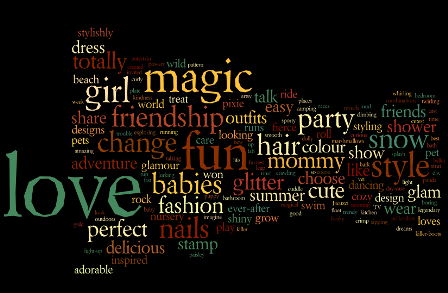
Gender Biased Vocabulary In Toy Ads


I came across an amazing graphic today and just had to share it with you.  I’d love to hear what you all think this means, if anything at all.  These graphics are word clouds created by the website achilleseffect.com exploring key words used in advertisement of toys for boys and girls.  My concern is what messages are our kids receiving as a result of marketing such as this?  We’d love to hear your thoughts on this.  How do you think this type of marketing is impacting our kids? 

Shame


Shame is both a feeling and a belief.  The feeling is very unpleasant.  People usually talk about noticing their face getting red, wanting to run away but finding themselves virtually paralyzed, being unable to maintain eye contact with anyone, losing all their strength and becoming incredibly weak and powerless, feeling totally exposed to people’s scrutiny and criticism, and collapsing inside into nothingness.  This feeling can be almost intolerable.  That’s why people find ways to make it go away, including converting shame into rage.

The belief that goes with shame is that somehow you are defective.  Broken.  Useless.  Flawed.  Damaged goods.  Ugly.  Worthless.  The deeper the shame, the more this damage seems impossible to mend.  Eventually, powerfully shamed people come to belive these messages:

  • “I am no good.”
  • “I am not good enough.”
  • “I am unlovable.”
  • “I don’t belong.”
  • “I should not exist.”


These are terribly damaging messages.  People who think this way about themselves suffer.  They see themselves as total losers.

Shame affects people’s behaviors as well.  Strongly shamed people tend to avoid others.  That’s because they are sure everyone else will see all their flaws.  They might not want to talk about themselves either, for the same reason. 

Shame has a spiritual component as well.  Deeply shamed people often feel cut off from spiritual support.  Judging themselves as unworthy of love or respect, they think of themselves as God’s mistake.  Consequently , they often feel empty inside.  While we acknowledge that we all have a sin condition, we must remember that we are made in the image of God as well.  We are the Imago Dei.

How Vulnerable Are You To Shame-Based Thinking?

Shame-based thinking is terrifying and dangerous.  If you have shame, you need to recognize how it infiltrates your thinking.  Otherwise, you won’t be able to stop them.  So ask yourself these questions:

  • Do people say that you are way too sensitive?
  • Do people often tell you that they don’t understand why something they said bothered you so much?
  • Do you become furious when people seem to disrespect you?
  • Is your reputation – your good name – something you strongly defend?
  • Do you frequently worry that people think you are stupid, worthless, ugly, or incompetent?
  • Do you get really mad after a moment of embarrassment, for instance, if someone points out something you did wrong?
  • Do you dwell upon put-downs that you believe people have made about you?
  • Do you become irate when people seem to be ignoring you?
  • Is anger, even really strong anger, easier for you to handle than feeling shame?
  • Do you sense that you convert feelings of shame to anger or rage?


Challenge The Validity Of The 5 Core Shame Messages

  • What thoughts do you already have that help you believe in your own essential goodness?
  • What new thoughts could you think that would also help in this way?
  • What do you do that helps you feel you are making a contribution to the world?
  • Who in your life regularly respects you, praises you, and/or appreciates you?
  • How are you kind to and accepting and forgiving of yourself?
  • How else could you become kinder to and more accepting and forgiving of yourself?

*Taken from “Rage – A Step-By-Step Guide To Overcoming Explosive Anger” by Ronald T. Potter-Efron, MSW, PH.D

What We’re Reading 02/15/2011


The Rise and Fall of the American Teenager – Thomas Hine

This book takes a look at the historical context of the American teenager experience.  Hine gives a great overview of the invention and development of the “adolescent” and their unique roles throughout our country’s history.  It drags at times but if hang in there you will walk away with a better sense of how the current state of affairs facing our youth today came to be.

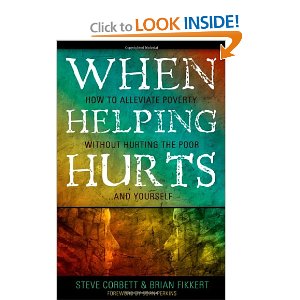
When Helping Hurts – Corbett & Fikkert

The subtitle of this book says it all, “How to alleviate poverty without hurting the poor and yourself”.  Many serve with the best of intentions but those intentions often don’t really help and can often make the problems worse.  This is a must read if your calling is to work with those in poverty regardless if the poverty is found in a third-world, urban city, or rural community.

Growing Up In America (the power of race in the lives of teens) – Christerson, Edwards, & Flory

Kara Powell at Fuller Youth Institute first brought this book to our attention.  If you work in a diverse population and want to understand how race shapes the experiences of our youth then this is a good primer.


Fist Stick Knife Gun – Geoffrey Canada

“If you wonder how a fourteen-year old can shoot another child his own age in the head and then go home to dinner, you need to know you don’t get there in a day, or week, or month.  It takes years of preparation to be willing to commit murder, to be willing to kill or die for a corner, a color, or a leather jacket.” (from inside flap)

This is a challenging book for us to read.  As we turned page after page we realized that we were part of the problem.  We all were.  For anyone  working in community where violence is the norm, this also is a must read.

A WordPress.com Website.

Up ↑