Search

conversations on the fringe

Category

Adolescent Development

This is your brain on opiates (part 2)


What are Opioids?

Opioids are a powerful class of drug that includes the illicit drug heroin as well as the licit pain relievers, such as; oxycodone, hydrocodone, codeine, morphine, and fentanyl.

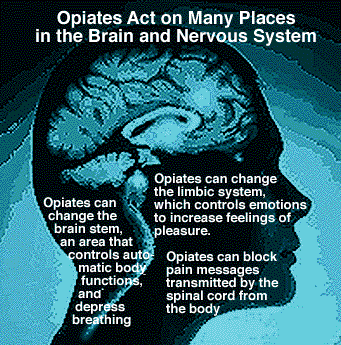
Our brains have natural opioid receptor hardwired within it. Opioid receptors interact with nerve cells in the brain and nervous system, controlling pain and delivering pleasure. Everyone on the planet does this naturally through our endorphin system.
brain3

When we engage in pleasurable activities the brain releases these feel good chemicals (dopamine/serotonin) and we experience them as a reward. These chemicals are the drive behind every habit we have. We will almost always do what that which gives us the greatest pleasure or has the greatest potential for removing pain or discomfort. We are hedonic seeking creatures. It’s why we eat when we’re hungry, have sex when we’re horny, and take medicine when we’re sick.

Our natural endorphin system has three primary functions; stabilize mood, provide energy/motivation, and control pain. All necessary to live a functional, normal life. Opiate dependent individuals ALL report they stopped using heroin and pain pills to get high within months of starting. They report primarily using just to feel normal, just to get up and go to work, take care of the kids, and not be sick.

scienceaddiction3

The Anatomy of an Opiate Addict

When we are prescribed or illicitly take opiates our brains hit the jackpot! Not only does this medication already belong in our systems, it’s much more powerful than the stuff we make naturally. If we take the medication or heroin long enough our brain, being a very efficient organ, will reduce or just stop manufacturing the naturally occurring chemicals and rely on you to provide it via drugs. It’s like the brain lays off all the workers and shuts down the factory.

Opiates are highly addictive because the chemical already belong there. The brain would fight off other foreign chemicals such as cocaine or methamphetamines because it sees them as a threat. But with opiates it just says, “Back that truck up and give me as much as you’ve got!” This is called dependency.

Unfortunately, the longer you use opiates the stronger the neural pathways get that support their use. Consequently, the lesser use natural pathways get weaker and less used neural pathways have a tendency to prune themselves to make room for more frequently used neurons/pathways. The brain, fueled by illicit or licit opiate use creates a superhighway that supports that drug use and he old, natural pathways are like rural back roads that aren’t driven anymore, overgrown and broken down. Even if you tried to take the old rural road it would be hard to traverse because of a lack of use.

So, now an individual is completely dependent on opiates and the brain structure has changed to accommodate this drug use. Paying for daily drugs gets expensive quickly as tolerance to the medication increases. This often leads a moral, kind, good person to do awful things they never imagined doing, such as stealing from grandmother, taking money from their kids piggy banks, selling the family jewelry, or robbing someone using physical force. All just to avoid feeling violently ill. All with the intent to make right as soon as they’re feeling better. But, that never comes. There’s always tomorrow and more sickness. The hole just gets deeper. Add to that the growing sense of shame, guilt, and remorse and you have a desperate, self-loathing person and the perfect antidote for feeling sick and hating yourself…use more drugs. Repeat. Repeat. Repeat.

If a person began using prescription pain medication and developed a dependency, it’s a short jump to heroin. Maintaining a pill addiction is very expensive and heroin is a cheaper, more powerful alternative. Once you use a needle to inject heroin, there’s no going back from there. Your life becomes a hopeless cycle of using drugs, getting high, hustling for money, getting high. Repeat. Repeat. Repeat.

Opiate use now becomes the only way for a person to function as a human. Most of the public lacks this understanding and perpetuates the false belief that if someone really wanted it bad enough they’d just stop using. Science tells us it simply does not work that way.

*In our next post we’ll explore the conditions known as tolerance and withdrawal and why quitting cold-turkey rarely works and can even be dangerous.


Addressing the Heroin/Opioid Epidemic


The United States is in the midst of an epidemic. The small county I work in reports 3-5 calls per day for opiate related overdoses. Treatment programs from around the area have huge wait lists and people are dying every day. Experts at a recent round table discussion on the problem are predicting that it will only get worse as we tighten physician prescribing of opiates, as opiate dependent people will switch to the cheaper, more accessible heroin to fight off withdrawals.

This, and other reasons are why we are designating time and space to exploring this growing concern. Heroin and opiates are not an inner city problem. The largest growing base of new users are 20-something, middle class, Caucasians, especially women. This problem in already in your backyard if you live in the suburbs or a rural community.This is not to say opiates doesn’t affect those in the city but the myth that it’s inner city black males that are the largest consumer and dealer of illicit drugs in not supported by research.

Over the next several months we will explore the following topics related to the opiate epidemic that is sweeping across the nation.

  1. Who? What? Why? Where? – An overview of the current state of this problem
  2. Understanding how opiates change the brain
  3. Tolerance/Withdrawal/Detoxification
  4. Medication Assisted Treatment – Methadone & Suboxone
  5. What does effective treatment look like and what are the barriers to accessing it
  6. Harm Reduction (needle exchanges, narcan, and condoms)
  7. Mass Incarceration and the War on Drugs
  8. Co-occurring Disorders
  9. Family Systems and Substance Use
  10. Intersection of class, race, gender, sexual orientation
  11. Education and Employment
  12. What is the role of the church?

U.S. drug control strategy has largely been focused on law enforcement. Police have done their jobs and have done them well. In the last 20 year we have seen record arrests, drug seizures, and incarceration of drug offenders and yet the drug problem is only getting worse and more deadly, not to mention wasted valuable taxpayer resources. It’s time to collectively create a new way of addressing the drug problem in our country. What we’re doing now clearly isn’t working.

Keeping Children/Youth Safe From Abuse In Church: Best Practices


In our last post we looked at what faith communities need to know and think about regarding sexual abuse. In this post we will look at very specific behaviors churches/ministries can take to reduce the actual risk of sexual abuse occurring in their buildings and programs.

  • Do the hard work of developing policies

Many churches or youth and children ministries already have policies on how to address abuse when it occurs. It would be prudent to develop an abuse prevention policy as well. For example, have a 2-1 adult-child ratio at all times would be a safer practice that allowing 1-on-1 adult to child ratio. If a child needs spiritual counseling or is in a mentoring relationship with an adult, restricting physical touch to only public spaces or simply minimizing (side hug vs. full frontal, prolonged hug) is also a best practice.

  • Identify and question confusing behaviors

This will take an environmental curator, who is skilled at communication, to shape the culture and make it safe and acceptable to talk about confusing or uncomfortable behaviors. Nobody wants to accuse someone of sexual abuse but having a climate that identifies behavior that could potentially be misconstrued as inappropriate is a good starting point.

  • Don’t wait! Address inappropriate behaviors

Speaking up about your concerns is not the same as accusing someone of sexual abuse and could serve to keep unhealthy or dangerous behaviors from occurring in the first place. The very nature of prevention is to act before the illegal sexual behavior occurs. Drawing a boundary of safe and appropriate behavior early is the important work of prevention. Don’t wait until the line is crossed, be proactive.

  • No hide and seek

When planning for child/youth space, we often look at it through the lens of the child or physical harm to the child. We should also be looking at our physical spaces through the lens of a potential perpetrator; where are there blind spots, hiding spaces where abuse might occur. Be mindful of the activities you play, such as; hide and seek, sardines, etc. Consider adding windows to interior walls for safer viewing and higher levels of accountability.

  • Plan for messy people

The church is and should be a place of restoration and reconciliation. People who have sexually abuse others in the past often look to faith and religion as a means of overcoming their problem. What are your protocol for how they can navigate your community? Are certain areas off limits? What legal restrictions do they have? Who is meeting with the abuser for counseling and accountability? Thinking this through ahead of time will give you the opportunity to be proactive and decrease the likelihood of unwanted difficulties.


In our next post we will look at best practices for responding to a sexual abuse crisis should it happen in your church/program.

Church Readiness for Sexual Abuse: Reducing Risk


Churches that care about children are an important part of our culture. The need for spiritual and moral development is imperative for our future as humans and also for the future of all faith traditions. The significance of growing into a community of people that love and support you is essential for a successful transition into adulthood as well. Unfortunately, any community can be vulnerable to sexual abuse, especially when adults interact with those children on a regular basis.

  • It can happen in your church.

“It won’t ever happen here.” Famous last words. There is no such thing as a “typical” sexual predator. They come in all shapes and sizes. We can’t afford to live in denial about the possibility that sexual abuse can happen in our ministries. Talking about it won’t make it happen. Talking about it publicly will help keep it in the forefront of your minds and will communicate a sense of safety, that this issue is not being ignored. Parents are always thinking about the possibility so your ministry should as well.

  • You’re as sick as your secrets.

Should sexual abuse occur in your church or ministry, you might be tempted to avoid the public scandal. Don’t! Nothing feels worse to the victim than brushing abuse under the rug. Don’t minimize or victim-blame. Speak out directly to your community, cooperate with the police, walk alongside the victim, and walk alongside the abuser. This will be messy but it will be worth it in the end as it will give everyone a sense of security that this issue is taken seriously and that we (the church) is in it for the long road to recovery.

  • Background checks – it’s a good start.

Background checks should be required by now. If not, you’re already vulnerable to predatory individuals. While background checks are essential, law enforcement says that 88% of sexual assault goes unreported. That means 9 out of 10 offenders will not have a criminal background. Proper vetting, relationships, ongoing supervision, accountability, and policy are necessary to reduce the risk of abuse happening in your ministry.

  • The importance of policies and procedures.

Beyond background check, extensive and comprehensive policies and procedures are going to be your best defense against child/youth abuse in your community. Good policies make clear that your ministry is committed to nurturing safe spaces for your kids to explore faith and tradition.


Legal Issues For The Church Dealing With Child/Youth Abuse


Limits of Confidentiality/Legal Issues/Mandated Reporting

Everything that happens in therapy is strictly confidential and protected under the law. Your therapist cannot discuss anything about your therapy, or even identify that you are a client, unless you give your written permission. There are some instances when a therapist will talk with someone about your case without obtaining your consent that is allowed under the law. These include reviewing your case during Clinical Supervision or Peer Consultation, sharing required information with your health insurance, discussing your case with other mental health or healthcare providers to collaborate services provided to you.

There are some instances in which a therapist is required to break confidentiality under the law. These apply to those in ministry serving youth. They include:

Mandated Reporting Laws

Child Abuse – includes physical or sexual abuse, neglect, excessive corporal punishment, child abduction and exposure to domestic violence that is traumatizing to the child. Child abuse reporting only applies to children who are currently under the age of 18. Abuse that happened in your childhood prior to becoming an adult is not reportable unless there is a child who is currently in danger of being abused. The reporter is required to report suspected child abuse in addition to known incidents of abuse. Child abuse is reported to the Department of Children and Family Services who will investigate the abuse allegations.

Spend time with your staff and volunteers exploring what each form of abuse looks like and what your policy/procedures are for addressing it. (i.e., neglect – being left at home at a young age without adequate food available for long periods of time.)

Dependent Adult/Elder Abuse – includes physical abuse, sexual abuse, neglect, abduction, financial abuse, self-neglect, isolating the adult and not providing proper care, including medical and mental health needs. Again, the reporter is required to report suspected abuse in addition to know abuse.

Intent to Harm Yourself or Others

If anyone discloses the intention or a plan to harm another person, you are legally required to warn the intended victim and report this information to legal authorities. If they discloses or imply that they have  plan for to harm or kill themself, you, as a mandated reported, are required by law to take precautions to keep them safe, which includes contacting a family member or friend to watch over them for a specified amount of time, a referral to a psychiatric hospital or police intervention if necessary.


Contact your local child protective services to ask about state specific requirements and training.

Myths About Child Abuse


Myths of Abuse

Child abuse is more than bruises or broken bones. While physical abuse is shocking due to the scars it leaves, not all child abuse is as obvious. Ignoring children’s needs, putting them in unsupervised, dangerous situations, or making a child feel worthless or stupid are also child abuse. Regardless of the type of child abuse, the result is serious emotional harm.

MYTH #1: It’s only abuse if it’s violent.

Fact: Physical abuse is just one type of child abuse. Neglect and emotional abuse can be just as damaging, and since they are more subtle, others are less likely to intervene. .

MYTH #2: Only bad people abuse their children.

Fact: While it’s easy to say that only “bad people” abuse their children, it’s not always so black and white. Not all abusers are intentionally harming their children. Many have been victims of abuse themselves, and don’t know any other way to parent. Others may be struggling with mental health issues or a substance abuse problem.

MYTH #3: Child abuse doesn’t happen in “good” families.

Fact: Child abuse doesn’t only happen in poor families or bad neighborhoods. It crosses all racial, economic, and cultural lines. Sometimes, families who seem to have it all from the outside are hiding a different story behind closed doors.

MYTH #4: Most child abusers are strangers.

Fact: While abuse by strangers does happen, most abusers are family members or others close to the family

MYTH #5: Abused children always grow up to be abusers.

Fact: It is true that abused children are more likely to repeat the cycle as adults, unconsciously repeating what they experienced as children. On the other hand, many adult survivors of child abuse have a strong motivation to protect their children against what they went through and become excellent parents.

MYTH #6: Children/Youth somehow played a role in the abuse.

Fact: Regardless of age, victims of abuse are just that, victims. Victim-shaming is a practice of blaming the victim for the actions of the abuser. Children of young ages do not have the ability to defend themselves from an abuser. Adolescents, while often times oppositional, are still protected as minors and therefore not able to defend themselves against the attacks of an abuser. They lack resources to defend or protect themselves and are protected by the law because of this.

Abuse Defined


If we’re going to dig into this messy and difficult topic then we’re going to need to define what abuse is and identify the different types of abuse a child/young person can experience.

Abuse Defined

Child abuse and neglect are defined by Federal and State laws. The Federal Child Abuse Prevention and Treatment Act (CAPTA) provides minimum standards that States must incorporate in their statutory definitions of child abuse and neglect. The CAPTA definition of “child abuse and neglect,” at a minimum, refers to:

  • “Any recent act or failure to act on the part of a parent or caretaker, which results in death, serious physical or emotional harm, sexual abuse, or exploitation, or an act or failure to act which presents an imminent risk of serious harm”

The CAPTA definition of “sexual abuse” includes:

  • “The employment, use, persuasion, inducement, enticement, or coercion of any child to engage in, or assist any other person to engage in, any sexually explicit conduct or simulation of such conduct for the purpose of producing a visual depiction of such conduct; or
  • The rape, and in cases of caretaker or interfamilial relationships, statutory rape, molestation, prostitution, or other form of sexual exploitation of children, or incest with children”

Types of Abuse

Nearly all States, the District of Columbia, American Samoa, Guam, the Northern Mariana Islands, Puerto Rico, and the U.S. Virgin Islands provide civil definitions of child abuse and neglect in statute. As applied to reporting statutes, these definitions determine the grounds for intervention by State child protective agencies. States recognize the different types of abuse in their definitions, including physical abuse, neglect, sexual abuse, and emotional abuse. Some States also provide definitions in statute for parental substance abuse and/or for abandonment as child abuse.

Physical Abuse

Physical abuse is generally defined as “any non-accidental physical injury to the child” and can include striking, kicking, burning, or biting the child, or any action that results in a physical impairment of the child. In approximately 38 States and American Samoa, Guam, the Northern Mariana Islands, Puerto Rico, and the Virgin Islands, the definition of abuse also includes acts or circumstances that threaten the child with harm or create a substantial risk of harm to the child’s health or welfare.

Neglect

Neglect is frequently defined as the failure of a parent or other person with responsibility for the child to provide needed food, clothing, shelter, medical care, or supervision such that the child’s health, safety, and well-being are threatened with harm. Approximately 24 States, the District of Columbia, American Samoa, Puerto Rico, and the Virgin Islands include failure to educate the child as required by law in their definition of neglect. Seven States specifically define medical neglect as failing to provide any special medical treatment or mental health care needed by the child. In addition, four States define as medical neglect the withholding of medical treatment or nutrition from disabled infants with life-threatening conditions.

Sexual Abuse/Exploitation

All States include sexual abuse in their definitions of child abuse. Some States refer in general terms to sexual abuse, while others specify various acts as sexual abuse. Sexual exploitation is an element of the definition of sexual abuse in most jurisdictions. Sexual exploitation includes allowing the child to engage in prostitution or in the production of child pornography.

Emotional Abuse

Almost all States, the District of Columbia, American Samoa, Guam, the Northern Mariana Islands, Puerto Rico, and the Virgin Islands include emotional maltreatment as part of their definitions of abuse or neglect. Approximately 32 States, the District of Columbia, the Northern Mariana Islands, and Puerto Rico provide specific definitions of emotional abuse or mental injury to a child. Typical language used in these definitions is “injury to the psychological capacity or emotional stability of the child as evidenced by an observable or substantial change in behavior, emotional response, or cognition,” or as evidenced by “anxiety, depression, withdrawal, or aggressive behavior.”

Parental Substance Abuse

Parental substance abuse is an element of the definition of child abuse or neglect in some States. Circumstances that are considered abuse or neglect in some States include:

  • Prenatal exposure of a child to harm due to the mother’s use of an illegal drug or other substance (14 States and the District of Columbia)
  • Manufacture of a controlled substance in the presence of a child or on the premises occupied by a child (10 States)
  • Allowing a child to be present where the chemicals or equipment for the manufacture of controlled substances are used or stored (three States)
  • Selling, distributing, or giving drugs or alcohol to a child (seven States and Guam)
  • Use of a controlled substance by a caregiver that impairs the caregiver’s ability to adequately care for the child (seven States)

Abandonment

Approximately 17 States and the District of Columbia include abandonment in their definition of abuse or neglect, generally as a type of neglect. Approximately 18 States, Guam, Puerto Rico, and the Virgin Islands provide definitions for abandonment that are separate from the definition of neglect. In general, it is considered abandonment of the child when the parent’s identity or whereabouts are unknown, the child has been left by the parent in circumstances in which the child suffers serious harm, or the parent has failed to maintain contact with the child or to provide reasonable support for a specified period of time.

Protecting Against Sexual Abuse in Youth Programs


6 Stages of Child Grooming

Wikipedia defines Child Grooming as befriending and establishing an emotional connection with a child, and sometimes the family, to lower the child’s inhibitions for child sexual abuse. It lures minors into trafficking of children, illicit businesses such as child prostitution, or the production of child pornography.

Child groomers are often drawn into roles such as youth ministry or other positions where they have access to children and youth like teachers, coaches, mentors, etc.

A child groomer is often methodical in their strategy and the grooming process can happen quickly, depending on the response from the child, or over a number of years. It can happen in person, online, or a combination of both. Most offenders are someone the youth and family know and have a measure of trust.

There are 6 common stages of grooming and it is important to be aware of for those of us who work with children and youth.


Stage 1: Initial Contact: If an abuser does not already have access to a child they will often target children that are unaware of sexual abuse, are shy, insecure, or children considered ‘weird’ or ‘needy’. They want: access, trust, and ability to control.  Often children with a single parent, or children with busy or inattentive parents are targeted and are increased risk of grooming. The reason for this is that there is a perceived likelihood that the child/youth will desire the attention and affection of an adult because of the deficiency in their primary relationships.

Points of contact include:

  • Church/youth group
  • School
  • Shopping Mall
  • Movie theater
  • Bus/train stations
  • Athletic activities/events
  • Parks
  • Anywhere a child/youth might gather with minimal direct supervision

Stage 2: Gaining Trust: The sex offender gains trust by watching and gathering information about the child, getting to know his or her needs and how to fill them. In this regard, sex offenders mix effortlessly with responsible caretakers because they generate warm and calibrated attention. Often, offenders fly under the radar in youth oriented programs because, on the surface, they look like and act like the ideal staff/volunteer.

Stage 3: Befriending the Victim: Once the individual groomer begins to meet the emotional/relational needs of the child, that adult may assume noticeably more importance in the child’s life and may become idealized. Often gifts, extra attention and affection may be a red flag for one adult in particular and they should be monitored closely at this point.

Stage 4: Isolating the Child: The grooming sex offender uses the developing special relationship with the child to create situations in which they are alone together. This private, one-on-one time further reinforces a special connection. Babysitting, tutoring, coaching and special trips all enable this isolation. A special relationship can be even more reinforced when an offender cultivates a sense in the child that he is loved or appreciated in a way that others, not even parents, provide. Parents may unwittingly feed into this through their own appreciation for the unique relationship; grateful that their child has someone in their life that understands and cares for them. Parents can be manipulated into thinking this individual is a conduit for the parent to understand their own strained relationship with their child.

Stage 5: Sexualizing the Relationship: Once there is sufficient emotional dependence and trust, the offender progressively sexualizes the relationship. Desensitization occurs through talking, pictures, even creating situations hugging more frequently and for longer periods of time. At that point, the adult exploits a child’s natural curiosity, using feelings of stimulation to advance the sexuality of the relationship. When conditioning a child, the grooming sex offender has the opportunity to shape the child’s sexual preferences and can manipulate what a child finds exciting and extend the relationship in this way. The child comes to see himself as a more sexual being and to define the relationship with the offender in more sexual and special terms. For a child who has yet to reach identity achievement, sexualization like this can disrupt and distort that natural process.

Stage 6: Maintaining Control: Once the sex abuse is occurring, offenders commonly use secrecy and blame to keep the child in continued participation and silence—particularly because the sexual activity may cause the child to withdraw from the relationship. Children in these entangled relationships—and at this point they are entangled—confront threats to blame them, to end the relationship and to end the emotional and material needs they associate with the relationship, whether it be the money, the coaching one receives, special outings or other gifts. The groomer creates a system of rewards for the behavior and the loss of those rewards becomes the consequences for ending the relationship. The child may also feel that the loss of the relationship and the consequences of exposing it will humiliate and render them even more unwanted by the offender, family, and friends.


Grooming for sexual exploitation purposes is a complex and effective strategy that we must be vigilant about. If you work with youth in any capacity, you are charged with protecting these precious children. Blaming them for the abuse will only render them more vulnerable to future attacks because it will further marginalize them from protective factors.

In our next post we will explore our response should we suspect grooming/sexual abuse is occurring and how we can work to prevent it in the first place.

Building Bridges (pt. 4 – Sense of Belonging/Community)


In our research, the greater the disconnect, the greater the sense of marginalization among LGBTQ youth, the higher the likelihood of high-risk behaviors. To compensate for the deep depression of being isolated many would turn to drugs or alcohol to numb those feelings. Many contemplate suicide at higher rates than their non-LGBTQ peers. Often they would move towards unhealthy communities seeking acceptance and belonging and engage in unsafe and unhealthy sexual activity just to feel a sense of love and that of being wanted.

There are culturally accepted norms by which we hold all people to. The more they are like the norm, the greater level of acceptance and support we are likely to give them. It’s not pretty but it’s honest. Jesus flipped this upside down with his kingdom. One of his goals for the kingdom was to restore people to community with each other and with the Father. The more an individual is different from the norm (those with power) the higher the risk of marginalization.

Add to this tendency, the variety of intersections an individual might have that increases societal marginalization, such as; race, ethnicity, gender, religion, ability, disability, socio-economic status, location, etc.. The more different one tends to be the higher the likelihood of alienation and separation from mainstream society, thus impacting one’s ability to feel and maintain a sense of belonging and connectedness.

So, if we (humanity) are to work towards the reconciliation of all things, how might we better do this?

Where have our strategies failed? Where have they succeeded? What new strategies do we need? What posture might we take that increases the potential for restoration to occur?

A WordPress.com Website.

Up ↑