Search

conversations on the fringe

Author

CotF Admin

Cognitive Distortions


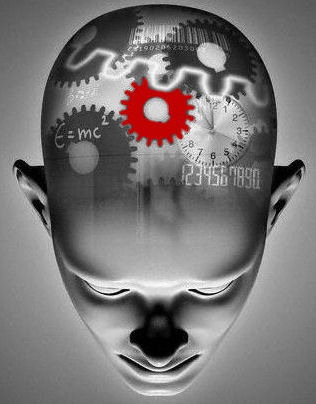
What’s a cognitive distortion and why do so many young people have them? Cognitive distortions are simply ways that our mind convinces us of something that isn’t really true. These inaccurate thoughts are usually used to reinforce negative thinking or emotions — telling ourselves things that sound rational and accurate, but really only serve to keep us feeling bad about ourselves.

For instance, a young person might tell themselves, “I always fail when I try to do something new; I therefore fail at everything I try.” This is an example of “black or white” (or polarized) thinking. The young person is only seeing things in absolutes — that if they fail at one thing, they must fail at all things. If they added, “I must be a complete loser and failure” to their thinking, that would also be an example of overgeneralization — taking a failure at one specific task and generalizing it their very self and identity.

Cognitive distortions are at the core of what many cognitive-behavioral and other kinds of therapists try and help a young person learn to change in psychotherapy. By learning to correctly identify this kind of “stinkin’ thinkin’,” a teen can then answer the negative thinking back, and refute it. By refuting the negative thinking over and over again, it will slowly diminish overtime and be automatically replaced by more rational, balanced thinking.

The Scriptures say in Romans 12:2 “Do not conform any longer to the pattern of this world, but be transformed by the renewing of your mind. Then you will be able to test and approve what God’s will is—his good, pleasing and perfect will.”

In order to teach students to think critically we must first help them identify any faulty thinking they may have developed over the course of their lives and hold those faulty thoughts up against the light of Scripture.

Below is a list of common distortions…

Cognitive Distortions

Aaron Beck first proposed the theory behind cognitive distortions and David Burns was responsible for popularizing it with common names and examples for the distortions.

1. Filtering.

We take the negative details and magnify them while filtering out all positive aspects of a situation. For instance, a person may pick out a single, unpleasant detail and dwell on it exclusively so that their vision of reality becomes darkened or distorted.

2. Polarized Thinking (or “Black and White” Thinking).

In polarized thinking, things are either “black-or-white.” We have to be perfect or we’re a failure — there is no middle ground. You place people or situations in “either/or” categories, with no shades of gray or allowing for the complexity of most people and situations. If your performance falls short of perfect, you see yourself as a total failure.

3. Overgeneralization.

In this cognitive distortion, we come to a general conclusion based on a single incident or a single piece of evidence. If something bad happens only once, we expect it to happen over and over again. A person may see a single, unpleasant event as part of a never-ending pattern of defeat.

4. Jumping to Conclusions.

Without individuals saying so, we know what they are feeling and why they act the way they do. In particular, we are able to determine how people are feeling toward us.

For example, a person may conclude that someone is reacting negatively toward them but doesn’t actually bother to find out if they are correct. Another example is a person may anticipate that things will turn out badly, and will feel convinced that their prediction is already an established fact.

5. Catastrophizing.

We expect disaster to strike, no matter what. This is also referred to as “magnifying or minimizing.” We hear about a problem and use what if questions (e.g., “What if tragedy strikes?” “What if it happens to me?”).

For example, a person might exaggerate the importance of insignificant events (such as their mistake, or someone else’s achievement). Or they may inappropriately shrink the magnitude of significant events until they appear tiny (for example, a person’s own desirable qualities or someone else’s imperfections).

With practice, you can learn to answer each of these cognitive distortions.

6. Personalization.

Personalization is a distortion where a person believes that everything others do or say is some kind of direct, personal reaction to the person. We also compare ourselves to others trying to determine who is smarter, better looking, etc.

A person engaging in personalization may also see themselves as the cause of some unhealthy external event that they were not responsible for. For example, “We were late to the dinner party and caused the hostess to overcook the meal. If I had only pushed my husband to leave on time, this wouldn’t have happened.”

7. Control Fallacies.

If we feel externally controlled, we see ourselves as helpless a victim of fate. For example, “I can’t help it if the quality of the work is poor, my boss demanded I work overtime on it.” The fallacy of internal control has us assuming responsibility for the pain and happiness of everyone around us. For example, “Why aren’t you happy? Is it because of something I did?”

8. Fallacy of Fairness.

We feel resentful because we think we know what is fair, but other people won’t agree with us. As our parents tell us when we’re growing up and something doesn’t go our way, “Life isn’t always fair.” People who go through life applying a measuring ruler against every situation judging its “fairness” will often feel badly and negative because of it. Because life isn’t “fair” — things will not always work out in your favor, even when you think they should.

9. Blaming.

We hold other people responsible for our pain, or take the other track and blame ourselves for every problem. For example, “Stop making me feel bad about myself!” Nobody can “make” us feel any particular way — only we have control over our own emotions and emotional reactions.

10. Shoulds.

We have a list of ironclad rules about how others and we should behave. People who break the rules make us angry, and we feel guilty when we violate these rules. A person may often believe they are trying to motivate themselves with shoulds and shouldn’ts, as if they have to be punished before they can do anything.

For example, “I really should exercise. I shouldn’t be so lazy.” Musts and oughts are also offenders. The emotional consequence is guilt. When a person directs should statements toward others, they often feel anger, frustration and resentment.

11. Emotional Reasoning.

We believe that what we feel must be true automatically. If we feel stupid and boring, then we must be stupid and boring. You assume that your unhealthy emotions reflect he way things really are — “I feel it, therefore it must be true.”

12. Fallacy of Change.

We expect that other people will change to suit us if we just pressure or cajole them enough. We need to change people because our hopes for happiness seem to depend entirely on them.

13. Global Labeling.

We generalize one or two qualities into a negative global judgment. These are extreme forms of generalizing, and are also referred to as “labeling” and “mislabeling.” Instead of describing an error in context of a specific situation, a person will attach an unhealthy label to themselves.

For example, they may say, “I’m a loser” in a situation where they failed at a specific task. When someone else’s behavior rubs a person the wrong way, they may attach an unhealthy label to him, such as “He’s a real jerk.” Mislabeling involves describing an event with language that is highly colored and emotionally loaded. For example, instead of saying someone drops her children off at daycare every day, a person who is mislabeling might say that “she abandons her children to strangers.”

14. Always Being Right.

We are continually on trial to prove that our opinions and actions are correct. Being wrong is unthinkable and we will go to any length to demonstrate our rightness. For example, “I don’t care how badly arguing with me makes you feel, I’m going to win this argument no matter what because I’m right.” Being right often is more important than the feelings of others around a person who engages in this cognitive distortion, even loved ones.

15. Heaven’s Reward Fallacy.

We expect our sacrifice and self-denial to pay off, as if someone is keeping score. We feel bitter when the reward doesn’t come.

Brokenness


Is it possible that one could derive worth/value for being the worst of the worst? Does being worse than anyone else set me apart as special in my mind? Does that make me and my situation unique? If I am the exception to every rule then does that make me exceptional?

There are many things I would like to say about our brokenness. But where to begin?

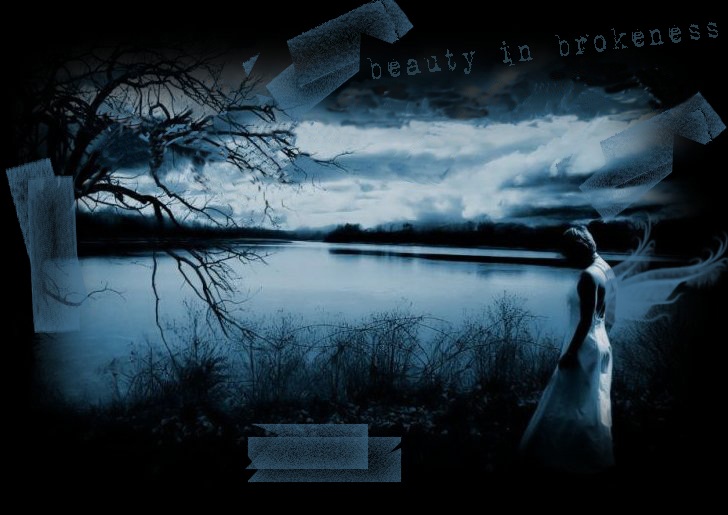
Perhaps the simplest beginning would be to say that our brokenness reveals something about who we are. Our sufferings and pains are not simply bothersome interruptions of our lives; rather, they touch us in our uniqueness and our most intimate individuality. The way I am broken tells you something unique about me if you pay attention. The way you are broken tells me something unique about you if I pay attention. This is precisely why we should feel very privileged when we share freely some of our deep pain with each other, and that is why it is an expression of my trust in you when I disclose to you something of my vulnerable side. Our brokenness is always lived and experienced as highly personal, intimate and unique.

*I am deeply convinced that each human being suffers in a way no other human being suffers. No doubt, we can make comparisons; we can talk about more or less suffering, but, in the final analysis, your pain and my pain are so deeply personal that comparing them can bring scarcely any consolation or comfort. In fact, I am more grateful for a person who can acknowledge that I am very alone in my pain than for someone who tries to tell me that there are many others who have a similar or worse pain.

Our brokenness is truly ours, nobody else’s. Our brokenness is as unique as our fingerprint or heartbeat.

So many suffer from physical or mental disabilities, and there are great amounts of economic poverty, homelessness, and a lack of basic needs, the suffering I am most accustomed to and most aware of is the suffering of the broken heart.

*On a daily basis I am reminded of the great hurt and suffering cause by broken relationships. I see the immense pain of severed relationships between lovers, friends, colleagues, father and son, mother and daughter, and yes, even God. The feelings that are so prevalent are feelings of rejection, of being ignored, of not belonging, and of being left alone to fend for one’s self.

In my own tribe, with many in the grips of addiction, the greatest source of suffering is not the addiction itself, but the accompanying feelings of being useless, worthless, unappreciated, and unloved. We humans can endure great deprivations with tremendous steadfastness, but when we sense we no longer have anything to contribute; we quickly lose our grip on life.

*All that our society has to say suggests that death is the great enemy who will finally get the better of us against our will and desire. But thus perceived, life is little more than a losing battle, a hopeless struggle, a journey of despair. My own vision and yours too, I hope, is radically different…

…so, if you are interested in starting on the journey of life, we have much to learn from each other, we have much more to say to each other, because the journey of life calls not only for determination and perseverance, but also for a certain knowledge of the terrain to be crossed. I don’t want us to wander in the desert as many before us have. I don’t want you to dwell there for even as long as I have. Although it remains true that everyone has to learn for him or herself, I still believe that we can prevent those we love from making the same mistakes we did. In the terrain of life, we need guides. I would like to be that for you. I would like you to be that for me. If we listen to each others brokenness we can learn from each other and lead each other into our preferred future and maybe, just maybe, we can find beauty in our brokenness.

* excerpts taken from “Life of the Beloved” – Henri Nouwen

Ministry to Persons with Disabilities


By Adam Ballard

Even at the beginning of a new century, with ever-increasing awareness of disability issues, there remains a deficiency in the church’s response and service to those who are disabled.  And nowhere are the needs for effective ministry to this community more obvious than in the city.  Cities, for the most part, are where the disabled live, attempt to find work, and hope that their basic needs can be met.  Efforts in the public sector to provide services to the disabled population are commendable, but are usually stretched thin by lack of manpower and adequate funding.  This is a need that could be met by the church.

Beyond these practical considerations, it could be argued that the community of faith has a theological and missional obligation to engage in such ministry activities.  Jesus’ ministry was largely concerned with healing and restoration of individuals to community life.  I have often felt that the Lord’s healing activity was primarily intended to eliminate the social barriers between those who were seen as unclean or less than whole and those who weren’t.  Although such barriers are less noticeable today, they still exist.  The church should be continuing Christ’s healing ministry in the city.  Whether it’s through job training, advocacy, health care, or simply seeking opportunities to fully integrate the disabled into the life together, there is much that can be done.

more…

National Day of Silence


Regardless of one’s belief about sexuality we should all agree that bullying, for any reason, is never acceptable.  The National Day of Silence is an attempt to bring awareness and change to the bullying/violence directed at youth who are LGBTQ.

Founded in 1996 at the University of Virginia, the “Day of Silence” is billed by organizers as the largest student-led action towards creating safer schools for all, regardless of sexual orientation, gender identity or gender expression. Scheduled to be held this year on Friday, April 16, hundreds of thousands of students in middle schools, high schools, and colleges across America will take a vow of silence in an effort to encourage their schools and peers to address the problem of anti- lesbian, gay, bisexual, and transgender behavior. The event is now officially sponsored by the Gay, Lesbian and Straight Education Network (GLSEN). According to research from GLSEN, nearly nine out of ten LGBT students report verbal, sexual or physical harassment at school, and more than 30 percent report missing at least a day of school in the past month out of fear for their personal safety. According to the “Day of Silence “ official website (www.dayofsilence.org), there are four truths that address common misinformation about the Day of Silence. These truths are:

1. The Day of Silence’s purpose is to bring attention to anti-LGBT name-calling, bullying and harassment and effective responses.

2. Hundreds of thousands of students of all beliefs, backgrounds and sexual
orientations participate in the Day of Silence.

3. Day of Silence participants encourage schools to implement proven solutions to address anti-LGBT name-calling, bullying and harassment.

4. The day is a positive educational experience.

In 2008, students participating in the “Day of Silence” handed out “speaking cards” which said: “Please understand my reasons for not speaking today. I am participating in the Day of Silence, a national youth movement bringing attention to the silence faced by lesbian, gay, bisexual and transgender people and their allies in schools. My deliberate silence echoes that silence, which is caused by name-calling, bullying and harassment. I believe that ending the silence is the first step toward fighting these injustices. Think about the voices you are not hearing today. What are you going to do to end the silence?”

Suicide and the Hopeline


Suicide is a permanent solution to a temporary problem. Suicidal behavior is complex, as some risk factors vary with age, gender, and ethnic group and may even change over time. The risk factors for suicide frequently occur in combination. Research has shown that more than 90% of people who commit suicide have depression or another diagnosable mental or substance abuse disorder. 

The number one cause of suicide is untreated depression. A depressive disorder is an illness that involves the whole body, mood, and thoughts. It affects the way a person feels about oneself and the way one thinks about things. The taking of ones own life tragically demonstrates the terrible psychological pain experienced by a person who has lost all hope…

more…

Teen Self-Injury


Approximately 1% of the population has, at one time or another, used self-inflicted physical injury as a means of coping with an overwhelming situation or feeling.

Self-harm scares people. The behavior can be disturbing and difficult to understand, and it is often treated in a simplistic or sensational manner by the press. As a result, friends and loved ones of people who self-injure often feel frightened, isolated, and helpless. Sometimes they resort to demands or ultimatums as a way of trying to regain some control over the situation, only to see things deteriorate further.

The first step toward coping with self-injurious behavior is education: bringing reliable information about who self-injures, why they do it, and how they can learn to stop to people who self-injure and to their friends, loved ones, and medical caregivers. The following links will serve as a starting point for those interested in learning more about self-injury.

more…

Adolescent Depression


The statistics on teen depression are sobering. Studies indicate that one in five children have some sort of mental, behavioral, or emotional problem, and that one in ten may have a serious emotional problem. Among adolescents, one in eight may suffer from depression. Of all these children and teens struggling with emotional and behavioral problems, a mere 30% receive any sort of intervention or treatment. The other 70% simply struggle through the pain of mental illness or emotional turmoil, doing their best to make it to adulthood.

The consequences of untreated depression can be increased incidence of depression in adulthood, involvement in the criminal justice system, or in some cases, suicide. Suicide is the second leading cause of death among young people ages 15 to 24. Even more shocking, it is the sixth leading cause of death among children ages 5-14. The most troubling fact is that these struggling teens often receive no counseling, therapy, or medical intervention, even though the National Institute of Mental Health reports that studies show treatments of depression in children and adolescents can be effective.

more…

Teen Dating Violence Article


Many people wonder how dating abuse and violence begins and there is no definite answer, but it most commonly begins with the wearing down of the victim’s self-esteem.  Abusers do this because it gives them authority and power over the other person.  “Abusers may feel insecure or uncertain about themselves or their lives.  Or they may feel like they don’t have much control over anything.  So they use power and control in their relationships to make themselves feel better.”2 Once the victim’s self-esteem is broken down, (s)he becomes vulnerable to all forms of abuse.  There are countless resources now available to public that will equip them to educate not only themselves, but also the youth they come in contact with.  Knowledge is power and power can end this horrible cycle of violence.

more…

UYWI Reload 2010 – Chicago


Reload Chicago is an exciting learning opportunity for urban youth workers.  This is an affordable, one day training event.  Reload will be hosted on the beautiful campus of North Park University.  We’ll be leading a workshop on how to minister to youth who have experienced abuse.  We’re hoping to see you there…

A WordPress.com Website.

Up ↑