Search

conversations on the fringe

Author

CotF Admin

Youth Suicide Risk Assessment Questionnaire


The threat of suicide is a complex and often complicated event for a youth worker to navigate.  Many of us have had absolutely no training whatsoever when it comes to properly handling a mental health crisis.  Often we feel like we’re missing something or aren’t covering all of our bases.  Unfortunately, we live in a litigious society and documentation such as this can make all the difference in protecting your ministry from potential legal action.

Conversations on the Fringe is committed to producing resources to help parents and youth workers navigate the murky waters of adolescent mental health.

By clicking here, you can download a questionnaire that will help you navigate a suicide threat.

Disclaimer

The information above is for general information purposes only. The information is provided by Conversations on the Fringe and while we endeavor to keep the information up to date and correct, we make no representations or warranties of any kind, express or implied, about the completeness, accuracy, reliability, suitability or availability with respect to the website or the information, products, services, or related graphics contained on this document for any purpose.  Any reliance you place on such information is therefore strictly at your own risk.

In no event will we be liable for any loss or damage including without limitation, indirect or consequential loss or damage, or any loss or damage whatsoever arising from harm to or loss of life of, or in connection with, the use of this resource.

Roles Of Children In Dysfunctional Families


When we think of a DYSFUNCTIONAL FAMILY it’s like a machine which is run by gears with weak or cracked cogs. As one cog breaks it puts more stress on the other cogs of that gear and then on other cogs of other gears. Eventually the whole machine shuts down. DYSFUNCTION means just that: unable to FUNCTION properly. Each individual in a family is like a gear and each perceived responsibility is like the cog. The main or original DYSFUNCTIONAL person may show their DYSFUNCTION in many ways: they may have difficulty coping, may yell, rage, isolate, verbally abuse, physically abuse, chemically abuse, gamble, cheat on their partner, threaten to leave, threaten suicide, give the silent treatment etc. This causes everyone to walk on eggshells and lots of CRAZY MAKING goes on.

The grown-ups or parent figures assume two roles: DYSFUNCTIONAL PERSON and the other plays the ENABLER. You decide which applies to your situation. In some cases the mother may be the DYSFUNCTIONAL PERSON and father the ENABLER and visa versa in other cases. Both roles play off each other. The DYSFUNCTIONAL PERSON is trapped in self delusion. They actually believe that they are justified in what they do and how they act. They have very distorted thinking. They seem to find ways to strengthen their own credibility and weaken everyone else’s in the family. Therefore, if anyone were to tell someone outside the family who the DYSFUNCTIONAL PERSON really was, many people would not really believe them because of the way they present themselves to the public.

The ENABLER also has distorted thinking and believes that they are basically responsible for the other person’s DYSFUNCTION. And they are therefore very fixated on the other person and often times appear to be uncaring or neglectful toward their children. But this person has only so much energy to go around and most of it goes toward the “squeakiest wheel,” the DYSFUNCTIONAL PERSON.

The children in the family may play more than one role at a time or only one. Each role gives the child their basic identity and shapes their script and future. The role also gives them their sense of worth and value. So they too get trapped in their roles and also develop distorted thought patterning. This is how the tapes, to be carried through life, about who we are and who we will become, begin to develop. Each role carries some aspect about the DYSFUNCTION of the whole family.

The following suggestions are for dealing with some of the typical behaviors of children from dysfunctional families.

A. “The Hero” is……always volunteering, very responsible and manifests a drive, almost a compulsion, to be on top. These students have an insatiable need for attention and approval and are often class leaders who are parental or bossy in their relationships with other peers. They tend to be very disappointed when losing, superior or snobbish when winning, and are frequently labeled “teacher’s pet” by other students.

Recommended adult behaviors:

1. Give attention at times when the student is not achieving.
2. Validate the student’s intrinsic worth, and try to separate his or her feelings or self-worth from achievements.
3. Let the student know it’s OK to make a mistake.

Adult behaviors to avoid:

1. Letting the student monopolize conversations or always be the first to answer a question or to volunteer.
2. Letting the student validate his or her self-worth by achieving.

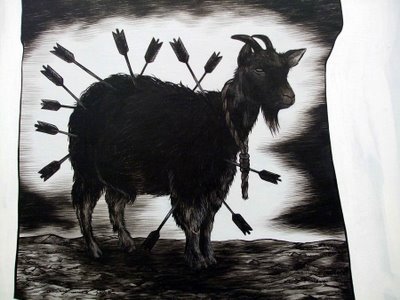
B. “The Scapegoat”……tends to blame others, makes strong peer alliances, and is often disciplined by teachers or other adults for breaking rules. The rebel tends to talk back, neglects work, and can be very frustrating to work with. The typical adult comments are “I don’t know what to do with that kid,” or “I’ve tried everything!”

Recommended adult behaviors:

1. Let the student know when the behavior is inappropriate.
2. Give the student strokes whenever he or she takes responsibility for something.
3. Attempt to develop empathy for the student. This prevents adults from being angry or getting defensive.
4. Set limits. Give clear explanations of the student’s responsibilities and clear choices and consequences.

Adult Behaviors to avoid:

1. Feeling sorry for the student.
2. Treating the student as special and giving him/her more power.
3. Agreeing with the student’s complaints about other students or other adults.
4. Taking the student’s behavior personally or as a sign of one’s own incompetence as a teacher, counselor, pastor, volunteer, etc.
C. “The Mascot”……

tends to be funny or distracting and gets attention frequently. This student likes to hide, make faces, pull the chair out from someone else, stick chalk in the erasers and otherwise act out.

Recommended adult behaviors:

1. It’s OK to get appropriately angry at the “class clown’s” behavior.
2. Try to give the student a job in the class with some importance and responsibility.
3. Hold him/her accountable.
4. Encourage responsible behavior.
5. Encourage appropriate sense of humor.
6. Insist on eye contact.

Adult behaviors to avoid:

1. Do not try to “laugh with” the clown. He/she will not understand it.
2. Remember the class clown’s underlying fear.
3. Remember the underlying depression this behavior often masks.

D. “The Lost Child”……

often gets lost in the shuffle. Adults sometimes can’t remember the student’s name because he/she is so quiet and is seldom a behavior problem. These students tend to have few, if any, friends and like to work alone in group settings, often in very creative though non-verbal ways. Other students either leave them alone or tend to tease them about never getting involved.

Recommended adult behaviors:

1. Every adult should take an inventory. If there are names that you consistently cannot remember, that may be a lonely or lost student.
2. Try to pick on their personal interests and often they will begin to talk.
3. Try some contact on a one-to-one basis. Find out who they are!
4. Point out and encourage the student’s strengths, talents and creativity.
5. Use touch slowly.
6. Help the student to be in a relationship. There will usually be one student they are drawn to in the class.
7. Encourage working in small groups, two’s and three’s, to build trust and confidence.

Adult behaviors to avoid:

1. Do not let the student off the hook by allowing him/her to remain silent or never calling on them.
2. Do not let other kids take care of the student by talking or answering for him/her.
E. “The Caretaker”……

tends to focus on helping other people feel better. They are motherly in their relationships to other students. This is usually a “liked” child by friends and adults. This student’s sensitivity is noticeable.

Recommended adult behaviors:

1. Assist the student on focusing on him/herself.
2. Ask the student to identify their desires for themselves.
3. Help this kids learn to play.
4. When they are assisting another, ask them to identify how they are feeling about the other’s pain.
5. Validate the student’s intrinsic worth, separating their worth from their care-taking.

Adult behaviors to avoid:

1. Calling on these students to focus on another’s emotional pain.

sources:

http://www.thechildrensplaceprogram.org

http://www.samhsa.org


Coping With Burnout


For youth workers (paid or volunteer), there can be nothing more frightening than the belief that something terrible might happen to a student that you have invested so much time and energy in.  As a substance abuse counselor, I struggle with the reality that one day someone could overdose and die regardless of how much I try to help.  I live with the often frantic sense that “there had to be something I could have done!”

Never knowing when crisis or tragedy might happen we learn to be hypervigilant…always on our guard.  Is today the day I get the call?  Will it be a car accident?  A school shooting?  Suicide?

Sometimes we feel as though we’re in a lethal game of chess with our kids, always trying to be two moves ahead and aware of the possible counter-moves.  This type of hypervigilance can be exhausting.

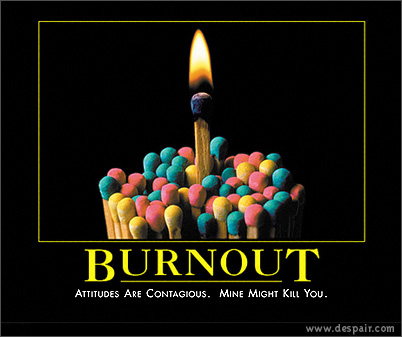
As a youth worker of At-risk kids, you may find yourself on a constant emotional rollercoaster with no scheduled stops.  In times of crisis we often set aside our own needs entirely and as a result we risk burnout and compassion fatigue.  Be reassured that the time for balance will come if you’re intentional, but there are some things you can do now.

1.  Seek supportive relationships – This will be essential in avoiding burnout.  Build a network of friends, family, and peers who are kind and encouraging.  Don’t isolate yourself in fear or shame.  Seek respite in these relationships from the intensity of the situations your kids are facing.

2.  Develop health-conscious behaviors– This is three-fold as I see it; rest, exercise, nutrition.  Get adequate sleep, avoid snack foods, take a brisk walk daily.  All three are important for emotional stability and combating low levels of energy.

3.  Have fun – A life that is overrun with doom and gloom and that is absent of joy is not one worth having.  We need recreation.  It brings balance.  Laughter releases endorphins which cause us to feel pleasure in our brain.  Often, when working with At-risk kids we lose our ability to laugh.  The best cure for a “lost laugh” is a “Three Stooges-I Love Lucy-Gilligan’s Island” marathon.

4.  Spiritual retreat – It is essential that we create time for retreat.  We should develop the discipline, schedule in our calendars, add to our budgets, the practice of seeking spiritual direction.  There’s something magical and refreshing about pulling away from the insanity and seeking Abba’s face in solitude or with a spiritual companion.  Jesus would often pull away after a busy day of ministry to connect with his Father.  He would travel across the lake, go up the mountain, or into the garden to pray.

This simple act breaks us of our dependency on ourselves.  It causes us to reflect on whether or not we are growing a savior complex.  Have I, with the best intentions, placed myself in the position of God?  I have found that when my levels are the lowest it’s because I have been the one trying to “save” and “fix” kids myself.  Being God is hard work and I’m just not cut out for it.

If we expect to be in this for the long-haul we must pace ourselves.  It is an intentional discipline that we need help in cultivating.  I am thankful for the other youth workers God has placed in my life that help me find balance.  They constantly remind me I am not God.  And, we laugh a lot.  As a result we have a better chance of loving and ministering to the kids in our community out of an overflow instead of a deficiency.

2nd Annual Abbey’s Walk


In March of 2009, our community lost one of our young people, Abbey, to a drug addiction. The loss has been disheartening. Since this loss, it has become our goal to prevent other friends and families from suffering a similar loss. Abbey’s family and friends have put together a walk to raise funds to be donated to local treatment providers. The money raised is then used to develop resources to help people in our community in overcoming addiction.

This year, you may choose to walk in memory of someone, or in support of someone dealing with addiction. To participate in this year’s walk click here to register.

The walk will be held on the 3rd Saturday of September (Sept. 18th).
The walk will begin at 9:00 a.m., and will take place at the Pekin Park Lagoon.
There will be a walk fee of $15.  $20 if you would like a t-shirt.  $5 for window decals.

If your community has a campaign that addresses the issue of substance abuse I would encourage you to participate.  If you have been touched by substance abuse, please donate your time, resources, and financial support.

Tipping Points


Take a jar of water, cool it and cool it, and it remains water down to 35 degrees, then 34, then 33, then suddenly the water turns to ice.  The temperature was consistently reduced, but at one point the whole system suddenly changed.  The point at which the system changed is what we know call the “Tipping Point”.  Arguably the most complex system known to science is the human brain.  There are billions upon billions of neurons, each with possibly thousands of synaptic connections bathed in multiple chemical transmitters, it is difficult to imaging the sheer volume of interactions that go on.  It may be hard to determine what small factor could have been in the wrong place at the wrong time to contribute to a mental health problem – like a tiny pebble kicked off a path that creates an avalanche further down the mountain.

The beauty of tipping points is that a complex system can just as easily tip up as down.  A small and seemingly inconsequential action can lead to a successful turn around from a seemingly hopeless situation.  Perhaps a lonely, depressed young man decides one day to go for a walk.  Then he starts walking a few times a week.  On one occasion he tries running for a while.  Then he begins to run more often.  Each time he can go a little farther.  He soon notices that he is sleeping and eating better, that he has more energy and looks better in the mirror.  That isolated first walk hay have started a sustained chain of events that are now building toward improving the man’s self-esteem and increasing his energy, affecting his entire brain-body system.  One day, feeling physically and mentally stronger, the man finds a new job.  He begins to make new friends, starts to laugh = and suddenly he finds his life has turned around.

As youth workers we must understand that each moment we spend with a student is potentially that student’s tipping point toward a full life in Christ.  The potential holistic impact is off the charts.  That one, seemingly innocuous conversation, that trip to the store where you invited him/her to “tag along”, that one encouraging text message might turn out to be the turning point in the story.  Likewise, that moment when a student is being “jokingly” picked on and we don’t advocate, that one moment when I’m too busy with budget stuff to take a call, that one moment when I refuse to listen to another break up story could have a lasting impact as well.  Everything we do has impact, whether we know it or not. 

“Be wise in the way you act toward outsiders; make the most of every opportunity. Let your conversation be always full of grace, seasoned with salt, so that you may know how to answer everyone,” Col. 4:5-6(NIV)

Excerpts taken from “A User’s Guide to the Brain” by John J. Ratey M.D.

Who’s Really In Charge?


As a parent I sometimes think this is really what’s happening.  😉

What’s a Trigger?


Often, we as youth workers, parents, teacher, etc.  don’t realize the impact our words can have on our students.  When a student has experienced trauma or substance abuse problems they can be “triggered” by elements in their environment that leads them back into their pain or negative behaviors.  We, as caregivers, need to understand what a trigger is and how it can impact our kids.  Once we understand this phenomena we can then capture it and bring it under the healing power of Christ.

So just what is a trigger?

PsychCentral describes a trigger as something that sets off a memory tape or flashback transporting the person back to the event of her/his original trauma.

Triggers are very personal; different things trigger different people. The survivor may begin to avoid situations and stimuli that she/he thinks triggered the flashback. She/he will react to this flashback, trigger with an emotional intensity similar to that at the time of the trauma. A person’s triggers are activated through one or more of the five senses: sight, sound, touch, smell and taste.

The senses identified as being the most common to trigger someone are sight and sound, followed by touch and smell, and taste close behind. A combination of the senses is identified as well, especially in situations that strongly resemble the original trauma. Although triggers are varied and diverse, there are often common themes.

Sight

Often someone who resembles the abuser or who has similar traits or objects (ie. clothing, hair color, distinctive walk).

Any situation where someone else is being abused (ie. anything from a raised eyebrow and verbal comment to actual physical abuse).

The object that was used to abuse.

The objects that are associated with or were common in the household where the abuse took place (ie. alcohol, piece of furniture, time of year).

Any place or situation where the abuse took place (ie. specific locations in a house, holidays, family events, social settings).
Sound

Anything that sounds like anger (ie. raised voices, arguments, bangs and thumps, something breaking).

Anything that sounds like pain or fear (ie. crying, whispering, screaming).

Anything that might have been in the place or situation prior to, during, or after the abuse or reminds her/him of the abuse (ie. sirens, foghorns, music, cricket, chirping, car door closing).

Anything that resembles sounds that the abuser made (ie. whistling, footsteps, pop of can opening, tone of voice).

Words of abuse (ie. cursing, labels, put-downs, specific words used).
Smell

Anything that resembles the smell of the abuser (ie. tobacco, alcohol, drugs, after shave, perfume).

Any smells that resemble the place or situation where the abuse occurred (ie. food cooking ,wood, odors, alcohol).
Touch

Anything that resembles the abuse or things that occurred prior to or after the abuse (ie. certain physical touch, someone standing too close, petting an animal, the way someone approaches you).
Taste

Anything that is related to the abuse, prior to the abuse or after the abuse (ie. certain foods, alcohol, tobacco).

Sometimes It Blows Up In Your Face


You pour your life into students, let someone else pour some life into you. At the National Youth Workers Convention they create an environment where times of worship, seminar speakers, and communicators pour some life back into you. Learn more at http://nywc.com/

French Gay Friendly McDonald’s Commercial Causing Quite A Stir


There’s a new viral ad for McDonald’s in France that’s causing quite a stir.  What are you’re thoughts on the video?  What do you like about the ad?  What do you dislike about the ad?  How can this stimulate healthy discussion about the issue of LGBTQ teens?

A WordPress.com Website.

Up ↑