Today could be the day that everything changes…make the most of it…

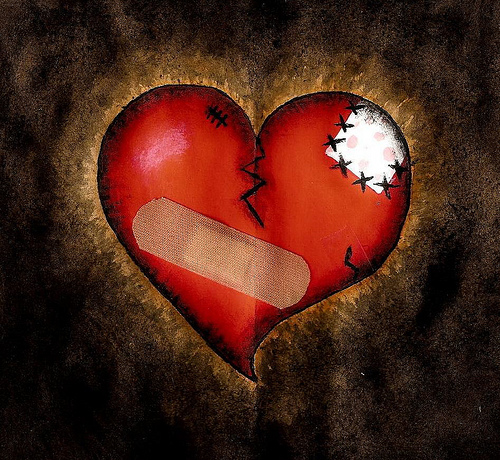 One of the ironies of surviving abuse is that victims might further harm themselves. Self-mutilation includes; burning, hitting, cutting, excessive scratching, using harsh abrasives on skin or scalp, poking sharp objects into flesh, head banging, pulling out hair or eyebrows for noncosmetic purposes, inserting objects into body orifices, excessive fasting, self-surgery, excessive tattooing or piercing, or refusing needed medication. This seems like such a paradox. Why in the world would those who are already in intense pain further injure themselves? It seems to make no sense, yet it does. Most often, it follows a history of protracted childhood trauma (such as physical and/or sexual abuse), not a single exposure. The person harms himself/herself in response to overwhelming, dissociated pain. At least sixteen reasons account for this complex behavior. Self-mutilation:
- Expresses pain that can’t be verbalized. It can be expected when the abused child was told to keep the offense a secret, or when the abuse happened before the child learned to talk. The nonverbal outcry says, “Something terrible has happened.” It may be a plea for help.
- Attempts to convert emotional pain to physical pain. Physical pain can be localized, displaced, and released, providing temporary distraction from psychic pain.
- Paradoxically relieves pain. Stress triggers natural pain killers in the brain, temporarily easing psychic and physical pain. This so-called stress-induced analgesia might also help explain victims become addicted to trauma-related stimuli.
- Is a way to feel alive. Numbing and dissociation feel dead. Perhaps feeling pain is better than feeling nothing. Physical pain grounds one in reality and counters dissociation. It returns focus to the present, providing relief from intrusion. Some people report that blood provides a soothing, warm sensation that relieves stress and reminds them they are still alive.
- Provides an illusory sense of power, a sense of mastery and control of pain. Reversing roles and assuming the role of offender, the person might think, “This time when I am hurt, I am on the controlling end. I can determine when the pain begins and ends.”
- attempts to complete the incompleted. The idea of repetition compulsion states that we repeat what we’ve experienced until we’ve completed old business – processing it and learning it and learning a better way. Unfortunately, simply reenacting the abuse doesn’t change the trauma material. Complete processing of the material does.
- Is a way to contain aggressive tendencies and pain. The person thinks, “If I discharge my anger and hurt on myself, then I won’t hurt anybody else.” Maybe it is the only way to stop anger, at least for a time. Learning constructive ways to express emotions is the antidote for this approach.
- Vents powerful emotions that cannot be venter directly. (e.g., I can’t rage at the powerful perpetrator, so I vent on myself instead).
- Makes the body unattractive to spare further abuse. This harmful defense makes sense to a child who was powerless to stop sexual abuse. Excessive thinness or weight might accomplish a similar purpose.
- Might become associated with pleasant moments. Following abuse, some abusers become remorseful, attentive, and loving for a time. Thus, the victims might be conditioned to think that pain signals the beginning of good times.
- Imitates what the child has seen. Children naturally imitate behavior that is modeled by adults. They learn to abuse if their parents are abusing, just as they will learn kindness if the parents model that.
- Can be an attempt to attach to parents. Children have a deep need to attach to parents, even if they are rejecting. In order to gain the abusive parent’s approval, the child might internalize his or her punishing attitudes. The child’s thinking might be, “I’ll show I’m good and devoted to Mom by doing what she does to me.” This makes more sense when we realize that abusers often isolate the victims, making them more dependent on them for approval. Need for approval causes the victim to identify with the aggressor. A child might confuse abuse with emotional closeness, especially if abuse was the only form of attention the parent showed. The child might think, “If I keep hurting myself, eventually they will love me.”
- Can mark a return to the familiar, understandable past. The child thinks, “I don’t understand loving, soothing behavior, but I do understand pain. It doe not always feel good, but at least it is predictable.”
- Is consistent with one’s view of self. People treat themselves consistent with their self image. Abuse teaches the victim, “I’m worthless, bad, no good, an object – so it makes sense to treat myself like an object.” Self-punishment consistently follows from feeling blameworthy, bad, or inadequate.
- Is consistent with one’s view of a maimed world and a nonexistent future.
- May ensure safety if it results in hospitalization.
The fact that a young person hurts themself does not mean they are insane. They are simply repeating what they learned to cope with intolerable pain. As they learn productive ways to meet their needs they will no longer need to do this.
Share this:

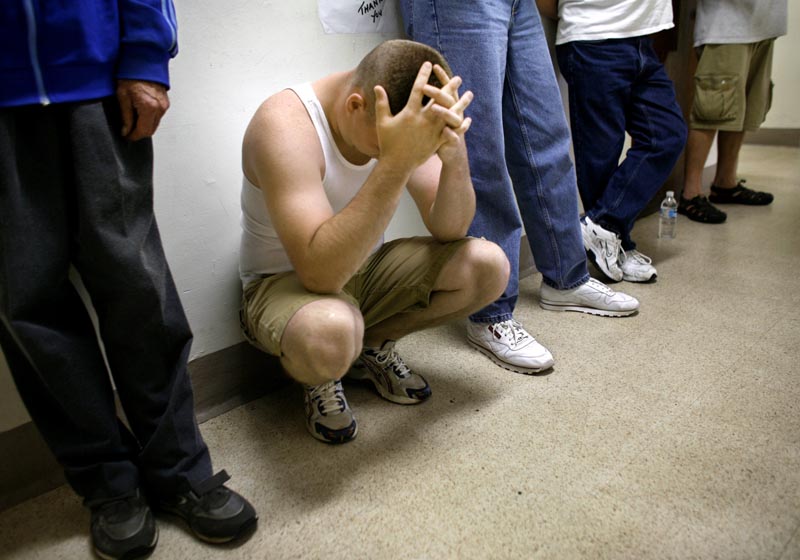 Suicide, sexual abuse, drive by shootings, car accidents, date rape. These events and many other traumatic events occur on a seemingly regular basis and can impact the surviving student(s), families, or youth workers more deeply than imagined. If you work with kids long enough then you will experience a traumatic event and it will serve you well to understand the phenomenon of Post Traumatic Stress Syndrome that is often left in the wake of a horrible event.
The following is an overview of what PTSD might look like in your youth, their families, and those that serve them.
Many triggers in the present environment can activate traumatic memory material and stimulate intrusions. Triggers are cues – often harmless – that have become associated with the original trauma. In some way, they remind us of the trauma or recall traumatic memories. The association may be obvious or subtle. They may trigger most of the memory or just certain fragments of it. Often, they trigger intrusions against our will. Recognizing triggers, and realizing that their power to elicit intrusions is understandable, are steps towards controlling its effects on our thoughts, feelings, and behaviors.
Some people find it helpful to understand triggers by their twelve categories:
- Visual: seeing blood or road kill reminds one of wounded bodies; black garbage bags can remind us of body bags; a secretary sees her boss standing over her and is reminded of her abusive father.
- Sound (auditory): a backfiring car sounds like gunshot to a veteran or inner city youth exposed to street violence; sounds during lovemaking remind one of sexual abuse.
- Smell (olfactory): the smell of semen or another’s body during intercourse, or the smell of cologne or aftershave reminds one of sexual assault.
- Taste (gustatory): eating a hamburger reminds one of an automobile accident that occurred as one drove away from a fast food restaurant.
- Physical or Body
- Kinesthetic means the sensation of movement, tension, or body position. Thus, running when tense might be reminiscent of trying to flee a beating; trying to do progressive muscle relaxation (tensing muscles, lying on one’s back with eyes closed) might trigger memories of sexual abuse.
- Tactile or touch: pressure around wrists or waist, being gripped, held, or otherwise restrained (perhaps even a hug) reminds one of torture or rape; feeling someone on top of you; a man accidentally kicked in bed by his wife while sleeping recalls a midnight attack while in prison; being touch during sexual relations with a loved one in the same place or in the same way as occurred during abuse will likely trigger traumatic memories.
- Pain or other internal sensations; surgical pain, nausea, headaches, or back pain might trigger memories of torture or rape. Elevated heart rate from exercising at night might remind one of a similar sensation during a high stress encounter such as a drive by shooting.
6. Significant Dates or Seasons
- Anniversary dates of the trauma
- Seasons of the year with their accompanying stimuli (temperature, lighting, colors, sounds)
- Other dates (e.g., a mother becomes distressed on the date of her murdered son would have graduated)
7. Stressful Events/Arousal: Sometimes changes in the brain due to the trauma cause it to interpret any stress signals as a recurrence of the original trauma. At other times, seemingly unrelated events are actually triggers. Examples include:
- A woman visits her spouse in the hospital which triggers a flashback of grief and loss. As a young woman she has a late term miscarriage in the same hospital.
- An argument with a significant other triggers memories of parents arguing violently.
- Criticism from a teacher reminds a person of being abused by his father.
- A frightening dream with no apparent related theme activates the fear of a traumatic memory. (Of course, a nightmare of the trauma would understandably elicit strong feelings of distress.)
- Athletic competition reminds an athlete of a previous traumatic injury or of a being abused when she performed poorly in the past.
8. Strong Emotions: feeling lonely reminds one of abandonment; feeling happy reminds a woman of a rape that occurred after having dinner with her best friend; anything that makes one anxious, out of control, or generally stressed, such as PMS. Some memories are state-dependent, meaning that the brain activates them only when the emotional state is the same as the original memory. Thus, if one was drunk when raped, she may feel symptoms only when drinking; if raped when sober, then drinking might provide an escape from the symptoms.
9. Thoughts: rejection by a lover leads to the thought “I am worthless,” which triggers the same thoughts that occurred when one was abused as a child.
10. Behaviors: driving reminds a person of a serious accident.
11. Out of the Blue: Sometimes intrusions occur when you are tired, relaxing, or your defenses are down. Often a thought or something you’re not aware of will elicit symptoms; so might the habitual act of dissociating during stressful times.
12. Combinations: often triggers contain several memory aspects at once. For example:
- Walking to the parking lot on a dark summer’s night (visual+kinesthetic+seasons) triggers a memory of a violent crime.
- Fireworks (sound+flarelike sight) triggers combat memories.
- Intercourse (weight+touch+sounds+relaxing+the smell of aftershave+the pressure of a hug or a squeezing sensation or the wrists) trigger memories of rape.
This list is by no means exhaustive but hopefully it will shed some light on the problems some of your students face. There are some implications for our ministries too. If we know a student has been sexually assaulted then we should be cognizant to the fact that some games we play where there is physical contact (human knot) or close proximity to others (passing a Life Saver on a toothpick) may trigger a response to that stimulus. We can simply pull them aside and prep them ahead of time as to what the game will entail and give them an option to participate or not.
Students who suffer from trauma need therapeutic interventions. Often we operate outside of our expertise and we must realize that we are not trained counselor. A referral for the student and their family is often the best thing we can do for them. Be honest with yourself about your limitations and seek outside support if necessary.
Share this:

 Unconditional worth means that each person has infinite, unchanging worth as a person. This worth comes with a person’s creation, and cannot be earned nor lost by poor behavior. This is not the same as market or social worth, which clearly are earned and lost. This core worth is not comparable. So you might be a better doctor and I might be a teacher, but worth as a person is equal. In theological terms, worth as a person is a given; each and every soul is precious because it is created by our loving Father.
The core self is like a crystal of great worth. Each facet represents a beautiful potential or attribute in embryo. Each person is complete in the sense that he or she has every attribute needed (such as seeds of love, integrity, intelligence, and talents). However, no one is completed or perfect, since no one has developed all attributes fully. Yet the worth of the core is infinite. People sometimes ask, “But how can I have worth if I have never accomplished or produced anything noteworthy?” And I ask them to think why parents might spend two million dollars seeking treatment for childhood cancer.
Some externals (e.g., respectful treatment, making wise decisions) shine up the core and help us enjoy its beauty more. Other externals (e.g., criticism, abuse, unkind behaviors) can cover or camouflage the core like a dirty film. The basic core is still there, however, unchanged in worth as a person.
The goals of strengthening this building block are:
- Separate core worth from externals. Externals include performance, appearance, health/disease, condition of the body, wealth, race, social status, gender, education, how we are treated, and traumatic events that happened.
- See clearly one’s inner strengths. The idea is not to see each strength as completely developed, but to appreciate that the capacities are there, in embryo, to think rationally, to feel, to sacrifice, to love, to make responsible choices, to recognize truth and worth, to beautify, to be gentle, patient, or firm. These capacities exist in each person, at different stages of developement, because we are made in the image of a God who is all these things and more.
With this understanding, one is freed to find satisfaction and joy, even in poverty or fading health. This understanding permits us to experience value and worth amidst out imperfections. It gives us the perspective that there is more to us that what happened to us or what we have done or not done.
Two Questions:
- Do we, as youth workers, understand this about ourselves? Or, are we attaching our worth to the “success” of our ministry efforts?
- Have we, as youth workers, cultivated relationships with students based on this understanding? Do we work to challenge the kind of thinking that supports that value is somehow attached to performance?
Share this:

Child abuse is more than bruises or broken bones. While physical abuse is shocking due to the scars it leaves, not all child abuse is as obvious. Ignoring children’s needs, putting them in unsupervised, dangerous situations, or making a child feel worthless or stupid are also child abuse. Regardless of the type of child abuse, the result is serious emotional harm.
MYTH #1: It’s only abuse if it’s violent.
Fact: Physical abuse is just one type of child abuse. Neglect and emotional abuse can be just as damaging, and since they are more subtle, others are less likely to intervene. .
MYTH #2: Only bad people abuse their children.
Fact: While it’s easy to say that only “bad people” abuse their children, it’s not always so black and white. Not all abusers are intentionally harming their children. Many have been victims of abuse themselves, and don’t know any other way to parent. Others may be struggling with mental health issues or a substance abuse problem.
MYTH #3: Child abuse doesn’t happen in “good” families.
Fact: Child abuse doesn’t only happen in poor families or bad neighborhoods. It crosses all racial, economic, and cultural lines. Sometimes, families who seem to have it all from the outside are hiding a different story behind closed doors.
MYTH #4: Most child abusers are strangers.
Fact: While abuse by strangers does happen, most abusers are family members or others close to the family
MYTH #5: Abused children always grow up to be abusers.
Fact: It is true that abused children are more likely to repeat the cycle as adults, unconsciously repeating what they experienced as children. On the other hand, many adult survivors of child abuse have a strong motivation to protect their children against what they went through and become excellent parents.
Share this:
What Happens To Our Bodies Under Stress?
You are driving down the interstate highway on a rainy evening. Visibility is very poor and you are being more cautions than usual. You are a few minutes late for youth group and are a bit preoccupied with getting there on time. Suddenly the car in front of you skids out of control! It smashes into the guard-rail and flips over into your lane. You slam on your brakes and jerk the steering wheel to the left to avoid a crash. The front of your car catches the rear bumper of the disabled vehicle and you feel yourself thrown violently toward your windshield. Your seatbelt and shoulder strap pull forcefully on your body, and then your car comes to a jolting halt. You and the other driver bolt from your automobiles and run to the shoulder of the road to avoid oncoming traffic. Then you breathe a sigh of relief and you feel legs trembling. You have survived!
This is a clear-cut stressor. It has a definite beginning and ending, and the body’s reaction to it is very predictable. To handle a crisis like the one above, our bodies are programmed to do several things which give us adder strength and alertness. Some of these bodily reactions are:
- Increased heart rate
- Increased blood pressure
- Increased blood sugar levels
- Increased muscle tension
- Increased brain activity
- Digestion slows or stops
- Peripheral blood vessels constrict
Healthy Stress Response
The idea here is that the body is now ready for an emergency. There is more blood available to the brain and muscles, and unimportant functions like digestion are slowed or stopped. The last reaction on the list, constriction of peripheral blood vessels, allows more blood to go to the muscles and brain and reduces the risk of severe blood loss should the person be cut during the emergency.
Under normal circumstances the body will return to its baseline state after the event is over. This is what happens when we are able to keep the stressors clear in our own minds. When stressors are too vague, and when our bodily mechanisms have gotten out of control, then something else happens.
Unhealthy Stress Response
When our bodies get use to high levels of stress, when our lifestyle has taught us that the only way to survive is to stay mobilized or stay vigilant, we get escalating stress. The stress accumulates like an unhealthy negative bank balance until we can no longer maintain the physical roller-coaster that we are on. At this point, some sort of physical or emotional collapse likely occurs.
Hypertension, tension headaches, colds and flu, migraine headaches, ulcers, colitis, depression, anxiety, loss of interest in sex, heart disease, irritability, fatigue, substance abuse, apathy, lack of interest in people, isolation, family conflicts, and spiritual bankruptcy. There are others, but the picture should be clear. One of the most insidious things about stress and burnout is that by the time we develop some of the more serious effects on the list, we have become so out of touch with our Creator and ourselves we haven’t the foggiest idea how we got there.
Example of Stressors
This is a list of typical stressors. You may find that you have some or all of these:
Career
- Conflict with superiors, subordinates or co-workers (these may be philosophical, methodological, theological, ecclesiological, missiological, etc.)
- Inefficient use of time
- Problems delegating
- Too heavy a workload
- Unrealistic expectations
- Lack of training
- Having too few challenges; being bored
Partner
- Not enough time together
- Too much time together
- Power struggles
- Differences in values or expectations
- Sexual concerns
Kids (if you have them)
- Discipline problems
- Finding enough time to do things with them
- Sibling rivalry
- Interference from relatives
- Attaching our value to their behavior/accomplishments
Friends
- Not enough
- Too many acquaintances, not enough close friends
- Demanding too much of my time
- Take but don’t give
- Competitive or critical
Spiritual
- Undisciplined devotional life
- Too rigid devotional life
- Too inward focused
- Too outward focused
- Not enough solitude
- No meaningful prayer time
- Spending time in the Word for teaching purposes only and not for communion with God
Other
- Too many outside activities (spread too thin)
- All work and no play
- All play and no work
- Trying to be “successful” and not faithful
In looking at stressors in your life, remember that this is subjective. What may be negative stressors to you may be energizing, positive stressors for others. God has wired you a very specific way for a very specific reason. Spend some time this fall contemplating that and allow God to “trim away the fat” that may be causing you to be over-stressed.
Share this:
 Understanding a few basics of what is happening in the brain of an adolescent prior to an impulsive and destructive behavior (i.e., self-injury, fighting, etc.) will help you walk through the lies, negative thoughts, and emotions that often drive these behaviors.
The goal is to teach them when they are being hooked by lies from the enemy, self-doubt, and old negative patterns of behaviors and thought so they can step back, get centered, and make life-giving choices instead of life-stealing choices. Choices that honor God and support their value as created beings.
The brain is divided into three major areas:
- The Cerebral Cortex
- The Limbic System, and
- The Brainstem
- The Cerebral Cortex is out thinking brain. It is the part of the brain that surrounds the Limbic System and fills the upper part of the skull. The Cerebral Cortex helps us to reason, reflect on our experiences and consider various options for responding. This part of the brain enables us to put words to our feelings, to settle ourselves when we are upset, and to make intentional choices.
- The Limbic System is our feeling brain. It surrounds the brain stem, and is the primary center for storage and processing of emotional memory. It is the key player in the triggering of the brain’s alarm system (fight or flight) when we perceive threat or danger. It is a place of no words, no thoughts.
- The Brainstem is the automatic brain. It surrounds the top of the spinal cord and is responsible for regulating basic life functions such as breathing and heartbeat. It regulates functions you don’t have to think about to make happen. It does it automatically.
- The Alarm Mechanism of the Limbic System is said to be sloppy. What this means is that when we are in a situation that we think is dangerous or threatening, we respond emotionally first, before we are aware of what we are responding to.
- An Emotional Hijacking occurs when the Limbic System’s quick alarm system short-circuits the Cerebral Cortex’s ability to more thoroughly process the situation.
This emotional hijacking can sometime be adaptive or helpful. For example, imagine that you are walking down a deserted street at night, and a large dog jumps out from between two buildings, starts to snarl and bark, and begins to run toward you. If you were to pause, think about the situation, and consider alternatives, you might get eaten. Instead, this event sets off a full-body hormonal response that bypasses the thinking part of the brain and is experienced physically as overwhelming and possibly uncontrollable fear. Before we are aware of it, our Limbic System signals our brainstem to increase breathing and heart rate, and we are primed to fight or flight.
Emotional hijacking can be destructive; however, when the Limbic System’s short-circuiting of the thinking brain occurs in situations in which it is not helpful or adaptive for the Cerebral Cortex to shut down. For example, imagine that your student is with a group of friends, and somebody says something to him/her that is hurtful or mean. This experience brings on an immediate and painful escalation of negative emotions – shame, fear, embarrassment and anger. They are not able to pause, think things through, and act or speak in a positive manner. They literally can’t think straight. Instead, he/she either lashes out in anger (fight), which results in greater escalation, or they shut down (flight), and tell themselves that they are “no good,” “a loser,” or that “nothing ever works out” for them. In either case, your student may feel hooked, or taken over by the negative thoughts and emotions, and later, in an attempt to make those feelings go away; engage in a negative and destructive behavior. This process often happens so quickly that when it does happen it seems like they are on autopilot. When internal reactions result in repeating old unhealthy and ineffective patterns of speech and behavior, this is known as emotional hijacking.
Fortunately their brains have a tremendous capacity to change, to reorganize and restructure neural connections over the entire lifespan. In order to restructure negative neural connections, they need to learn how to step back (Galatians. 5:23) and settle themselves a bit before acting or speaking (Psalm 34:13, 1 Peter 3:10) when they become overwhelmed with painful emotions and the quick alarm mechanism of the Limbic System.
In terms of brain operation, this literally gives the thinking brain a chance to catch up with the alarm signals of the feeling brain, to make a more thorough analysis of the present situation and avoid an emotional hijacking that results in repeating old habitual behaviors.
The practices of prayer and meditation enables young people to break their old emotional habits and replaces them with more thoughtful and effective ways of thinking (Romans 12:2). These practices allow the old brain circuits conditioned by fear to die out as we help replace them with new neural circuits created by God’s word and the Spirit’s activity in their lives.
How does this help us better understand adolescent behavior?
What implications do this have on how we practice youth ministry?
Are there times when we are inadvertantly reinforcing our students negative emotions, behaviors, and stories?
Share this:

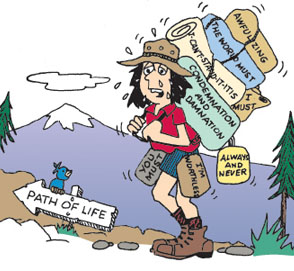 Research has found that a number of core beliefs identified by the psychologist Albert Ellis are consistently linked to self-dislike and depression. I see these in many young people today and they go largely unchallenged by adults because many of the adults in their lives are handicapped by the same irrational beliefs. Below is a list of commonly held false core beliefs. As an exercise, print this list and have your students circle those that they hold. You might further discuss scriptural responses that challenge these false beliefs.
- I must be loved or approved of by everyone I consider significant.
- I must be thoroughly competent and adequate in everything I do. I should not be satisfied with myself unless I’m the best or excelling.
- If something is or may be dangerous or fearsome I must be terribly concerned about it or keep on guard in case it happens.
- It is easier to avoid than face life’s difficulties and responsibilities.
- It’s bad to think well of oneself.
- I can’t be happy unless a certain condition – like success, money, love, approval, or perfect achievement – is met.
- I can’t feel worthwhile unless a certain condition if met.
- I’m entitled to happiness (or success, health, self-respect, pleasure, love) without having to work for it.
- One day when I make it, I’ll have friends and be able to enjoy myself.
- Work should be hard and in some way unpleasant.
- Joy is only gained through hard work.
- I am inadequate.
- Worrying insures that I’ll be prepared to face and solve problems. So the more I worry the better. (Constant worrying helps prevent future mistakes and problems and gives me extra control.)
- Life should be easy. I can’t enjoy it if there are problems.
- The past makes me unhappy. There’s no way around it.
- There’s a perfect solution, and I must find it.
- If people disapprove of (reject, criticize, mistreat) me, it means I’m inferior, wrong, or no good.
- I’m only as good as the work I do. If I’m not productive, I’m no good.
- If I try hard enough, all people will like me.
- If I try hard enough, my future will be happy and trouble free.
Share this:

Our friends over at Fuller Youth Institute published a great post today about the messages we are sending our young girls.
They referred to an article in the Huffington Post about photos of models that have been touched up to make the model look thinner.

As a father of three young girls I’m concerned that when they see the touched up photos they compare and contrast themselves to a fictional image. We have got to continue to pull back the curtain on these tricks of the trade or our girls will kill themselves striving for something that is impossible.
Now I know this may sound fanatical but we work first hand with young girls who suffer from image distortions and eating disorders. It’s no wonder they struggle so much when confronted with images such as this.
Here’s a great song by Jonny Diaz called “More Beautiful You” that speaks to this same issue:


 conversations on the fringe